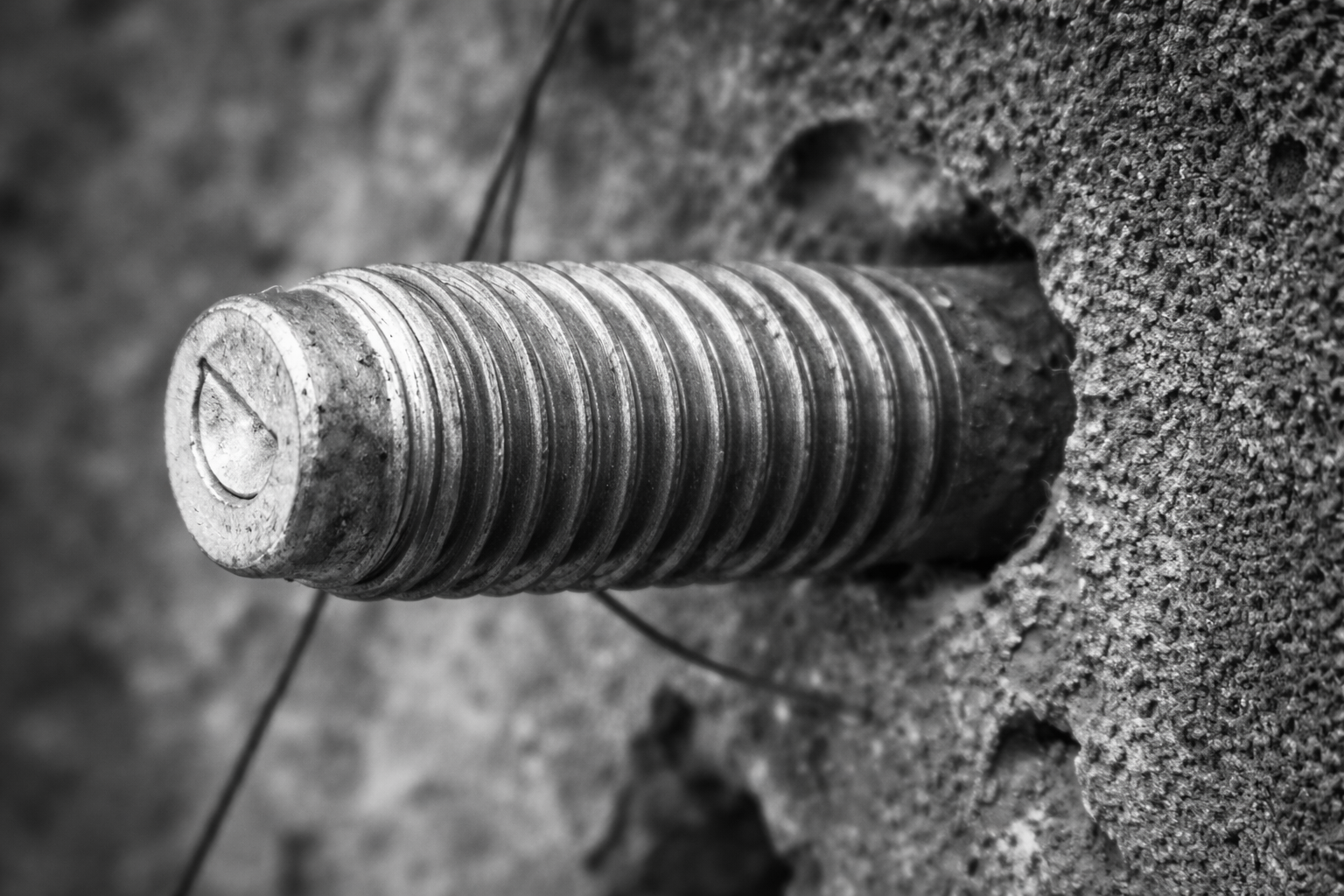
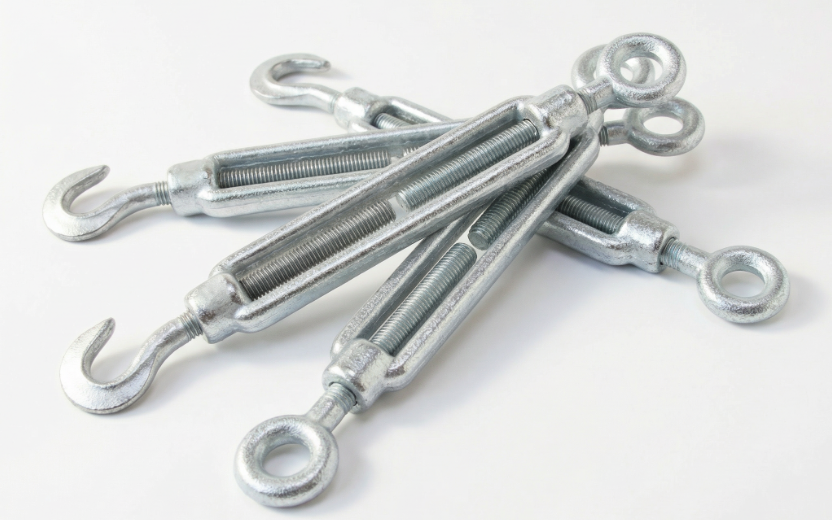
Threaded studs, often also called stud screws or stud bolts, are headless bars characterized by threading at both ends or along their entire length.
This configuration allows them to be stably inserted into a component (generally through a threaded hole), leaving the other end free for tightening with a nut and washer.
From a construction point of view, a stud bolt is generally composed of three parts:
an end that is screwed into the base component
a central part, which can be smooth or threaded
a second threaded end intended for tightening
This structure allows for uniform load distribution and greater reliability than other fastening systems, especially in critical applications.
When to use stud bolts
The use of threaded stud bolts is particularly widespread in all those contexts where it is necessary to frequently disassemble and reassemble components without compromising the thread of the main piece.
In the industrial sector, for example:
in engines and automotive components subject to vibrations
in mechanical systems and industrial machines
in flange connections of piping systems
in metal structures requiring maintenance
Their effectiveness derives from the fact that the most “delicate” thread (that of the basic component) is not continuously stressed: the stud bolt remains in place, while tightening and dismantling take place using a nut.
This makes them ideal even in the presence of high temperatures, thermal variations or harsh operating conditions, where reliability and repeatability of assembly are essential.
How to assemble threaded stud bolts
The assembly of a threaded stud bolts follows a precise logic, designed to ensure stability and correct distribution of forces.
The first step is to screw the bolt inside the threaded hole of the base component. This operation can be performed manually or with specific tools, ensuring the correct coupling of the thread.
Next, the component to be fixed is positioned and locked by washer and nut on the free end of the stud bolt.
Tightening therefore takes place on the nut and not on the fastening body, with two main advantages:
thread wear in the base component is avoided
a more controlled and uniform voltage is obtained
This system also allows for better alignment of components during assembly, especially in complex configurations such as flanges or multiple couplings.
Difference between prisoners and screws
The main difference between a stud bolt and a screw concerns the presence of the head and the way in which the tightening occurs.
A traditional screw is equipped with a head and is screwed directly into the component, generating tightening by rotation of the body itself.
This difference brings important advantages in industrial contexts. The stud bolt reduces thread wear, improves assembly accuracy and facilitates maintenance operations.
Furthermore, in systems subject to frequent disassembly, the use of stud bolts increases the overall connection life compared to a traditional screw.
The lag screw is designed to directly create the thread in the material during screwing, making it ideal for quick and often permanent fixings.
The stud bolt, on the other hand, always works on existing threads and is born for applications where the connection must be:
removable
controlled
repeatable over time
In summary, the lag screw is suitable for fast and definitive installations, while the stud bolt represents the most advanced technical choice when reliability, maintenance and long-term strength are required.
Conclusion
Threaded studs represent a fundamental solution in the world of industrial bolting. Thanks to their headless configuration and double threading, they allow for the creation of robust, precise and, above all, easily repairable connections.
The choice to use a stud bolt instead of a traditional screw is not just a technical issue, but a strategic one: it means designing a system that is more reliable over time, reducing component wear and improving the efficiency of assembly and maintenance operations.
To receive more information about the world of viteria, subscribe to our newsletter.
Metal sandblasting applied to small metal components: surface preparation, process control and its role in coatings for screws, bolts and threaded parts....
Technical guide to choosing anchors and bolts for air conditioner installation: substrate, bracket, anchoring, vibration, corrosion and proper tightening....
Drywall anchors: types, load capacity, selection criteria and correct installation to identify the most suitable fixing solution for every application....
Industrial automation is now a key factor in improving efficiency, quality, and control in manufacturing processes. By integrating machines, software, and data, companies can make their production more reliable, flexible, and competitive....
Threaded stud bolts are fasteners widely used in industry when it is necessary to ensure strong, reliable and above all time-demountable connections. Unlike traditional screws, they have a specific configuration that makes them particularly suitable ...
Carburizing is a thermochemical treatment that significantly improves steel performance by increasing surface hardness without compromising internal toughness. It is a fundamental solution for components subject to wear, friction and dynamic loads....
Surface treatments of steel are essential to ensure corrosion resistance, durability and reliable performance. Understanding which ones to choose and when to apply them helps you avoid problems, reduce costs, and improve component efficiency....
In the metal fabrication and construction industries, structural connection and reinforcement systems play a fundamental role in ensuring long-term stability and safety. Among these, steel tension rods are a widely used technical solution for absorbi...
The metalworking sector is one of the pillars of modern industry. But what does it actually encompass? What are its categories, and what jobs fall under it? In this article, we provide a clear and comprehensive analysis of one of the most strategic s...
Behind every product that reaches the market lies a complex network of suppliers, production processes, logistics, and distribution. Supply Chain Management was developed precisely to efficiently coordinate all these activities, transforming supply c...
 Added to quote