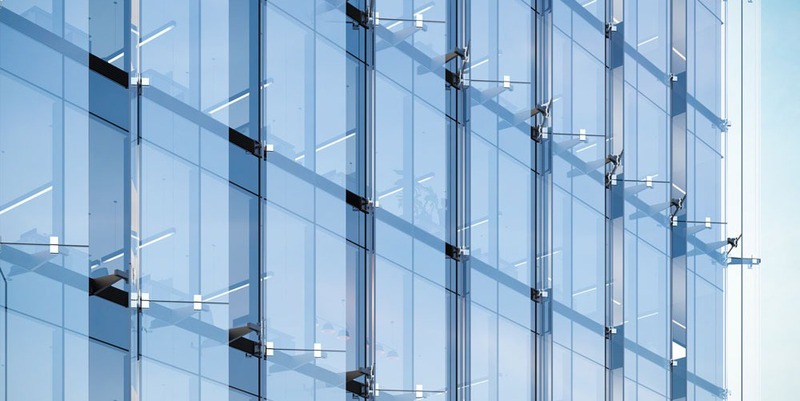
From the English "curtain wall," curtain walls are innovative and particular types of building structures that make a construction lighter and give greater design to the entire structure. With numerous advantages, a curtain wall gives geometric continuity to the building and is a true advanced technology in the world of construction and heavy carpentry. In this article, we will delve into the various types and characteristics.
Main Features of Curtain Walls
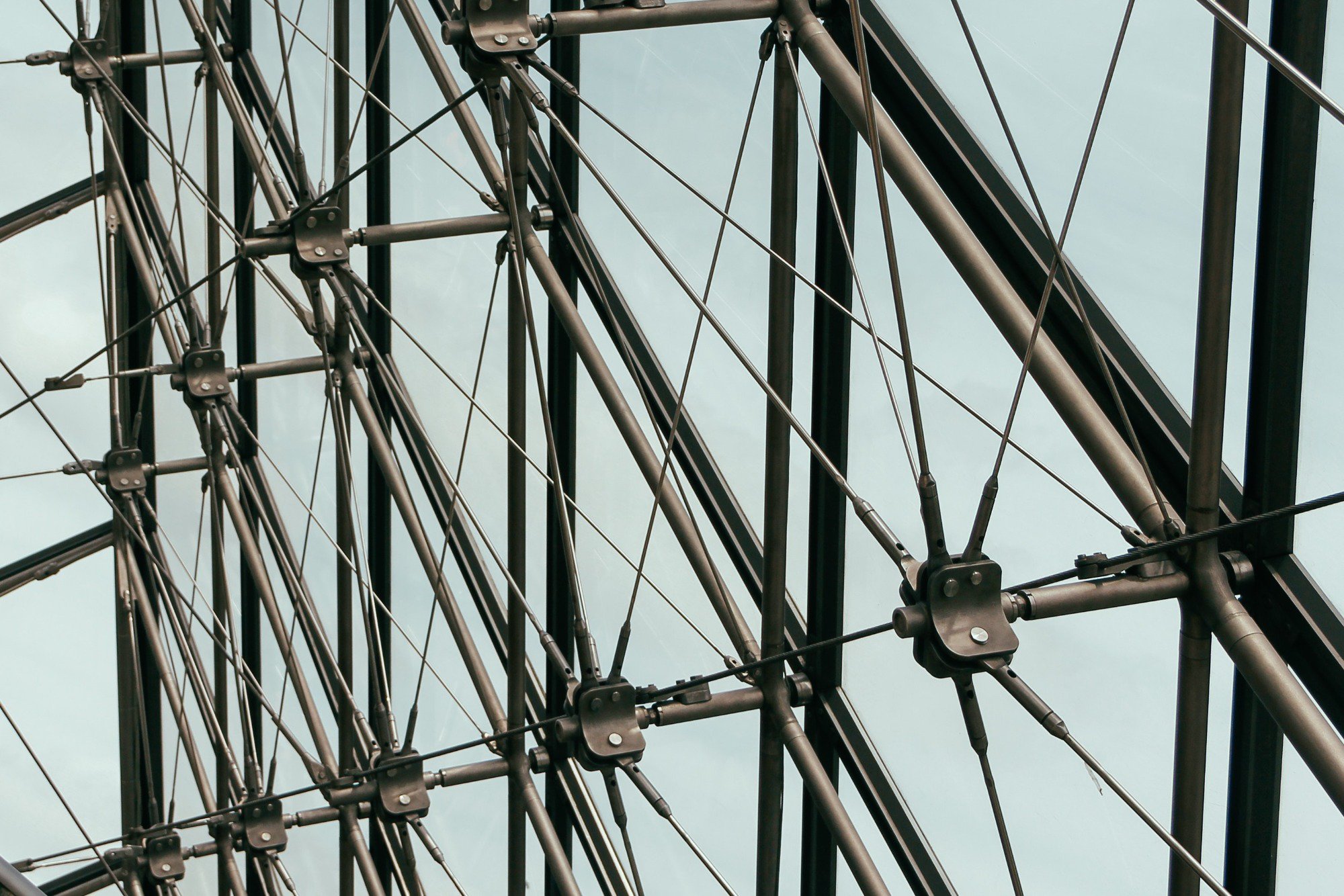
Made through a framework of horizontal and vertical profiles, curtain walls are created with a system of panelsattached to the outside of the building through a supporting skeleton. These facade systems, therefore, do not weigh on the heaviness and stability of the structure.
In general, the panels can be fixed and/or openable, as well as translucent and/or opaque. Regarding the materials with which curtain walls can be constructed, we can list glass, steel, plastic materials, and aluminum.
Installing a curtain wall is not purely aesthetic. These coatings indeed bring numerous benefits:
They define the exterior and interior of a building;
They protect the interior from solar rays and their effects (e.g., radiation and glare);
They protect from external weather agents (e.g., wind, snow, fire, and water);
They ensure thermal and acoustic insulation of a building;
They are impact-resistant.
This type of facade is designed as a self-supporting construction that, therefore, transmits its own weight and its environmental and seismic loads to the main structure without impacting the mechanical resistance and stability of the entire building.
Reference Standards for Curtain Walls
The curtain wall is an increasingly widespread building structure. For this reason, since it is not just an aesthetic but also a performance project, it was necessary to devise regulations to govern this product.
Specifically, the reference is to UNI EN 13830:2020 “Curtain Walls – Product Standard”, a standard that defines the requirements for this external envelope. In summary, the product must:
Be resistant to weather agents;
Ensure operational safety;
Promote energy saving.
The regulation also provides that, to ensure product compliance, technical tests are carried out on it and evaluations are drawn up with reference to specific criteria and indicators.
Types of Curtain Walls
Curtain wall systems can be of different types:
Stick and frame curtain walls: Originating around the '50s/'60s, these types of products are ideal for ground-floor glazing or for specific heights. They consist of a metal frame with vertical elements (mullions) and horizontal elements (transoms) connected to each other to ensure regular support for the closure panels. The mullions perform the supporting function while the transoms stiffen the facade structure, support, and allow the placement of infills. These elements, both mullions and transoms, are processed in the workshop while the grid is assembled on site;
Unitized curtain walls: Fully prefabricated systems in the workshop to ensure greater product quality control, these are modular elements with a box-like behavior. In this case, the panels can be of different sizes depending on the final project. This type of facade includes various fixing technologies such as glazing beads, external thickness, structural bonding, and point fixing;
Point-fixed glass curtain walls: Structural sealant glazing systems are so-called for the use of structural silicones that directly transfer the loads applied to the facade to the metal structure without the use of substructures. This system, which can be used for both stick and frame and unitized facades, provides good energy and acoustic performance and is easily cleaned from the outside even with automatic procedures;
Double-skin curtain walls: The peculiarity of this system is the dynamic insulation due to the natural or mechanical ventilation present in the air gap between two layers. This system actively contributes to the sustainability of the building because, for example, in summer it reduces the discomfort caused by solar radiation while in winter these facades reduce heat losses by 20-30%.
Aluminum Curtain Walls: Advantages and Uses
As mentioned in previous paragraphs, among the materials in which facades can be designed and built, there is aluminum. But why prefer the installation of aluminum curtain walls?
Aluminum has numerous advantages:
It is widely distributed in nature;
It is a light metal and infinitely recyclable;
It is corrosion-resistant;
It can be worked at both high and low temperatures.
Therefore, it is a raw material that simplifies the production of curtain walls, given its distribution, and enhances the performance of the final product.
Facade Systems: Innovations and Technologies
Innovation and technology are the two keywords that well represent curtain walls. These systems, in addition to meeting specific architectural or performance needs, also blend with innovation in fields such as naval and railway.
These special glazings require an in-depth initial study and a subsequent executive project to balance the external envelope with the loads and stresses to which the structural part of the facade is subjected.
The aesthetic and decorative factor should not be underestimated. Even in this case, the search for new solutions is continuous, and there is a different possibility of choice among the integrative decorative elements (e.g., vertical and/or horizontal fins, coverings with various materials, etc.).
Therefore, the curtain wall is the result of a project and research always directed towards the future.
To receive further information about curtain walls, subscribe to our newsletter.
Industrial automation is now a key factor in improving efficiency, quality, and control in manufacturing processes. By integrating machines, software, and data, companies can make their production more reliable, flexible, and competitive....
Threaded stud bolts are fasteners widely used in industry when it is necessary to ensure strong, reliable and above all time-demountable connections. Unlike traditional screws, they have a specific configuration that makes them particularly suitable ...
Carburizing is a thermochemical treatment that significantly improves steel performance by increasing surface hardness without compromising internal toughness. It is a fundamental solution for components subject to wear, friction and dynamic loads....
Surface treatments of steel are essential to ensure corrosion resistance, durability and reliable performance. Understanding which ones to choose and when to apply them helps you avoid problems, reduce costs, and improve component efficiency....
In the metal fabrication and construction industries, structural connection and reinforcement systems play a fundamental role in ensuring long-term stability and safety. Among these, steel tension rods are a widely used technical solution for absorbi...
The metalworking sector is one of the pillars of modern industry. But what does it actually encompass? What are its categories, and what jobs fall under it? In this article, we provide a clear and comprehensive analysis of one of the most strategic s...
Behind every product that reaches the market lies a complex network of suppliers, production processes, logistics, and distribution. Supply Chain Management was developed precisely to efficiently coordinate all these activities, transforming supply c...
Heat treatment of steel is one of the most important processes for obtaining reliable, resistant metal components suitable for industrial applications. From normalizing to tempering, these processes modify the structure of the material and determine ...
The seven principles of quality form the basis of ISO management systems and, in particular, the ISO 9001 standard. Understanding them means understanding how organizations can improve processes, decisions, and relationships to ensure quality and lon...
The Machinery Directive 2006/42/EC is one of the pillars of European industrial safety and defines the essential requirements that a machine must comply with to be placed on the Union market. It is not a simple formal fulfillment, but a system of res...
 Added to quote