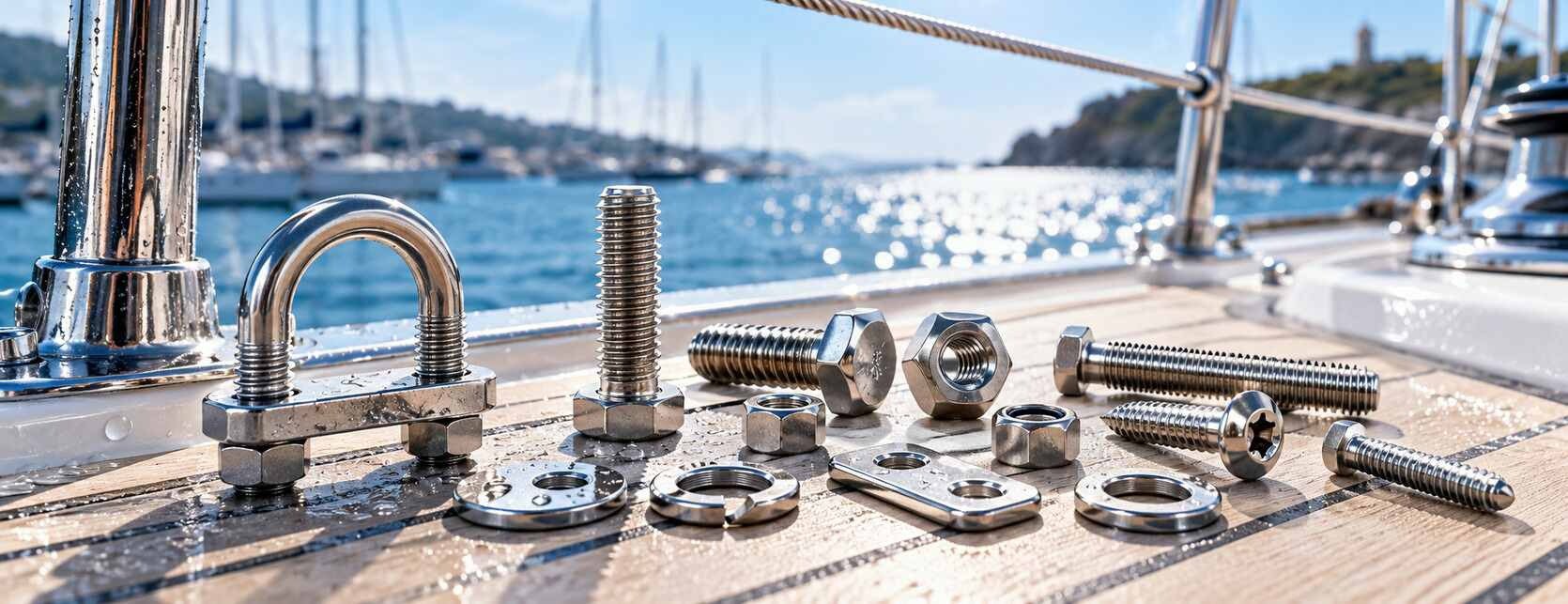
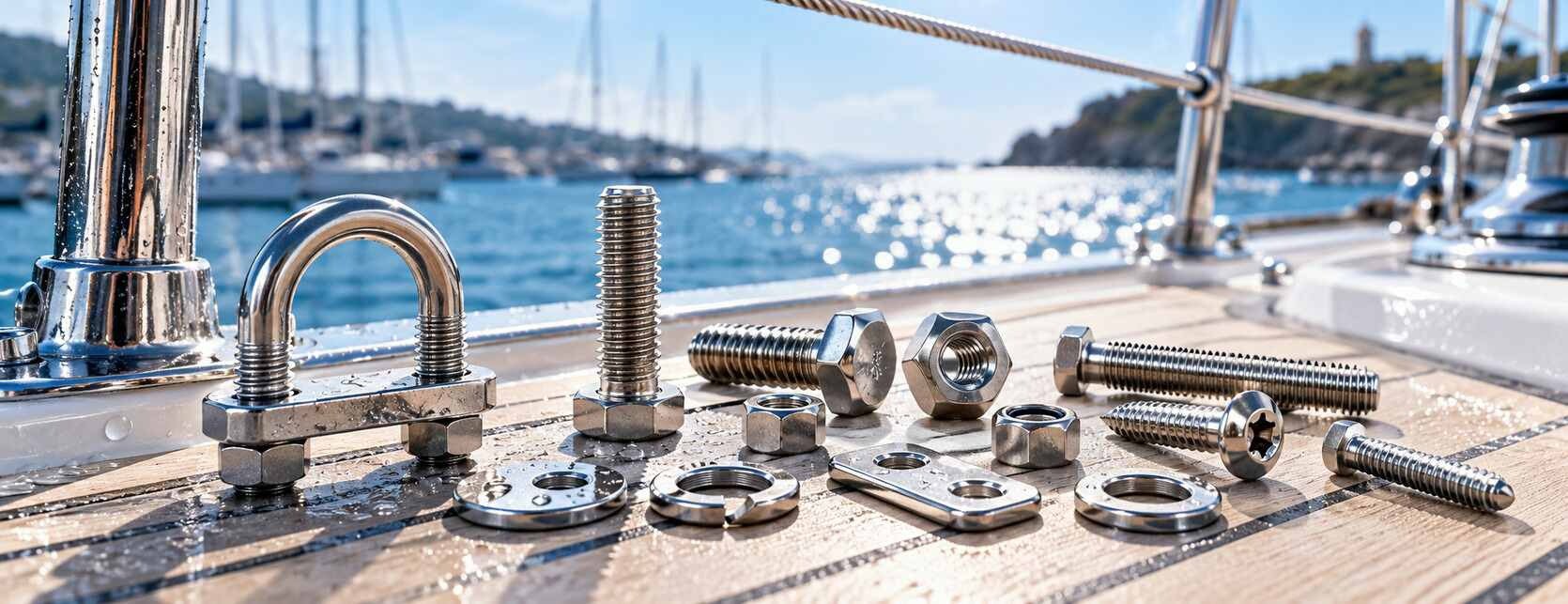
Marine accessories: screws, bolts and fasteners for saltwater environments
For marine accessories, the choice of screws, bolts, nuts and washers directly affects the durability of the assembly and the safety of the installed component.
In a marine environment, in fact, a fastening point never works under neutral conditions: salt spray, persistent humidity, water stagnation, vibration, cyclic loads and contact between different materials can accelerate degradation even on components that may appear suitable.
For this reason, in the nautical sector it is not enough to refer only to stainless steel. The type of stainless steel, the position of the fastening, the support material, drainage possibilities, tightening method and direct exposure to salt water or marine aerosol must all be assessed.
The real reliability of the fasteners used on deck, brackets, ladders, handrails, supports and other marine accessories depends on this combination of factors.
Screws and bolts for nautical use: the critical points
The marine environment is particularly critical because the chlorides present in salt spray can compromise the passive film that protects stainless steel.
Corrosion does not necessarily develop uniformly: it often affects localized points, crevices, contact areas, threads, under-head areas, washers and parts where water and salt remain trapped.
These details affect the service life of marine accessories. A fastening installed in a well-ventilated and easily washable area can behave differently from the same component placed in a blind hole, under a bracket or in an area subject to stagnation.
In the nautical sector, the issue is not only the material, but also the geometry of the assembly.
To reduce the risk of localized corrosion, it is important to avoid configurations that retain salt water, deposits or dirt. Clean surfaces, compatible pairings and the possibility of rinsing with fresh water help preserve the functionality of the fastening over time.
A2 or A4 stainless steel for marine environments? Selection criteria
In the nautical sector, the material designation must be assessed in relation to the actual exposure of the component. A2 stainless steel is widely used for general fastening applications and may also be suitable in outdoor contexts that are not particularly aggressive, but it is less appropriate when the component is continuously exposed to salt spray, seawater splashes or saline deposits.
For the most exposed marine fasteners, A4 stainless steel is generally used because it offers higher resistance to corrosion in the presence of chlorides than A2. This advantage is linked to the alloy composition, particularly the presence of molybdenum, which improves the material's behavior against localized phenomena such as pitting and crevice corrosion.
Choosing A4, however, does not make the fastening immune to problems. Stagnant salt water, non-draining crevices, surface deposits, incorrect tightening and contact with incompatible materials can still encourage staining or localized corrosion.
Material assessment must be combined with correct connection design, size selection and periodic maintenance. For a specific in-depth explanation of the differences between the two solutions, you can consult our guide on A2 and A4 stainless steel.
Compatibility and component selection for marine accessories
A reliable marine fastening starts from the entire assembly system. The screw must be appropriate for the load, the nut for the thread, the washer for the bearing surface and the support material for the operating environment. In connections subject to vibration, tightening must also remain stable over time and be compatible with any anti-loosening solutions.
In marine accessory assemblies, the choice of fasteners must start from the function of the connection.
Metric bolts and screws are used when a threaded tightening system is required, with diameter, length and strength class consistent with the expected load. Nuts complete the connection and must be compatible with the material, pitch and size of the screw.
Washers and plates may be necessary when the tightening pressure needs to be distributed more effectively, the bearing surface must be protected or the fastening is used on brackets, sheets and thin supports.
U-bolts, on the other hand, are used for fastening on tubular elements, cylindrical profiles, handrails and similar supports, where the geometry of the part directly influences the stability of the anchoring.
Another important aspect is galvanic compatibility. In the presence of salt water, contact between stainless steel, aluminium, carbon steel or other metals can create unfavorable conditions for one of the materials involved. In the most exposed assemblies, it is therefore advisable to assess insulation, suitable interposition elements, proper separation of materials and periodic maintenance.
Stainless steel can also be subject to galling during tightening, especially in threads exposed to high friction. For this reason, forced assembly should be avoided, the correct tools should be used and, where necessary, lubricants or anti-galling products compatible with stainless steel and the operating environment should be specified.
In a marine environment, even one underestimated detail can become the first weak point of the assembly. When selecting components, beyond the initial strength of the part, it is essential to assess its ability to remain inspectable, removable and functional even after prolonged cycles of exposure, use and maintenance.
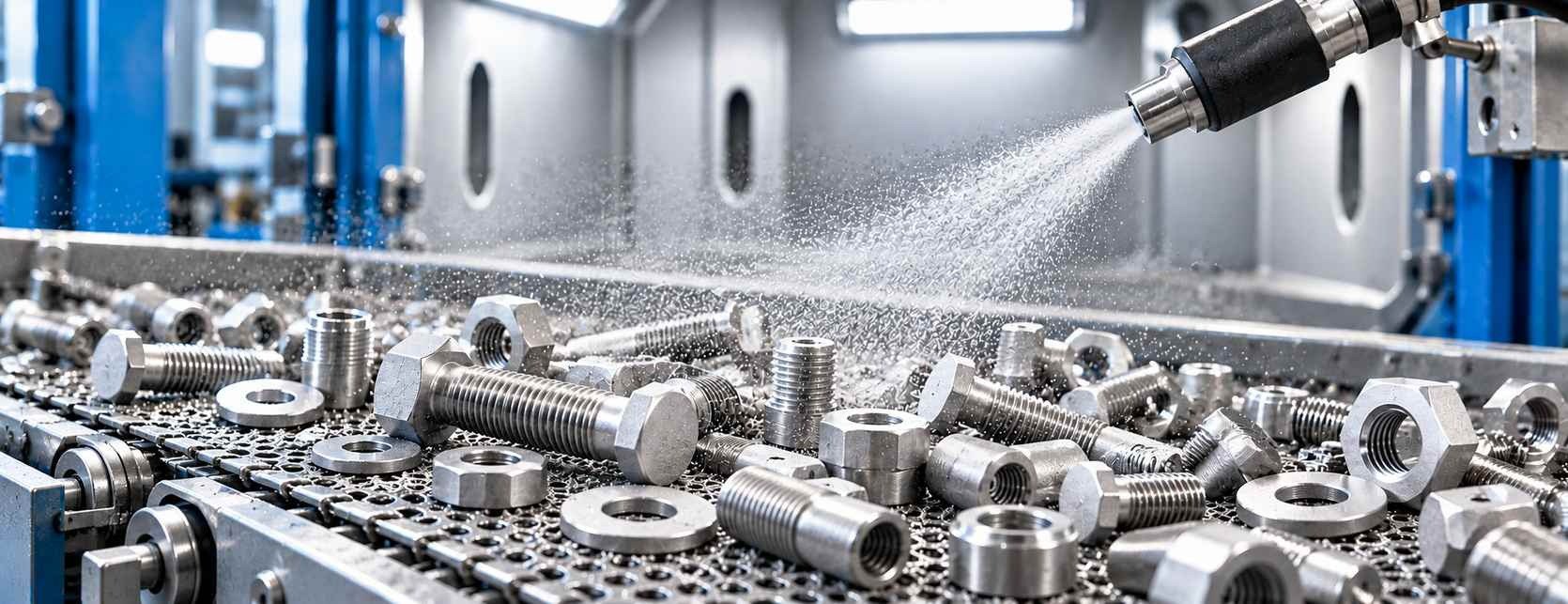
Metal sandblasting applied to small metal components: surface preparation, process control and its role in coatings for screws, bolts and threaded parts....
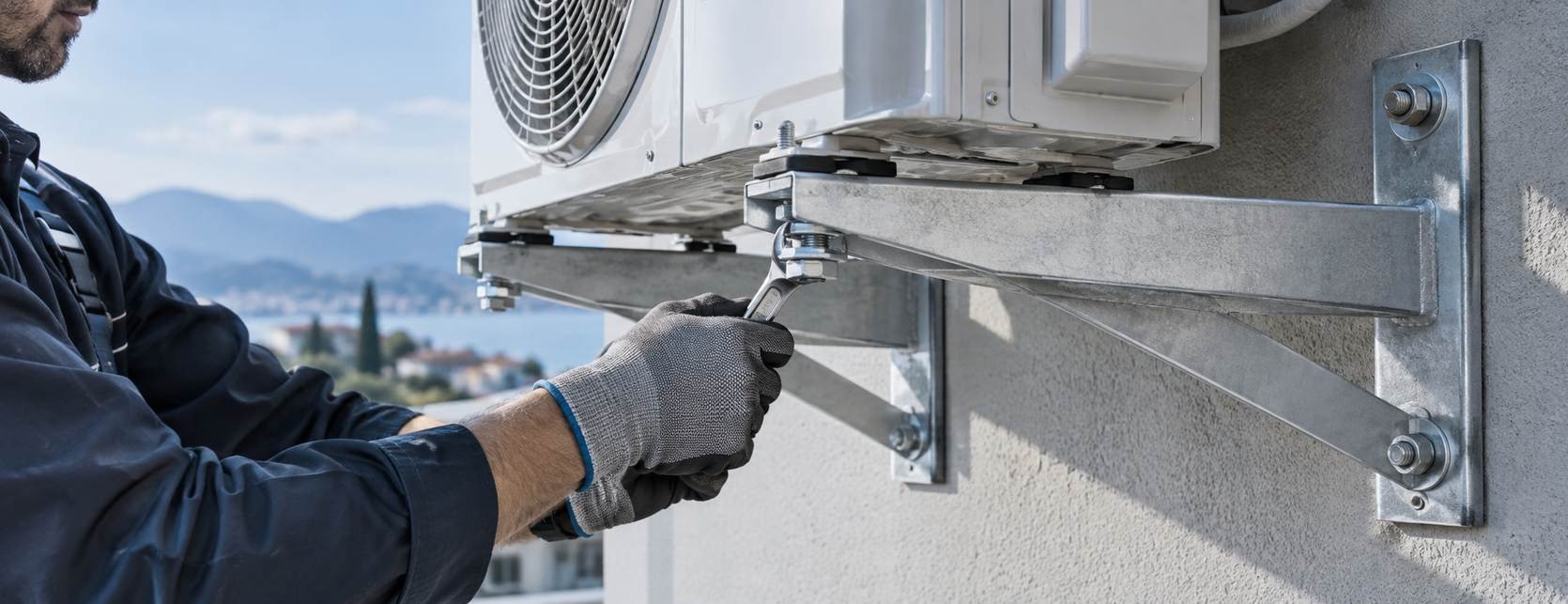
Technical guide to choosing anchors and bolts for air conditioner installation: substrate, bracket, anchoring, vibration, corrosion and proper tightening....
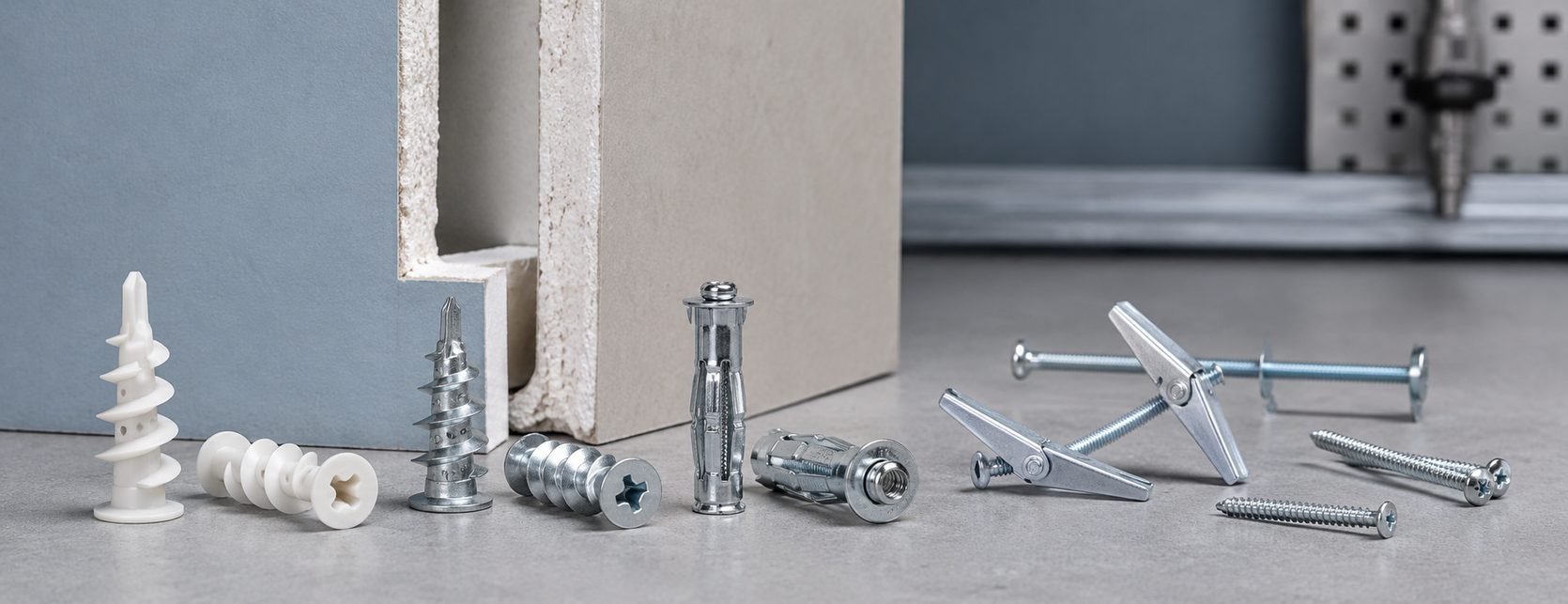
Drywall anchors: types, load capacity, selection criteria and correct installation to identify the most suitable fixing solution for every application....
Industrial automation is now a key factor in improving efficiency, quality, and control in manufacturing processes. By integrating machines, software, and data, companies can make their production more reliable, flexible, and competitive....
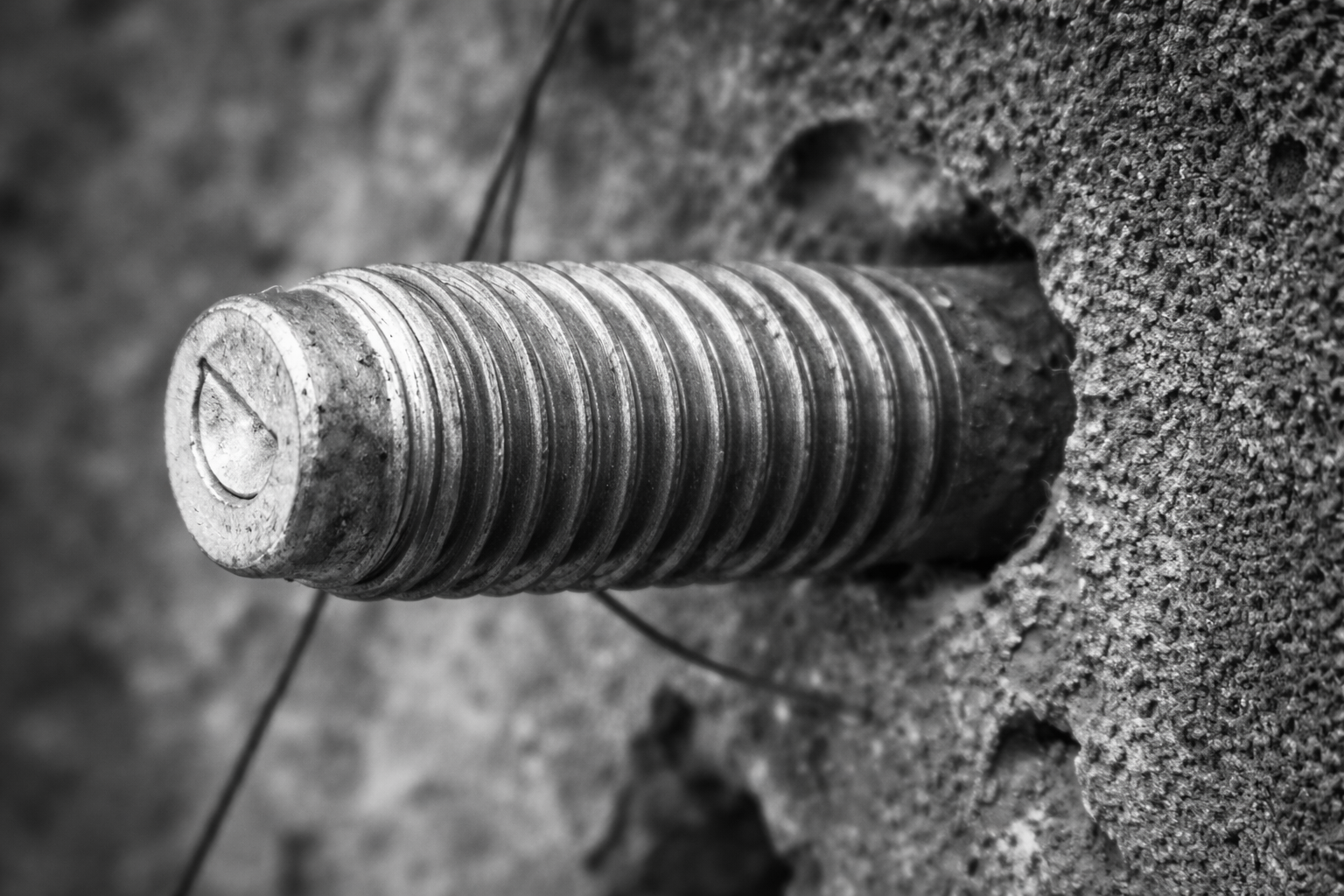
Threaded stud bolts are fasteners widely used in industry when it is necessary to ensure strong, reliable and above all time-demountable connections. Unlike traditional screws, they have a specific configuration that makes them particularly suitable ...
Carburizing is a thermochemical treatment that significantly improves steel performance by increasing surface hardness without compromising internal toughness. It is a fundamental solution for components subject to wear, friction and dynamic loads....
Surface treatments of steel are essential to ensure corrosion resistance, durability and reliable performance. Understanding which ones to choose and when to apply them helps you avoid problems, reduce costs, and improve component efficiency....
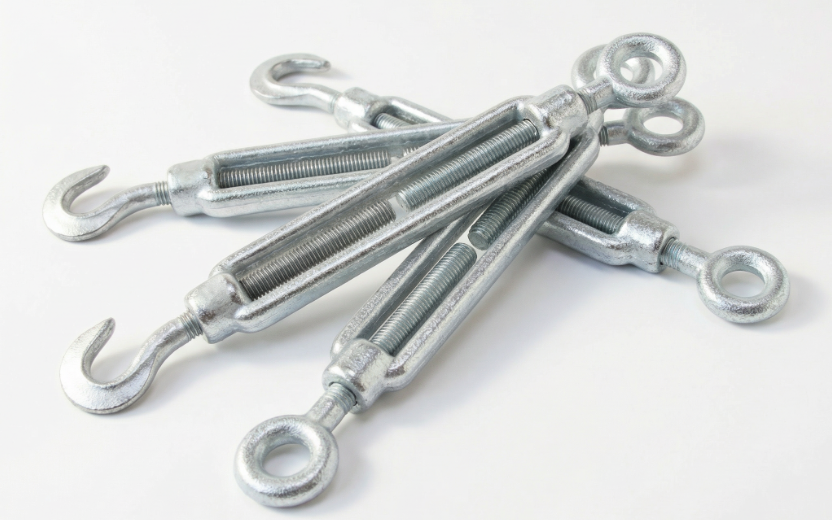
In the metal fabrication and construction industries, structural connection and reinforcement systems play a fundamental role in ensuring long-term stability and safety. Among these, steel tension rods are a widely used technical solution for absorbi...
The metalworking sector is one of the pillars of modern industry. But what does it actually encompass? What are its categories, and what jobs fall under it? In this article, we provide a clear and comprehensive analysis of one of the most strategic s...
 Added to quote