Metal Sandblasting: Surface Preparation for Treatments
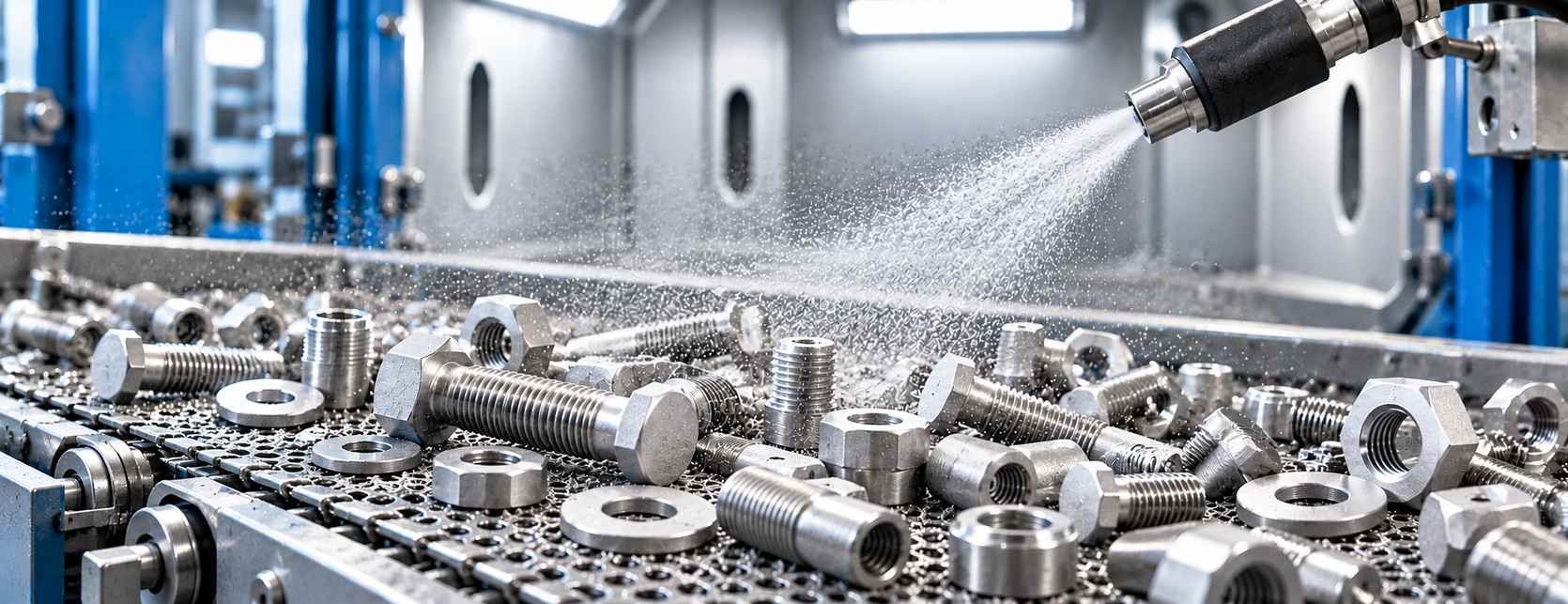
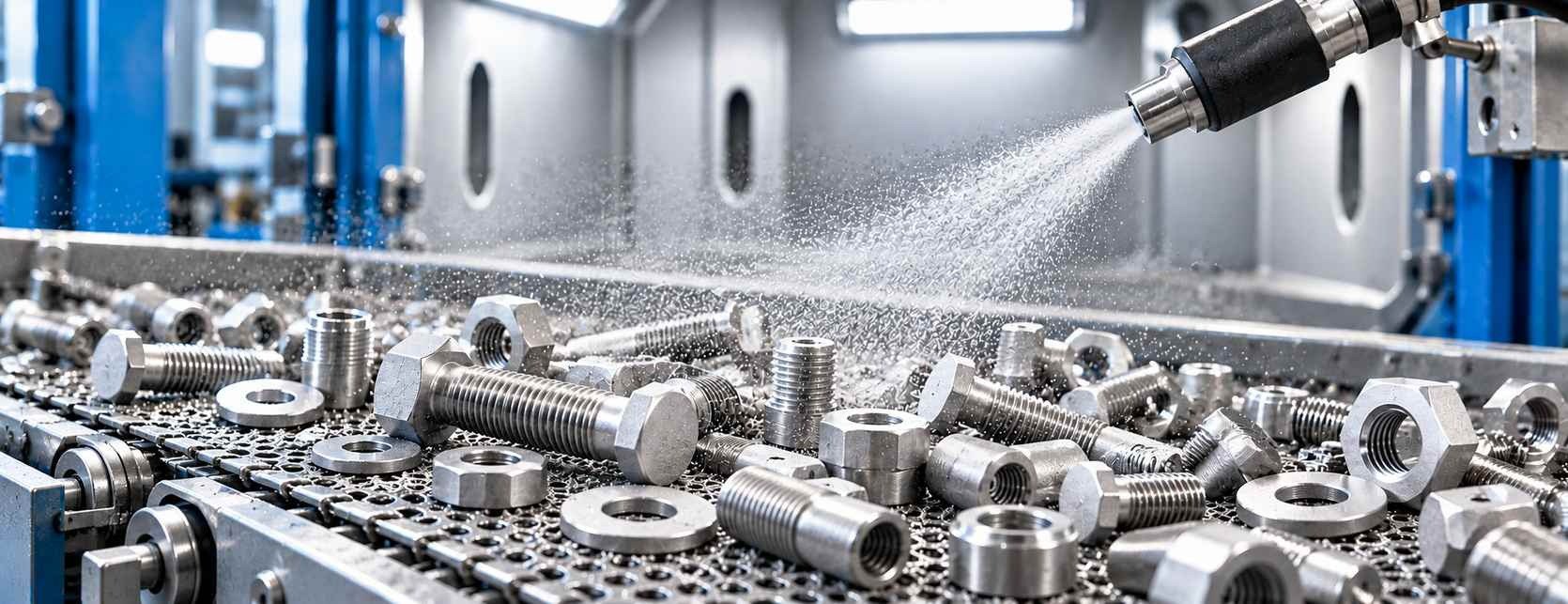
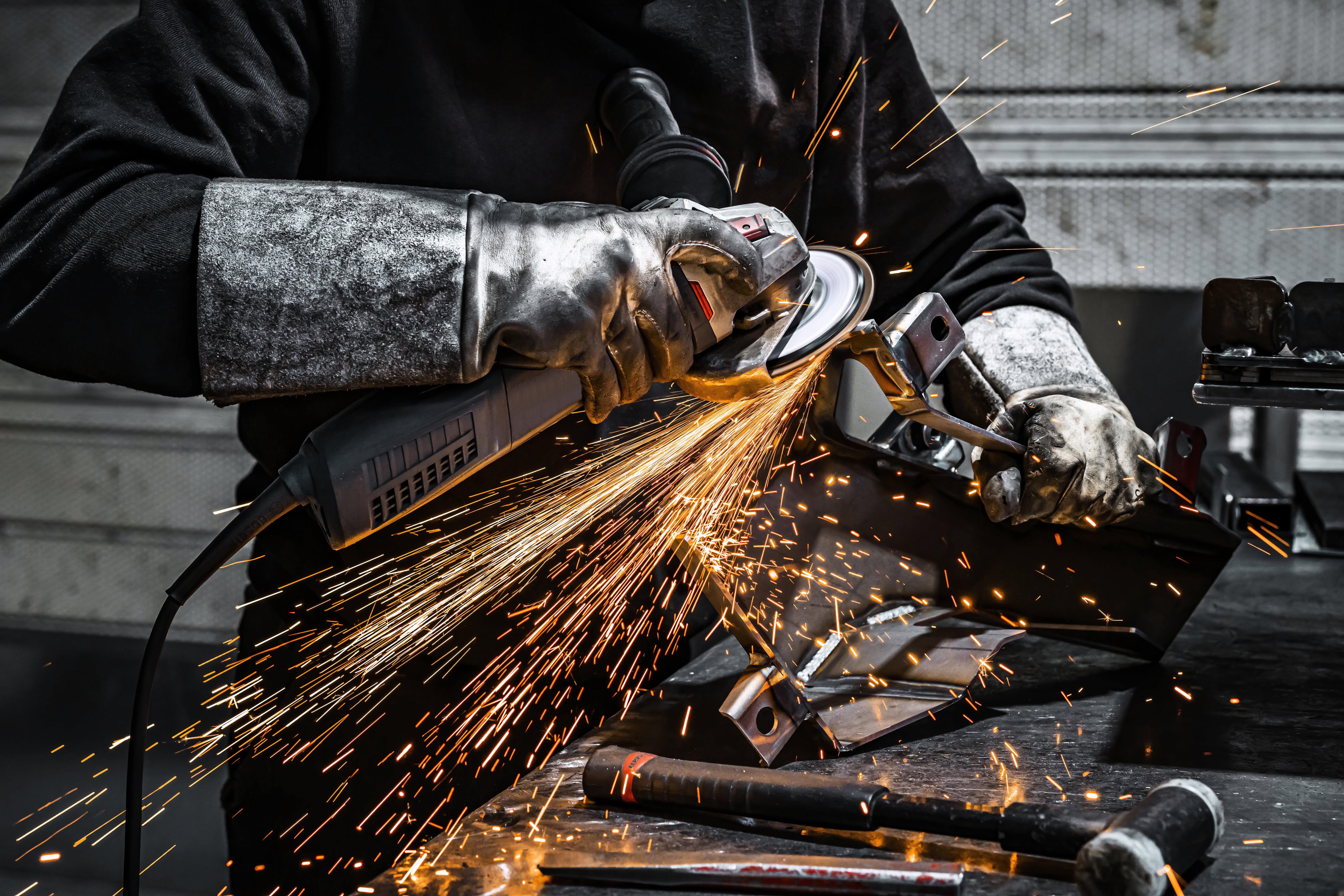
Metal sandblasting is a surface preparation process used, when required by the production cycle, to remove oxides and solid residues and obtain a surface suitable for the subsequent treatment.
It is not limited to cleaning the component: the degree of cleanliness and the resulting profile can affect the adhesion of paints and organic coatings, as well as the outcome of further operations.
The term “sandblasting” is often used generically to describe cleaning by abrasive projection. Depending on the abrasive medium and the equipment used, it may be more accurately referred to as shot blasting or other abrasive treatment processes.
The aim is to remove oxides, mill scale when present and other surface residues, achieving the degree of cleanliness and roughness required by the intended cycle.
When metal sandblasting concerns screws, bolts, nuts, washers and threaded parts, the process must be calibrated with great care to preserve the component’s functional characteristics.
Sandblasting Process and Applications in Small Metal Components
In fastening components, surface conditions are relevant both to the application of any coatings and to the component’s behaviour in its operating environment.
When a technical paint system or an organic coating is specified, metal preparation must meet the requirements of the selected cycle.
Sandblasting works through the controlled impact of abrasive particles on the surface: it can remove oxidized layers and solid residues and, where necessary, create a micro-roughness suitable for anchoring the finish.
In the case of bolting components, the abrasive action must respect the geometry of the part. Threads, drive recesses, under-head areas and bearing surfaces must necessarily maintain the specified dimensions and tolerances.
An overly aggressive treatment can alter functional surfaces and make the fit between components less regular. Metal surface coatings must also be assessed in relation to the dimensional tolerances of threads and assembly conditions. For this reason, sandblasting applied to small metal components requires parameters suited to the characteristics of the parts being processed.
Abrasives, Materials and Process Control
The quality of the result in metal sandblasting depends on the type and grain size of the abrasive, the intensity of the treatment, exposure time and part handling, according to the equipment used.
In small components processed in bulk, uniformity requires particular attention: threads, drive recesses and other less exposed areas may receive a different abrasive action from the external surfaces or retain residues.
The choice of abrasive must take account of the material, component geometry and the surface characteristics required:
More aggressive abrasives can be used to remove heavy oxidation, provided the resulting profile is compatible with the subsequent treatment and does not alter functional surfaces;
Less aggressive abrasives may be preferable when the part needs to be cleaned while limiting changes to threads, edges and geometric details.
The starting material also affects the choice of cycle. Carbon steels, alloy steels and stainless steels require different assessments.
On stainless steel, in particular, it is necessary to avoid ferrous contamination caused by abrasives or equipment also used on carbon steel. Iron particles transferred to the surface can promote surface rust and compromise the component’s behaviour in humid or aggressive environments.
Sandblasting in Metal Finishing and Protection Cycles
A metal sandblasting process carried out with suitable parameters can prepare the surface for the subsequent treatment, but it does not replace the correct choice of material or compensate for a coating unsuitable for the operating conditions.
Component durability depends on the entire cycle: base material, surface preparation, applied finish, environmental conditions and stresses expected during use.
Sandblasting can precede technical paint systems and some organic coatings when the cycle requires a specific degree of cleanliness and a controlled surface profile. For phosphating and black oxide finishes, by contrast, preparation follows the specifications of the adopted process: any abrasive treatment must be assessed case by case.
In electrolytic galvanizing and other galvanic treatments, as well as in hot-dip galvanizing, preparation may include specific chemical steps, including degreasing and pickling. Depending on the process, surface activation or fluxing may also be provided. Sandblasting may have a role in specific cycles, but it should not be considered a necessary step in every case.
In screws, bolts and related fasteners, the finish should not be assessed only for corrosion protection or appearance: the component must retain its functionality within the joint.
Surface preparation that is not suitable for the intended cycle can promote coating defects and leave less protected areas, especially in geometrically complex areas. The selection and control of preliminary operations contribute to the quality of the finish and to component durability.
Metal sandblasting applied to small metal components: surface preparation, process control and its role in coatings for screws, bolts and threaded parts....
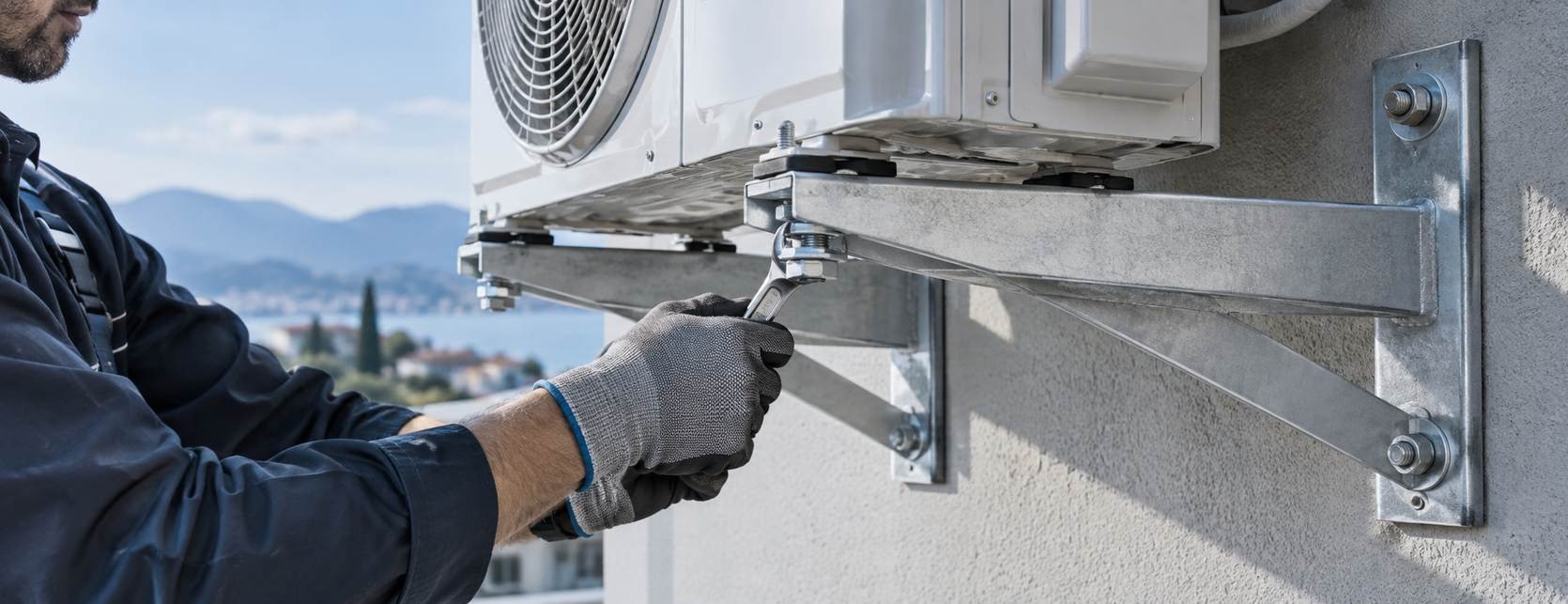
Technical guide to choosing anchors and bolts for air conditioner installation: substrate, bracket, anchoring, vibration, corrosion and proper tightening....
Drywall anchors: types, load capacity, selection criteria and correct installation to identify the most suitable fixing solution for every application....
Industrial automation is now a key factor in improving efficiency, quality, and control in manufacturing processes. By integrating machines, software, and data, companies can make their production more reliable, flexible, and competitive....
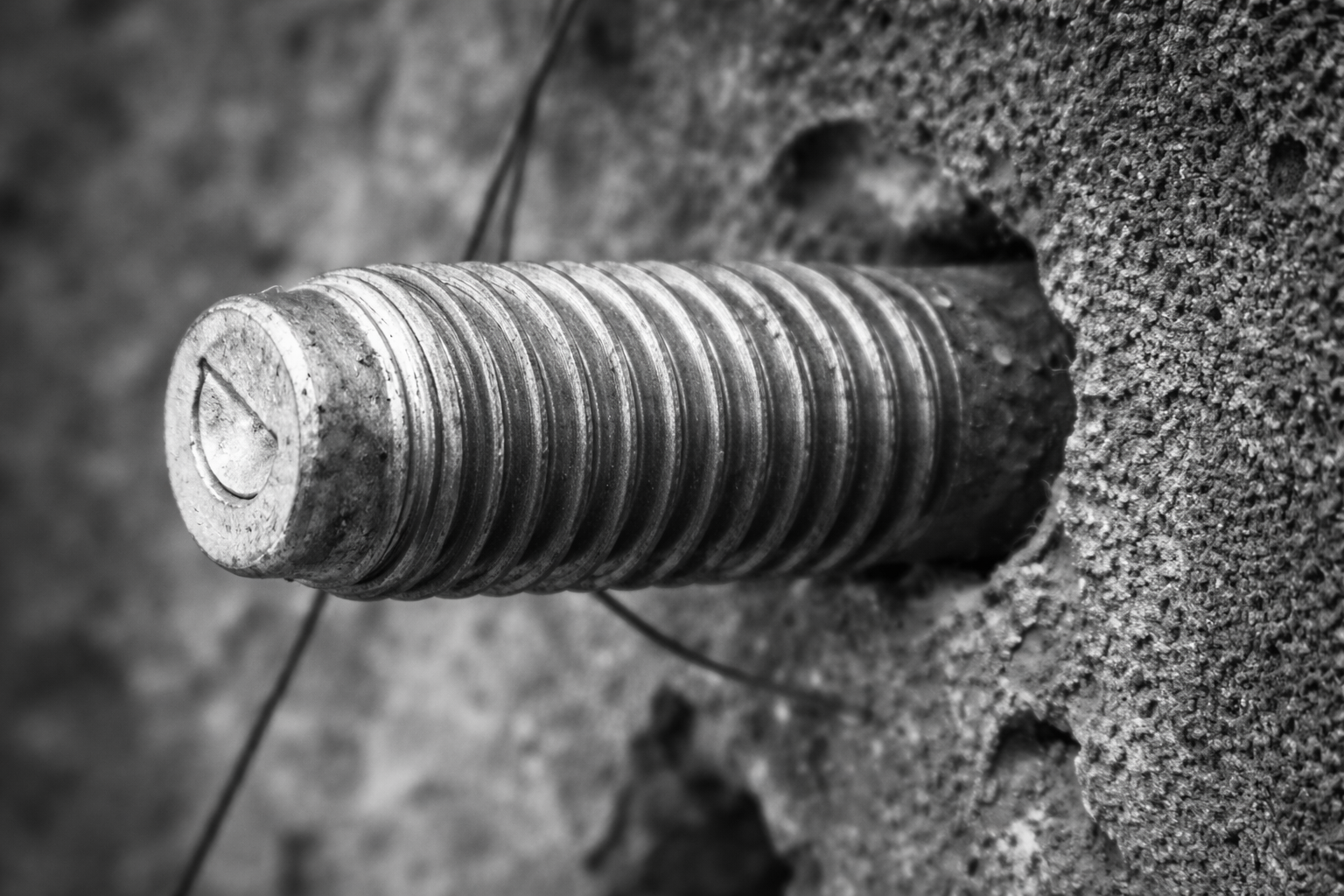
Threaded stud bolts are fasteners widely used in industry when it is necessary to ensure strong, reliable and above all time-demountable connections. Unlike traditional screws, they have a specific configuration that makes them particularly suitable ...
Carburizing is a thermochemical treatment that significantly improves steel performance by increasing surface hardness without compromising internal toughness. It is a fundamental solution for components subject to wear, friction and dynamic loads....
Surface treatments of steel are essential to ensure corrosion resistance, durability and reliable performance. Understanding which ones to choose and when to apply them helps you avoid problems, reduce costs, and improve component efficiency....
In the metal fabrication and construction industries, structural connection and reinforcement systems play a fundamental role in ensuring long-term stability and safety. Among these, steel tension rods are a widely used technical solution for absorbi...
The metalworking sector is one of the pillars of modern industry. But what does it actually encompass? What are its categories, and what jobs fall under it? In this article, we provide a clear and comprehensive analysis of one of the most strategic s...
Behind every product that reaches the market lies a complex network of suppliers, production processes, logistics, and distribution. Supply Chain Management was developed precisely to efficiently coordinate all these activities, transforming supply c...
 Added to quote