Air Conditioner Installation: Which Anchors and Bolts to Choose
When installing an air conditioner, anchors and bolts perform different functions and must be selected by separately considering the fastening to the wall and the connection between the outdoor unit and the bracket.
There is no single anchor size suitable for every air conditioner: the weight of the unit, bracket geometry, wall material, anchoring depth and exposure conditions all contribute to determining the most suitable fixing system.
When installing the outdoor unit of an air conditioner, in particular, the load does not act simply downwards, because the projection of the bracket from the wall also generates a moment that subjects the anchors to tensile and shear forces.
Wall differences when installing an air conditioner
The choice of fixing system must begin with an assessment of the substrate, even before considering the diameter and length of the anchor.
Concrete, solid masonry, hollow brick, aerated concrete and lightweight walls have different mechanical characteristics and therefore require specific anchoring solutions. In our range of anchors and fixing elements, you can find mechanical and chemical systems designed for different application conditions.
On concrete and solid masonry, steel mechanical anchors, concrete screws or chemical anchoring systems can be used, provided that the fastening is appropriately sized for the actual substrate.
A mechanical anchor transfers loads to the wall through its anchoring mechanism. For this reason, its diameter and length cannot be determined solely on the basis of the air conditioner’s weight.
Installation depth, distance from edges and spacing between fixing points must also be taken into account.
In hollow brick, on the other hand, it may be appropriate to use chemical anchoring systems with a mesh sleeve, which contains and distributes the resin within the cavities of the substrate.
Where external thermal insulation is present, the fixing system must reach the load-bearing structure without loading or compressing the insulation layer, using suitable stand-off fixing systems designed for this type of installation.
Which anchors to use for the outdoor unit bracket
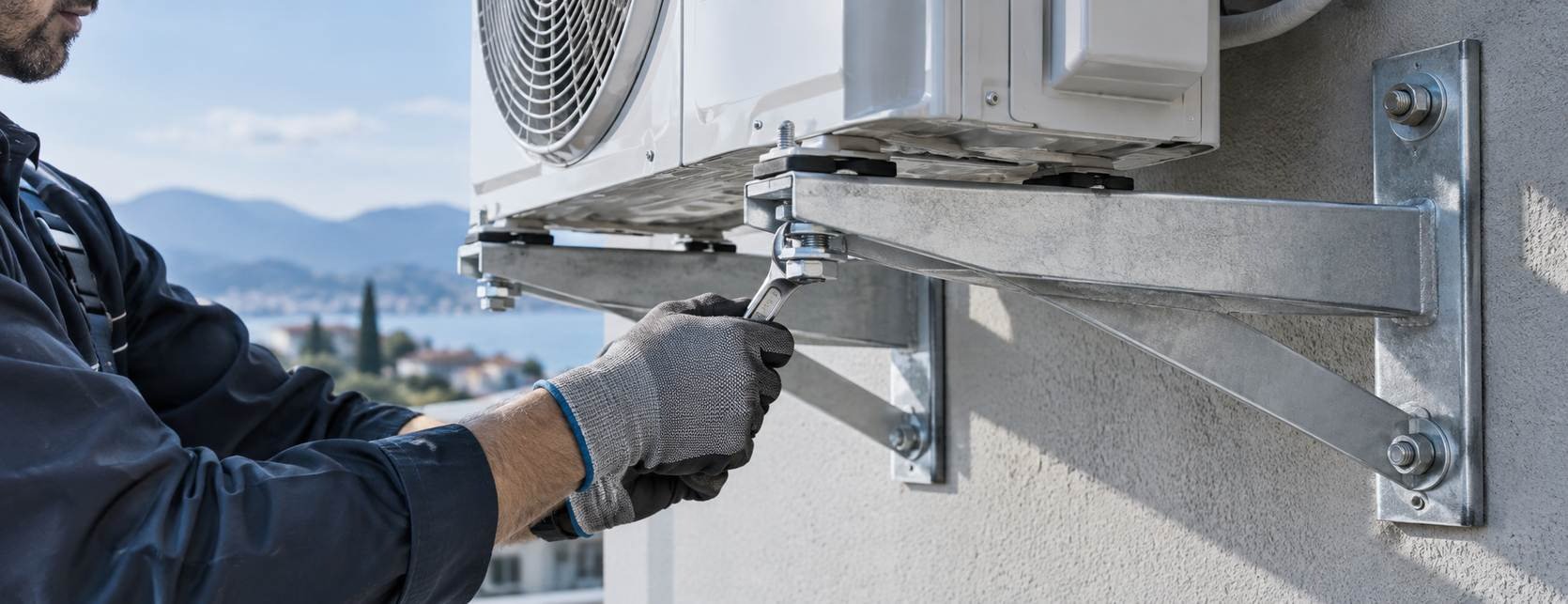
Fixing the bracket supporting the outdoor unit is one of the most critical aspects of air conditioner installation.
The brackets work as cantilevers, and the distance between the air conditioner and the wall generates a moment that is transferred to the anchors, subjecting them simultaneously to tensile and shear forces. For this reason, the choice of anchors cannot be based solely on the nominal weight of the outdoor unit.
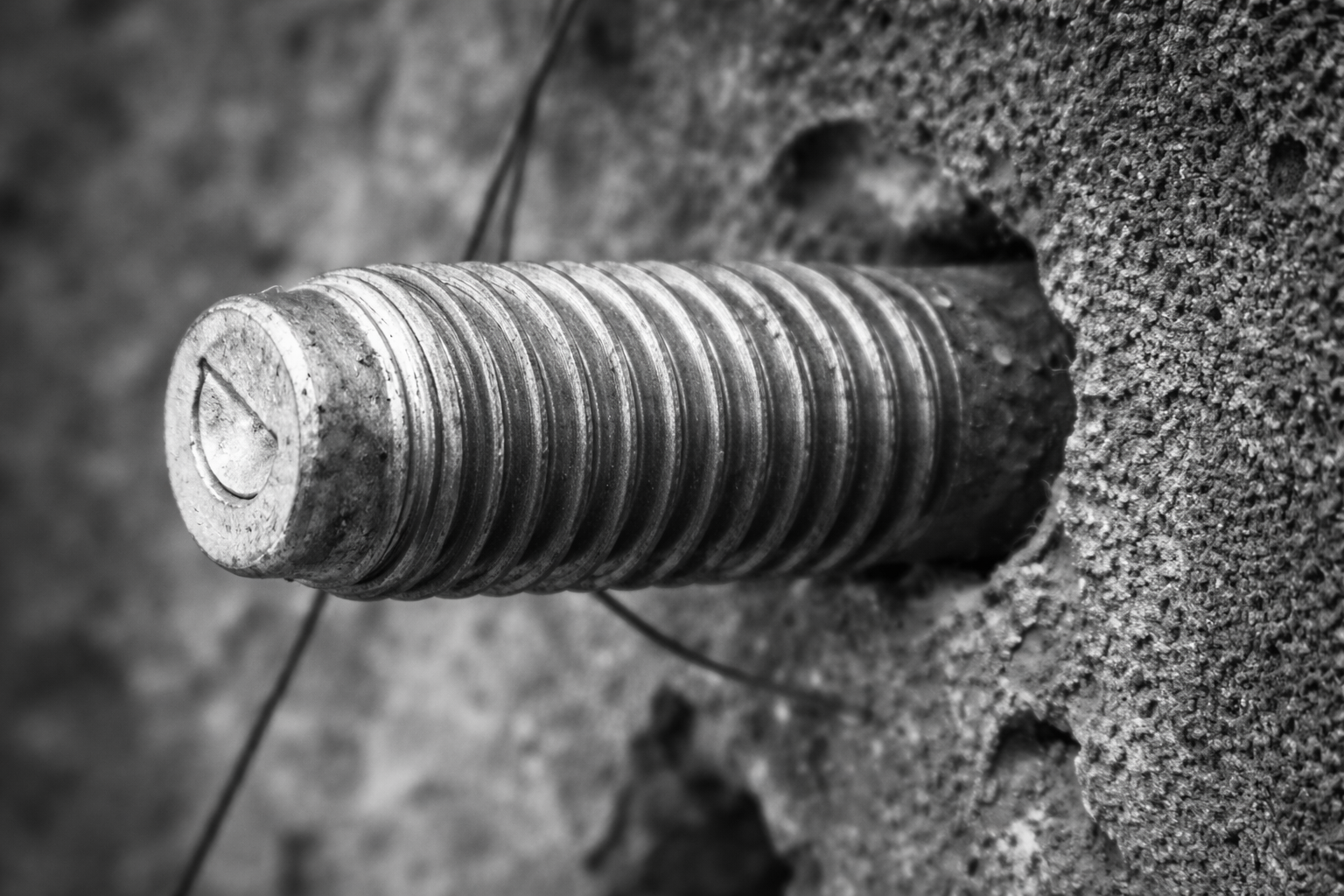
On compact and resistant substrates, such as concrete or solid masonry, appropriately sized metal mechanical anchors can be used. With hollow masonry, heterogeneous substrates or situations in which an expansion fixing is not suitable, a chemical anchoring system consisting of resin and a threaded rod compatible with the base material may instead be preferable.
A chemical anchor, however, is not automatically superior to a mechanical one. Its performance depends on the type of resin, the threaded rod used, the substrate, the diameter and depth of the hole, and correct installation.
Cleaning the hole is also essential, because dust and debris can reduce the adhesion of the resin.
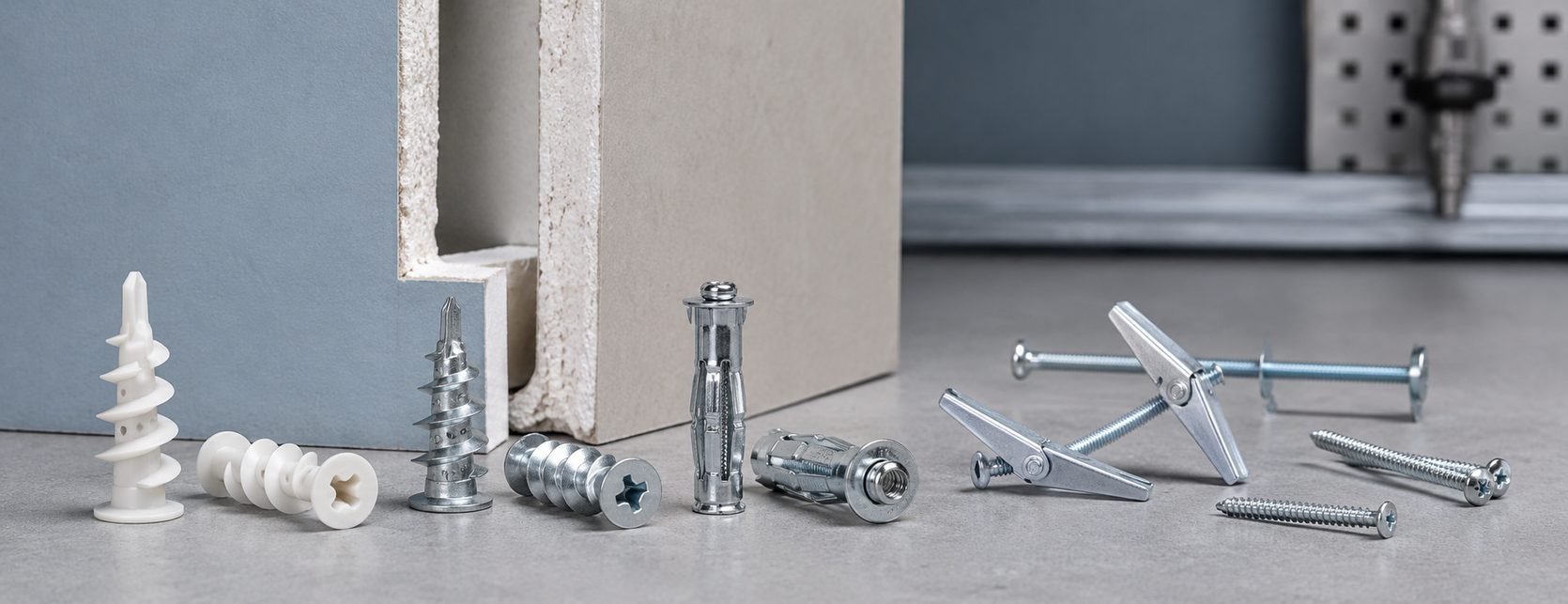
For the indoor unit, the loads are generally lower, but it is still essential to assess the wall material. On plasterboard walls, specific fixings for hollow walls are required, taking into account the thickness of the boards, the cavity and the presence of any supporting structure behind them, as explained in our guide to drywall anchors.
Bolts, washers and tightening the unit to the bracket
The bolts connecting the feet of the outdoor unit to the bracket perform a different function from the anchors fixing the bracket to the wall, as they create the joint between the unit and the metal support structure.
The screw diameter must be compatible with the holes provided on the unit and bracket, while the length, nut and washer must allow proper tightening without interfering with the unit’s components. Depending on the configuration, hex head screws can be used together with suitable nuts and washers.
The choice of fastener material must also take environmental conditions into account. Particularly when installing the outdoor unit of an air conditioner, corrosion protection is especially important because the fasteners remain exposed to humidity, condensation and weather conditions.
Depending on the application, galvanised steel, hot-dip galvanised steel or A2 or A4 stainless steel solutions may therefore be used.
Another important aspect is the long-term stability of the joint. Vibrations generated by the compressor and cyclic loads can cause a progressive loss of preload in threaded joints. Where operating conditions require it, specific anti-loosening systems should therefore be used, including washers designed for joints subjected to vibration.
Finally, tightening must be carried out using values appropriate to the diameter, grade and material of the screw. Excessive torque can damage the thread or deform components, while insufficient torque can reduce the stability of the connection. You can find further information in our guide to screw and bolt tightening torques.
Ultimately, the quality of the fastening is determined by the ability of the joint to maintain preload, alignment and component integrity over time.
Drywall anchors: types, load capacity, selection criteria and correct installation to identify the most suitable fixing solution for every application....
Industrial automation is now a key factor in improving efficiency, quality, and control in manufacturing processes. By integrating machines, software, and data, companies can make their production more reliable, flexible, and competitive....
Threaded stud bolts are fasteners widely used in industry when it is necessary to ensure strong, reliable and above all time-demountable connections. Unlike traditional screws, they have a specific configuration that makes them particularly suitable ...
Carburizing is a thermochemical treatment that significantly improves steel performance by increasing surface hardness without compromising internal toughness. It is a fundamental solution for components subject to wear, friction and dynamic loads....
Surface treatments of steel are essential to ensure corrosion resistance, durability and reliable performance. Understanding which ones to choose and when to apply them helps you avoid problems, reduce costs, and improve component efficiency....
In the metal fabrication and construction industries, structural connection and reinforcement systems play a fundamental role in ensuring long-term stability and safety. Among these, steel tension rods are a widely used technical solution for absorbi...
The metalworking sector is one of the pillars of modern industry. But what does it actually encompass? What are its categories, and what jobs fall under it? In this article, we provide a clear and comprehensive analysis of one of the most strategic s...
Behind every product that reaches the market lies a complex network of suppliers, production processes, logistics, and distribution. Supply Chain Management was developed precisely to efficiently coordinate all these activities, transforming supply c...
Heat treatment of steel is one of the most important processes for obtaining reliable, resistant metal components suitable for industrial applications. From normalizing to tempering, these processes modify the structure of the material and determine ...
 Added to quote