Tumbling of small metal parts: processing and surface finishing
Tumbling small metal parts is a mass finishing process that uses relative motion between workpieces and the finishing elements known as media to remove burrs, round edges and modify surface roughness.
It is used after operations such as blanking, turning and milling when it is necessary to finish large numbers of components using a repeatable process. For screws, nuts and precision parts, the tumbling cycle must balance the finishing action with the need to preserve functional geometry.
How tumbling works for small metal parts
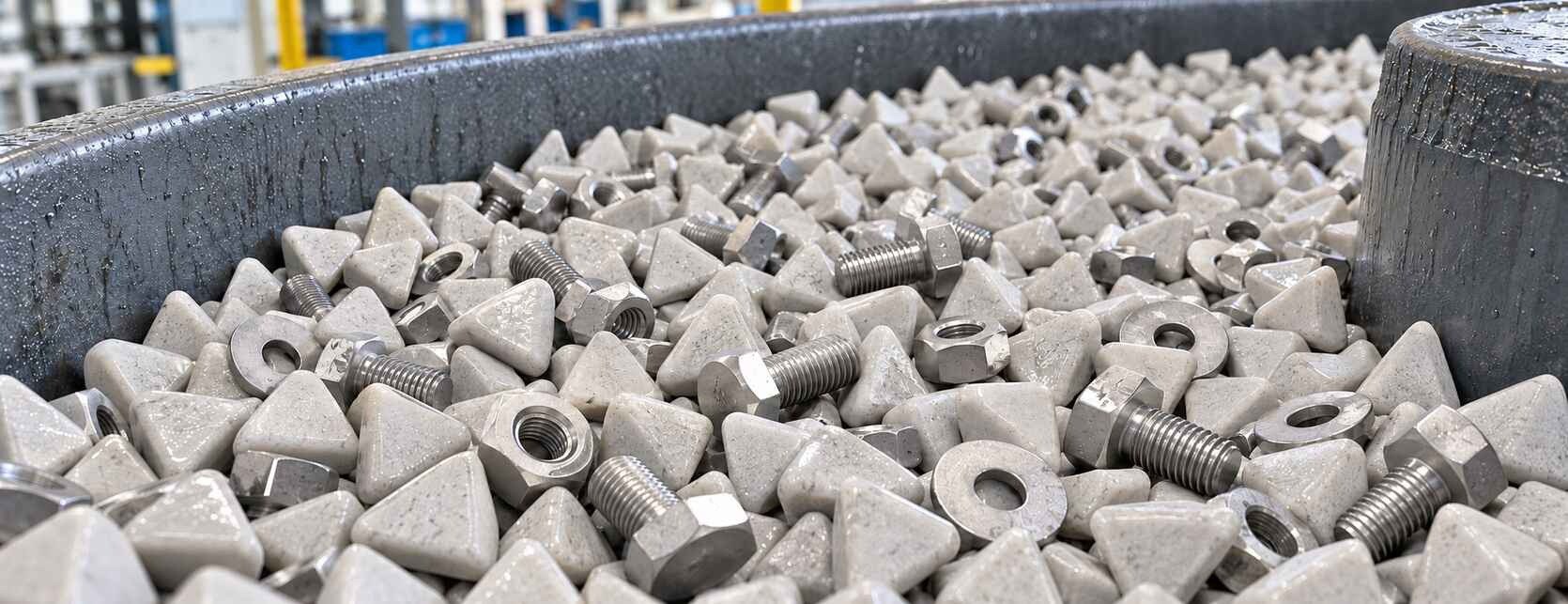
In a rotating barrel, rotation of the container causes the mixture of workpieces and media, known as the charge, to slide, creating the contact and rubbing action that allows the abrasive media to remove material. The same principle of relative motion underlies vibratory finishing, in which the charge is moved by vibrations of the processing bowl. The action is particularly pronounced on burrs and edges, while flat surfaces may be processed less intensively. Specially shaped abrasive media can be used to reach fillets and internal passages in components with complex geometries.
In metal sandblasting, the action is produced by projecting abrasive particles; in tumbling, it results from movement of the charge within the container.
In wet processing cycles, mechanical action is combined with water and process compounds that aid cleaning and the removal of residues. Depending on their formulation, the compounds can also degrease the parts and provide temporary protection against corrosion during processing. Once processing is complete, the components are separated from the media, rinsed and dried. For certain polishing operations, dry processing cycles can also be used, with specialized granules and polishing compounds.
Abrasive media and parameters that determine the finish
Abrasive media used in tumbling include those with a ceramic binder and those with a resin binder. The binder is the material that holds the abrasive particles together and gives the media their shape.
Ceramic formulations offer a range of material removal capabilities for steel and other materials. Resin-bonded media, which generally have a lower density, are often selected for gentle processing of aluminum and brass. The choice therefore depends on the specific formulation, the component material and the initial burr size. Non-abrasive steel media can also be used for burnishing stages, smoothing the surface through pressure.
During use, media wear must also be monitored: as the media gradually become smaller, they can lodge in holes, slots and threads. Media that have worn down to sizes that pose this risk must therefore be removed from the charge.
When processing flat components such as flat washers, parts must also be prevented from sticking together, as this can shield some surfaces from the abrasive action.
The behavior of the charge also depends on the media-to-workpiece volume ratio: an appropriate quantity of media helps cushion contact between the parts, limiting impacts and dents. Cycle time and movement intensity must also be controlled, since overly aggressive conditions can increase component damage and wear of the abrasive media without delivering a useful reduction in processing time.
The cycle may include successive stages using different media, selected according to the initial condition of the workpiece and the final requirements for surface roughness and gloss.
Checking geometry and preparing for coatings
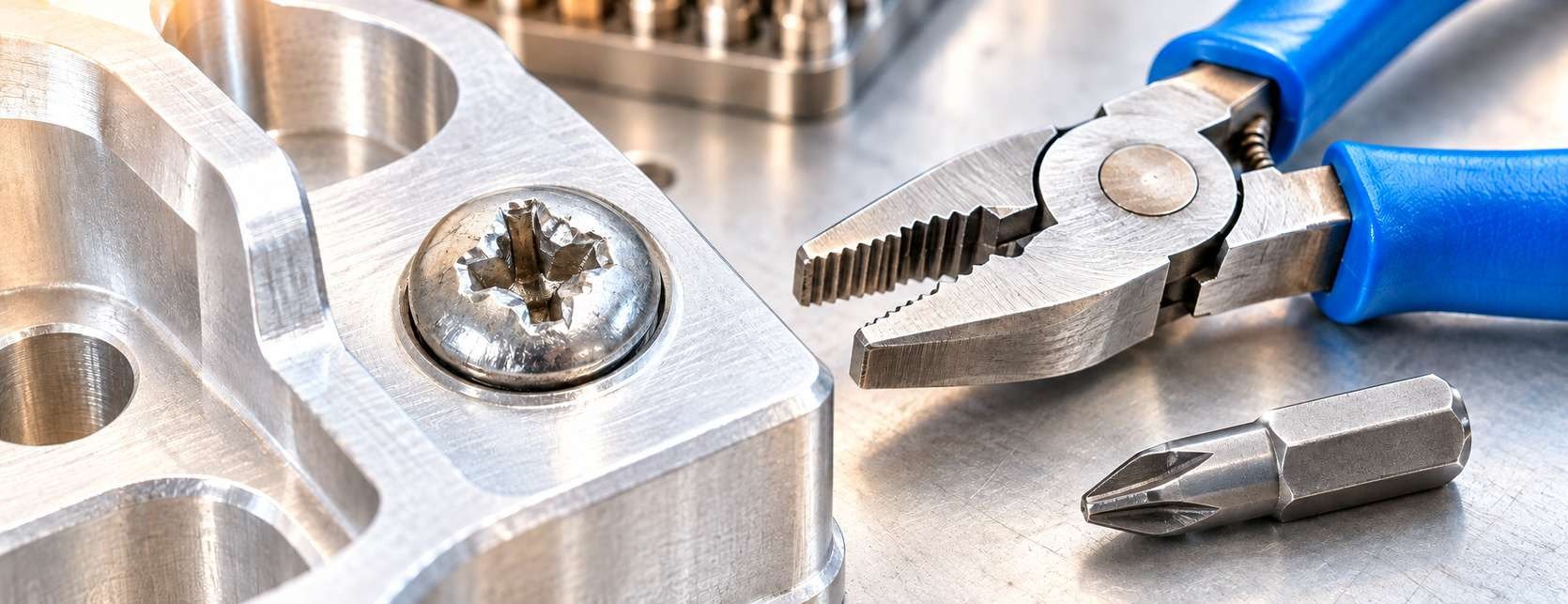
Inspection of tumbled metal parts must focus on the dimensions and surfaces that determine correct assembly. For screws and nuts, this means checking thread profiles, drive recesses and bearing surfaces; for parallel pins, the diameter must remain within the tolerance specified for the fit.
The condition of the edges also needs to be assessed: removing a burr and producing a specified edge radius are distinct objectives, and the amount of material removed must be evaluated against the specified dimensional limits.
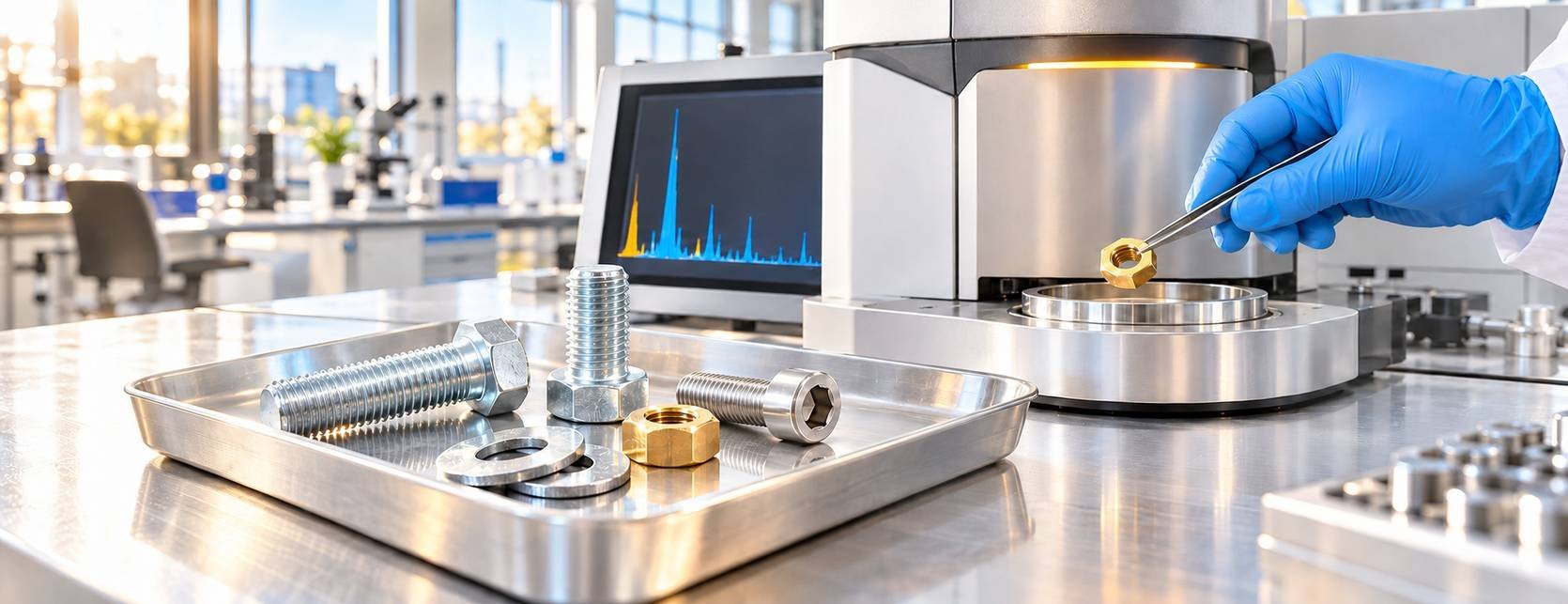
Trials on representative samples allow the result to be assessed before the production process is finalized. The comparison between initial and final conditions must cover residual burrs, edge radii, surface roughness and critical dimensions, together with checks that no media remain trapped in the components. These results allow processing parameters and acceptance criteria to be defined in accordance with the drawing and intended application.
When a coating is specified, cleanliness, surface roughness and residues must be assessed against the requirements of the subsequent process. Tumbling can contribute to mechanical surface preparation, while any additional corrosion protection, provided, for example, by galvanizing, must be selected according to the material and the service environment.
Metal sandblasting applied to small metal components: surface preparation, process control and its role in coatings for screws, bolts and threaded parts....
Technical guide to choosing anchors and bolts for air conditioner installation: substrate, bracket, anchoring, vibration, corrosion and proper tightening....
Drywall anchors: types, load capacity, selection criteria and correct installation to identify the most suitable fixing solution for every application....
Industrial automation is now a key factor in improving efficiency, quality, and control in manufacturing processes. By integrating machines, software, and data, companies can make their production more reliable, flexible, and competitive....
Threaded stud bolts are fasteners widely used in industry when it is necessary to ensure strong, reliable and above all time-demountable connections. Unlike traditional screws, they have a specific configuration that makes them particularly suitable ...
Carburizing is a thermochemical treatment that significantly improves steel performance by increasing surface hardness without compromising internal toughness. It is a fundamental solution for components subject to wear, friction and dynamic loads....
 Added to quote