Anchors are supports designed to allow greater adherence of the screw inside the wall. It is, therefore, a wall fixing system that adapts well to every need thanks to the different types of products available on the market.
Among these, a particular type is represented by chemical anchors, which are chemical fixings used together with a special resin through which the metal thread is bonded to the wall. But how are chemical anchors used? What are the types of chemical anchors? And how do they differ from mechanical anchors?
What Are Chemical Anchors For and How Are They Installed?
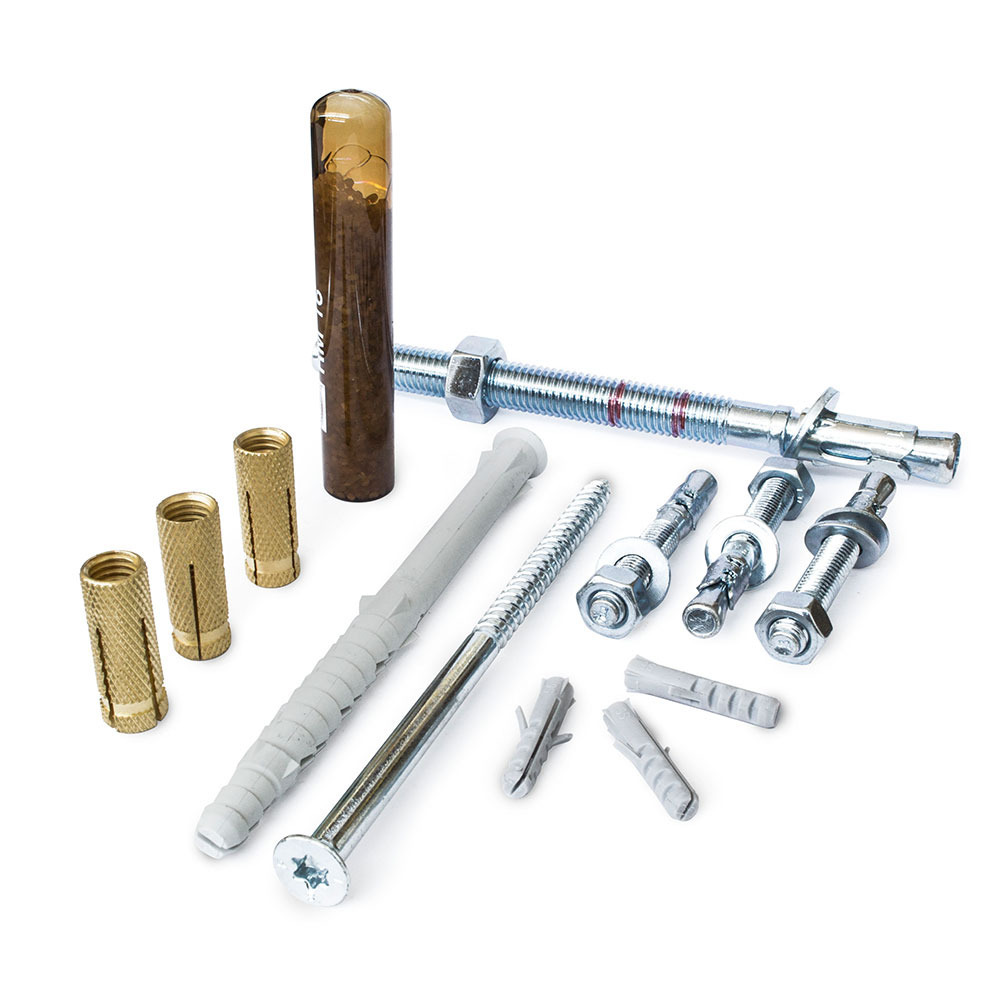
The chemical anchor, also known as a chemical fixing, is a specific type of element used in situations where the support could be damaged due to the pressure exerted. Indeed, unlike the classic mechanical anchor used for friction or interlocking, the chemical anchor is fixed to the masonry through special rigid glues.
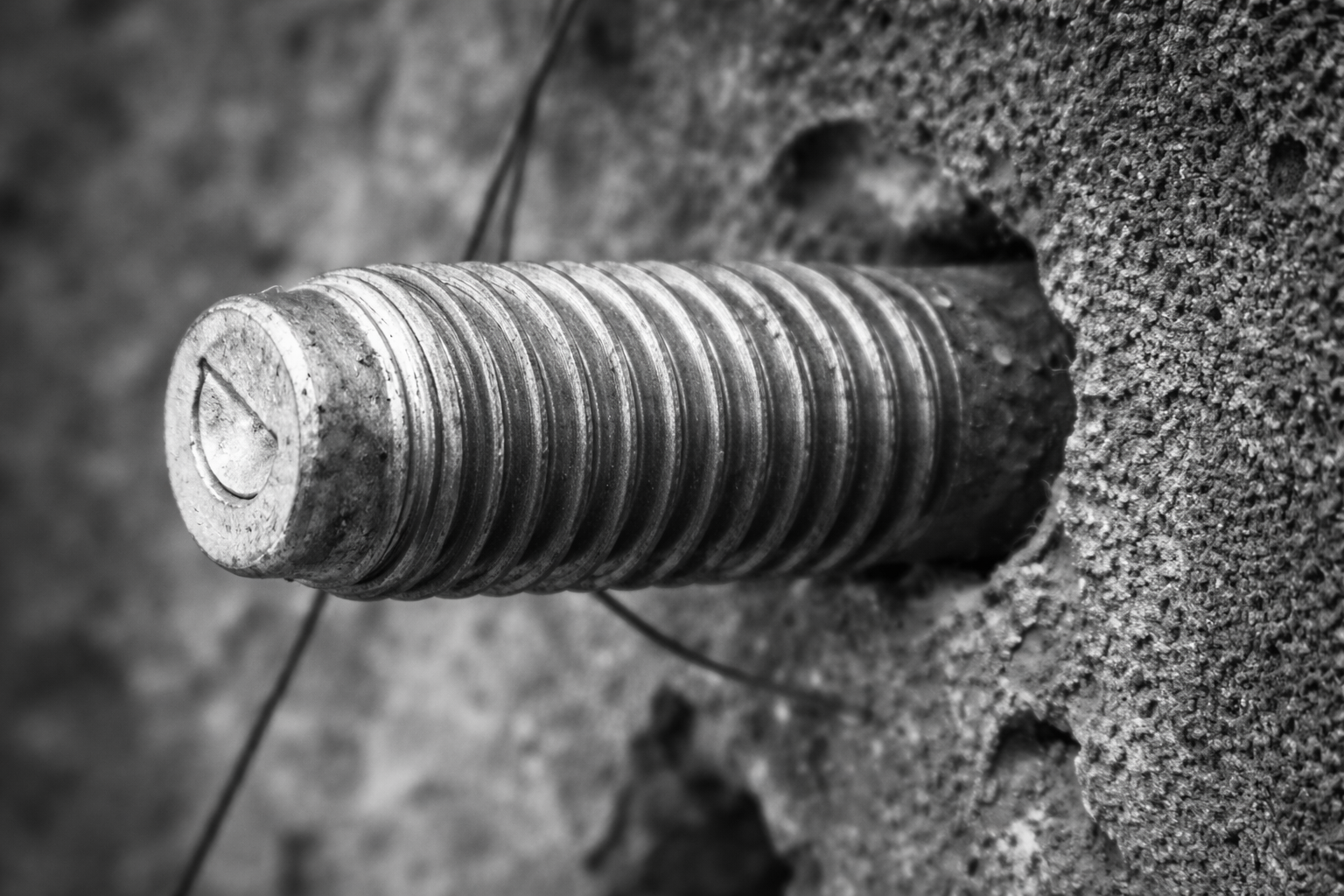
Through the application of the resin for anchors, the wall into which the metal bar is inserted does not crumble or disintegrate. The chemical anchoring technique involves injecting the resin into the hole before inserting the bar so that, after the resin hardens, all irregularities are covered and the hold of the hole is stronger.
The hardening speed can vary from 3 minutes to a maximum of 5/6 hours based on:
Ambient temperature;
Humidity or presence of water in the hole. Beyond the method of application, chemical anchors differ from mechanical ones also by the unlimited depth of insertion.
In general, the choice to use a chemical anchor over a mechanical one depends on:
The type of material to work on
Environmental conditions
The intensity of the load to be supported.
Different Anchors for Different Uses
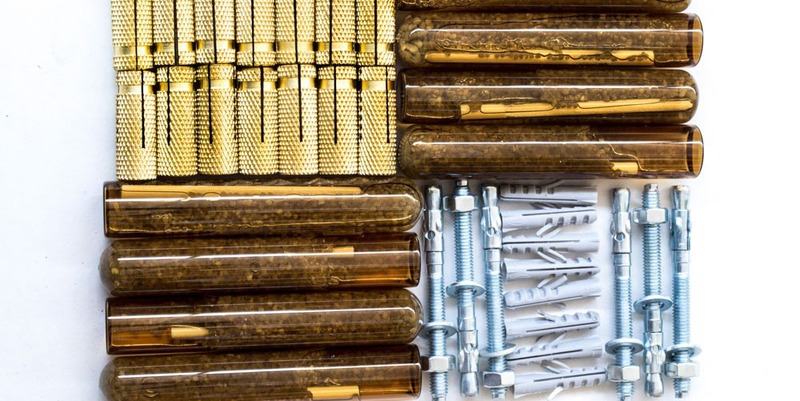
The main types of chemical anchor are injection or contained in capsules. Among injection chemical anchors, the most widespread and used are the bi-component resins, available in 3 types:
Chemical anchors for porous materials and polyester resins, generally applied on damp concrete to avoid the occurrence of alkaline hydrolysis, which could compromise their resistance over time. They are mainly used for: installing frames, thermohydraulic works, light carpentry, and applications on hollow bricks.
Chemical anchors and vinyl ester resins, characterized by greater mechanical resistance and resistance to alkaline hydrolysis, are the ideal article for high-resistance fixings in the building, construction, heavy carpentry, and road works sectors.
Chemical anchors and epoxy resins, this last category of products has greater resistance than the previous two, but requires up to 10 times longer for hardening and fixing. They are used for anchoring reinforcing bars and for fixing in deep holes.
Injection chemical anchors are packaged in rigid or soft cartridges that contain the base resin and the hardener. At the time of installation, resin and hardener are mixed in already fixed proportions.
Chemical anchors in capsules are available on the market in glass or soft material envelopes. The capsule contains the resin, a container for the hardener, and any inert fillers.
How Much Weight Can a Chemical Anchor Hold?
Asking about the capacity of an anchor means considering the right choice to make. The weight to be supported, along with the surface it will be applied to, is one of the factors on which the choice depends.
In general, the larger the diameter of the anchor, the greater the weight it can support (for example, a 6mm anchor can support up to 14 kg while a 10mm anchor up to 30kg). The evaluation of the right element is also linked to the material in which to insert it. From wood, concrete to steel and iron structures, the market is able to offer different types and sizes of anchors for every need.
For further information on chemical anchors, subscribe to our newsletter.
Industrial automation is now a key factor in improving efficiency, quality, and control in manufacturing processes. By integrating machines, software, and data, companies can make their production more reliable, flexible, and competitive....
Threaded stud bolts are fasteners widely used in industry when it is necessary to ensure strong, reliable and above all time-demountable connections. Unlike traditional screws, they have a specific configuration that makes them particularly suitable ...
Carburizing is a thermochemical treatment that significantly improves steel performance by increasing surface hardness without compromising internal toughness. It is a fundamental solution for components subject to wear, friction and dynamic loads....
Surface treatments of steel are essential to ensure corrosion resistance, durability and reliable performance. Understanding which ones to choose and when to apply them helps you avoid problems, reduce costs, and improve component efficiency....
In the metal fabrication and construction industries, structural connection and reinforcement systems play a fundamental role in ensuring long-term stability and safety. Among these, steel tension rods are a widely used technical solution for absorbi...
The metalworking sector is one of the pillars of modern industry. But what does it actually encompass? What are its categories, and what jobs fall under it? In this article, we provide a clear and comprehensive analysis of one of the most strategic s...
Behind every product that reaches the market lies a complex network of suppliers, production processes, logistics, and distribution. Supply Chain Management was developed precisely to efficiently coordinate all these activities, transforming supply c...
Heat treatment of steel is one of the most important processes for obtaining reliable, resistant metal components suitable for industrial applications. From normalizing to tempering, these processes modify the structure of the material and determine ...
The seven principles of quality form the basis of ISO management systems and, in particular, the ISO 9001 standard. Understanding them means understanding how organizations can improve processes, decisions, and relationships to ensure quality and lon...
The Machinery Directive 2006/42/EC is one of the pillars of European industrial safety and defines the essential requirements that a machine must comply with to be placed on the Union market. It is not a simple formal fulfillment, but a system of res...
 Added to quote