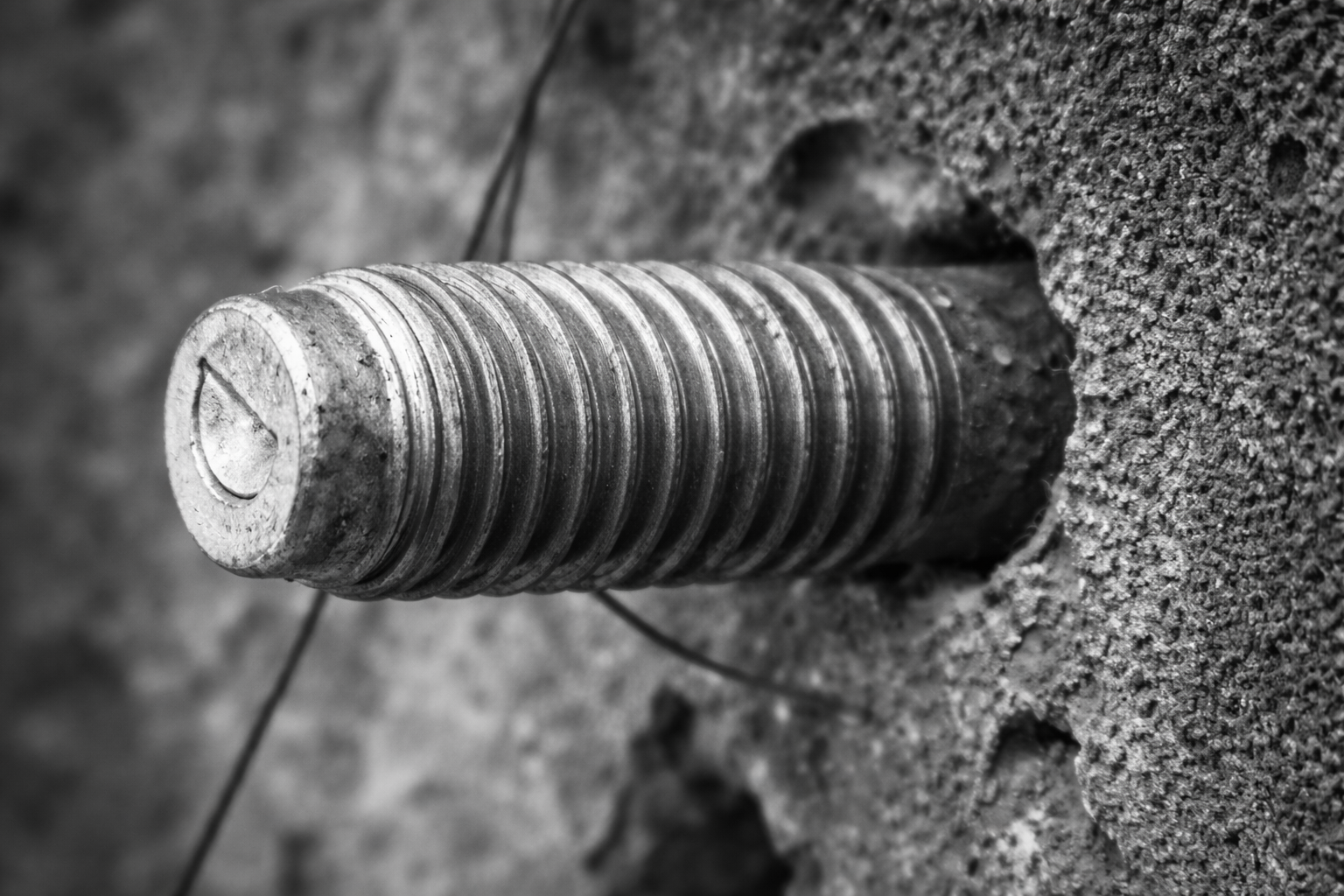
Galvanic currents: how to prevent fastener corrosion
In joints between dissimilar metals, galvanic currents can accelerate corrosion of the fastener, any metallic coating it may have, or the material into which it is installed.
Prevention requires a combined assessment of electrochemical compatibility, environmental exposure and assembly geometry. The corrosion resistance of an individual screw is not, in itself, sufficient to ensure the durability of a joint exposed to galvanic currents.
The electrochemical mechanism in metal joints
Galvanic attack occurs when two metallic materials with different electrochemical potentials are electrically connected and exposed to a common electrolyte. This is a liquid that conducts current through dissolved ions: even a thin film of condensation or water containing salts can act as an electrolyte.
Under these conditions, a galvanic couple forms. The less noble material acts as the anode and undergoes accelerated dissolution compared with exposure to the same environment without galvanic coupling, while the more noble material forms the cathode. Electrical continuity may result from direct contact or be provided by screws, nuts and other metal components in the assembly.
The severity of the process depends on the conductivity of the electrolyte, the duration of wetting and the condition of the surfaces. Salt deposits can retain moisture and make the exposure more aggressive.
The galvanic series provides a reference for comparing the electrochemical behaviour of materials in a specific environment. Its interpretation must also take account of surface conditions, including the passive film that protects stainless steel. Galvanic attack must also be distinguished from crevice corrosion, which can develop in areas where moisture stagnates, even without coupling between dissimilar metals.
Material compatibility and surface area ratio
Assessment of the risk associated with galvanic currents must include the ratio between the cathodic and anodic surface areas actually exposed to the electrolyte. All other conditions being equal, a small anode connected to a large cathode experiences a higher anodic current density, resulting in more severe attack.
This is the case when a carbon steel bolt is used on a stainless steel component with a much larger surface area. If the fastener is zinc-coated, galvanic coupling can accelerate consumption of the zinc. Once this protection has been depleted, the underlying steel can also be attacked.
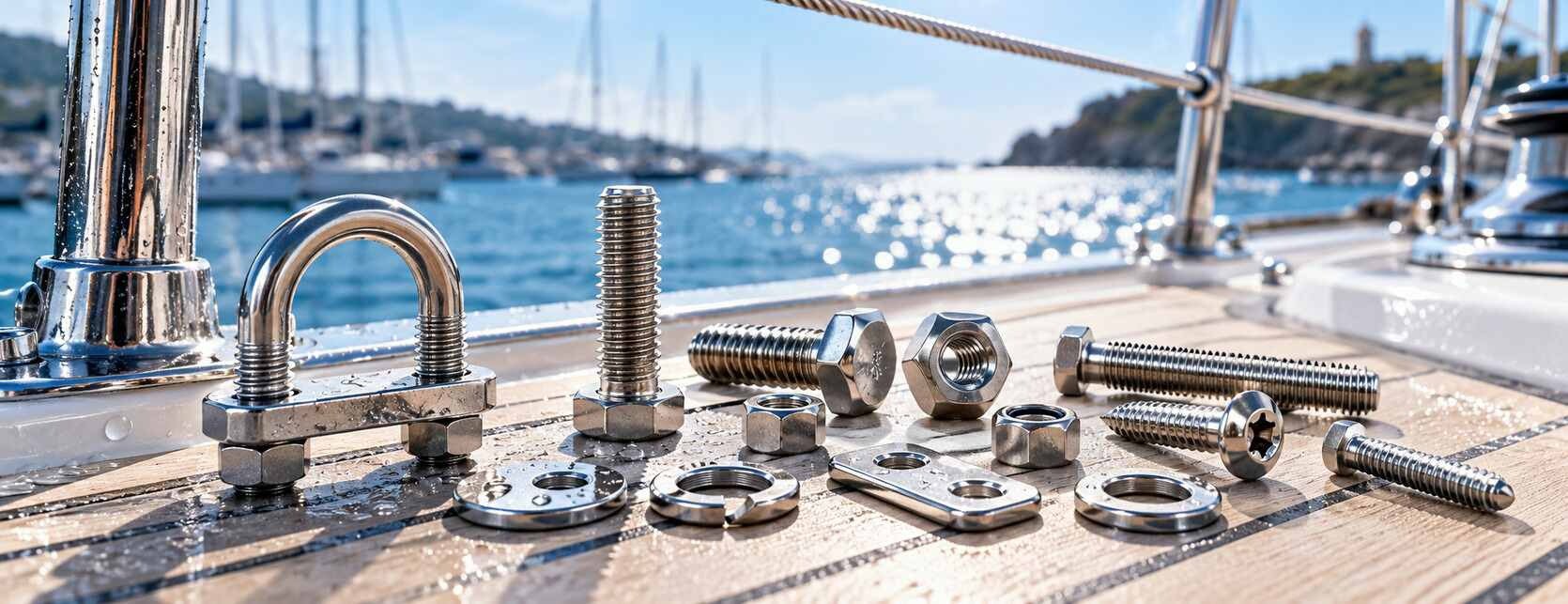
A stainless steel screw installed in a much larger component made from a less noble material generally presents more favourable conditions. However, this surface area ratio does not rule out localised corrosion of the substrate: in the aluminium components of marine accessories, exposure to a saline environment can promote attack concentrated around the fastener. The ratio between the surface areas actually wetted can also vary during wetting and drying cycles, so the overall dimensions of the components are not sufficient to characterise the risk.
The choice between A2 and A4 stainless steel must also distinguish the fastener’s resistance to its environment from its compatibility with other metals. A4’s better performance in the presence of chlorides does not eliminate the possibility of galvanic attack on the coupled material.
Insulation and protection against galvanic currents
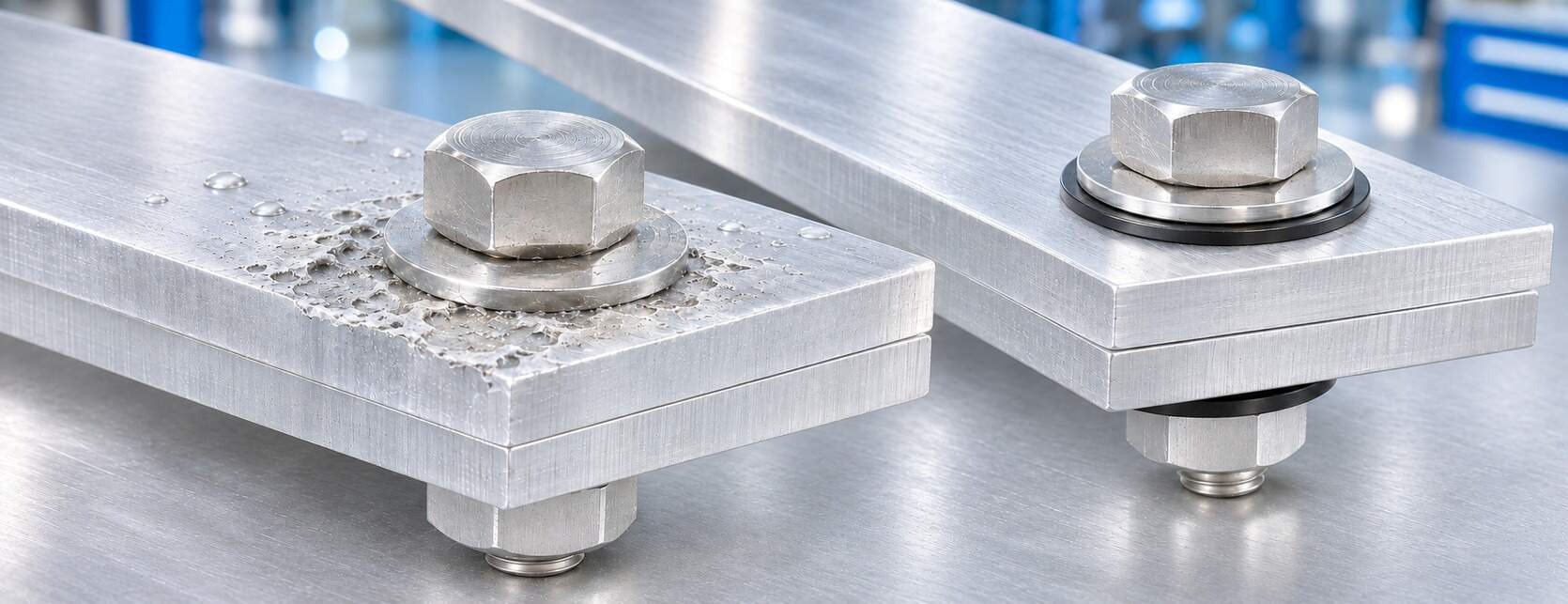
Using electrical insulation to counteract galvanic currents requires all conductive paths to be interrupted between the coupled materials. Insulating washers, sleeves around the shank and interposed gaskets must maintain separation throughout the joint. The assessment must also cover possible contact through the hole, the thread and other metal components, which could compromise the effectiveness of the insulation.
Flat washers are also available in plastic, but their suitability as insulating components must be assessed against the material properties and operating conditions. Under compression, polymers can deform progressively, reducing the preload, namely the force that keeps the parts clamped together. Selection must therefore consider both electrical performance and mechanical behaviour at the expected pressure and temperature.
Non-conductive organic coatings form a barrier between the metal and the electrolyte. Protecting only the anodic material can, however, promote localised attack at scratches or coating defects: the exposed area acts as a small anode connected to a large cathode. The protective system must therefore be assessed on both materials or on the cathodic side, with the extent of coating coverage determined by the exposure conditions.
The joint geometry must prevent water from becoming trapped under the screw head, around the hole or between mating surfaces. In these locations, persistent moisture and the accumulation of salt deposits can sustain conditions favourable to corrosion. Any seals must prevent water ingress; where infiltration cannot be ruled out, drainage paths must be provided to allow the water to escape.
Inspections must therefore focus on areas where infiltration and standing water may occur, assessing both the fastener and the substrate: a seemingly intact screw can conceal material loss around the hole or on the contact surfaces.
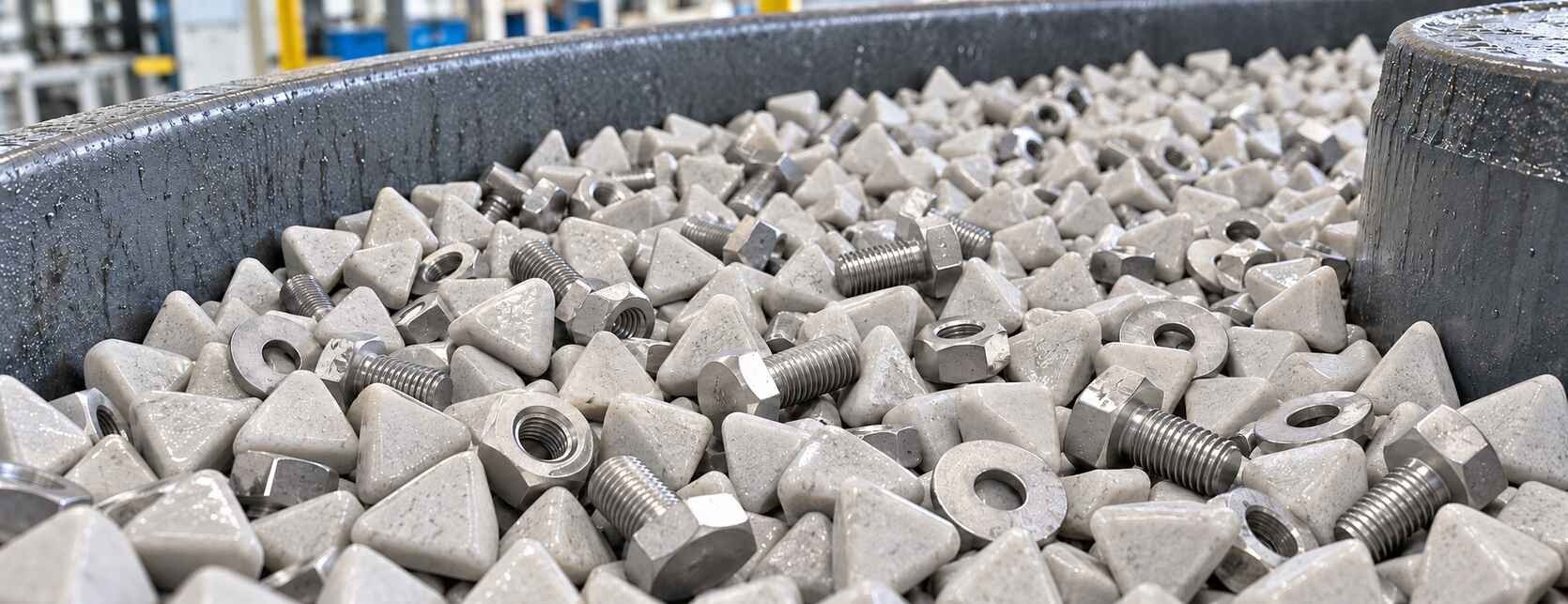
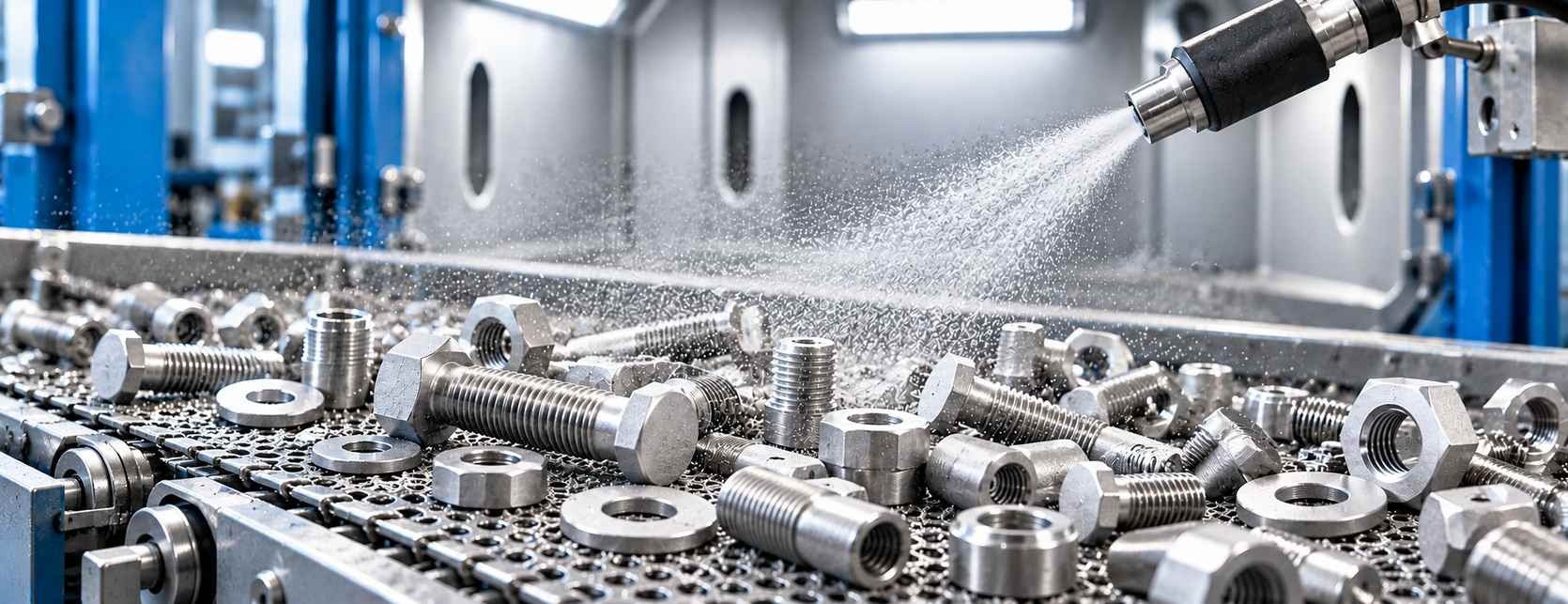
Tumbling of small metal parts: abrasives, process parameters and checks to remove burrs, finish surfaces and maintain geometry and dimensional tolerances....
Metal sandblasting applied to small metal components: surface preparation, process control and its role in coatings for screws, bolts and threaded parts....
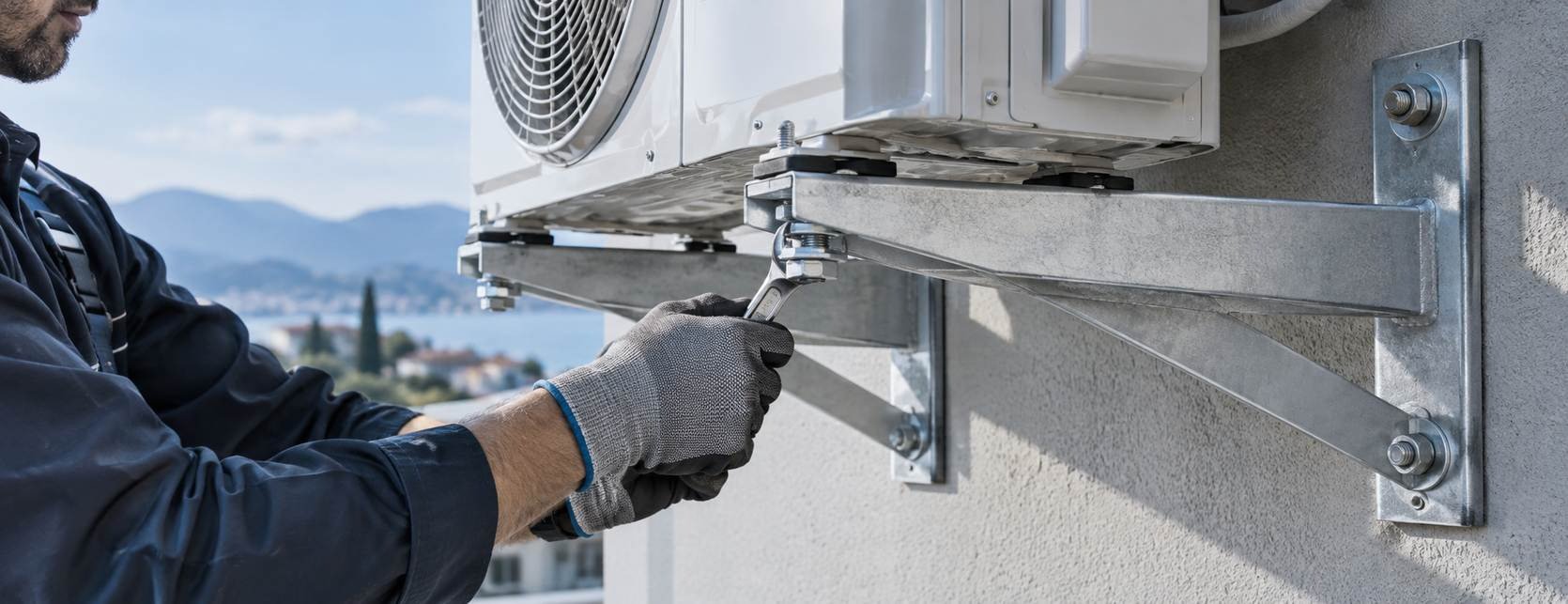
Technical guide to choosing anchors and bolts for air conditioner installation: substrate, bracket, anchoring, vibration, corrosion and proper tightening....
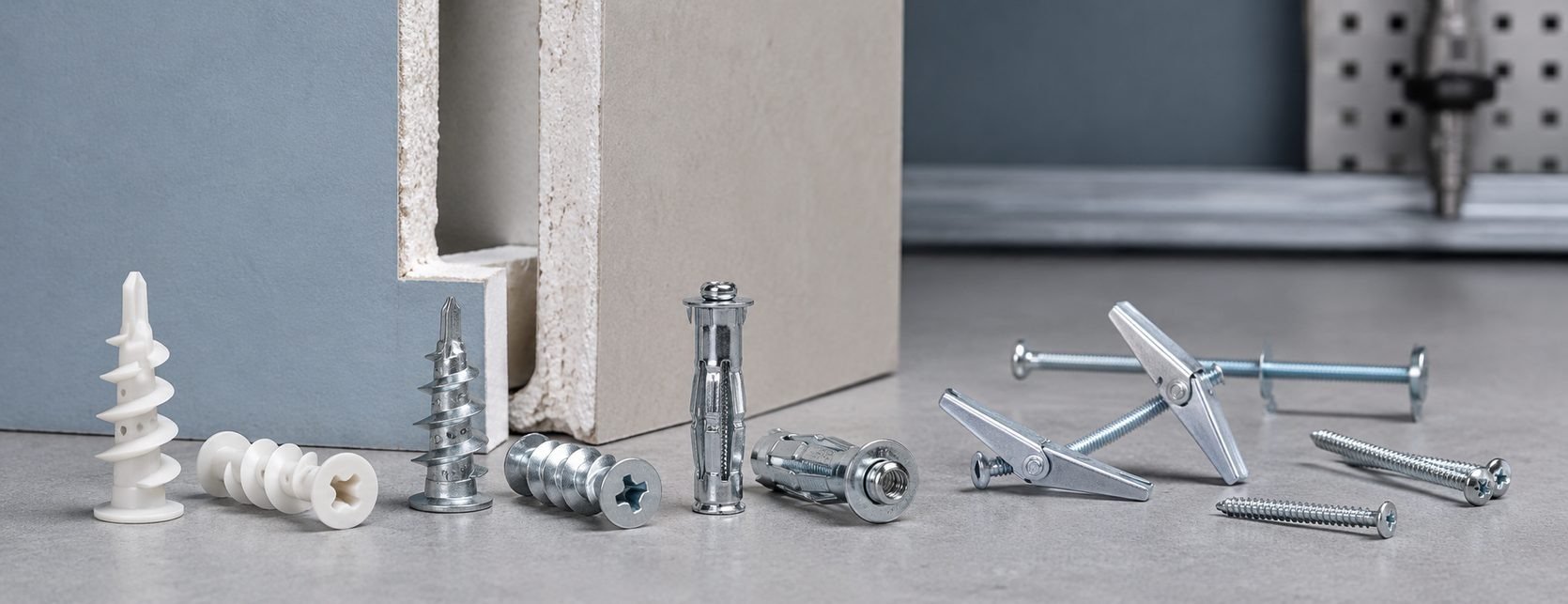
Drywall anchors: types, load capacity, selection criteria and correct installation to identify the most suitable fixing solution for every application....
Industrial automation is now a key factor in improving efficiency, quality, and control in manufacturing processes. By integrating machines, software, and data, companies can make their production more reliable, flexible, and competitive....
Threaded stud bolts are fasteners widely used in industry when it is necessary to ensure strong, reliable and above all time-demountable connections. Unlike traditional screws, they have a specific configuration that makes them particularly suitable ...
 Added to quote