Mechanical Anchors: How to Choose the Right Anchor
Among the most purchased and used elements in sectors such as construction and related fields, anchors are supports designed to ensure the fastening of an element. Anchors can be described as joining elements that allow for the fastening of the parts to be joined. These can be found on the market in various materials (e.g., steel, nylon, rubber, etc.) and can be used through various techniques (e.g., hammering, screwing, etc.).
Given their wide distribution and extensive use, it's crucial to know how to choose the right anchor depending on the wall or material you're working with. In this article, we will outline all the features of these elements, and in particular, in the third paragraph, we will talk about mechanical anchors and how they work.
Different types of anchors for different uses
As mentioned above, the wide offer of anchors on the market requires good knowledge of them in order to choose the right ones suitable for one's work. In general, three main elements must be kept in mind:
The material in which to insert the anchor (whether solid or hollow);
The maximum weight that the anchor can support;
The diameter of the hole in which the anchor is to be inserted.
The large family of anchors can be divided into two specific macro areas:
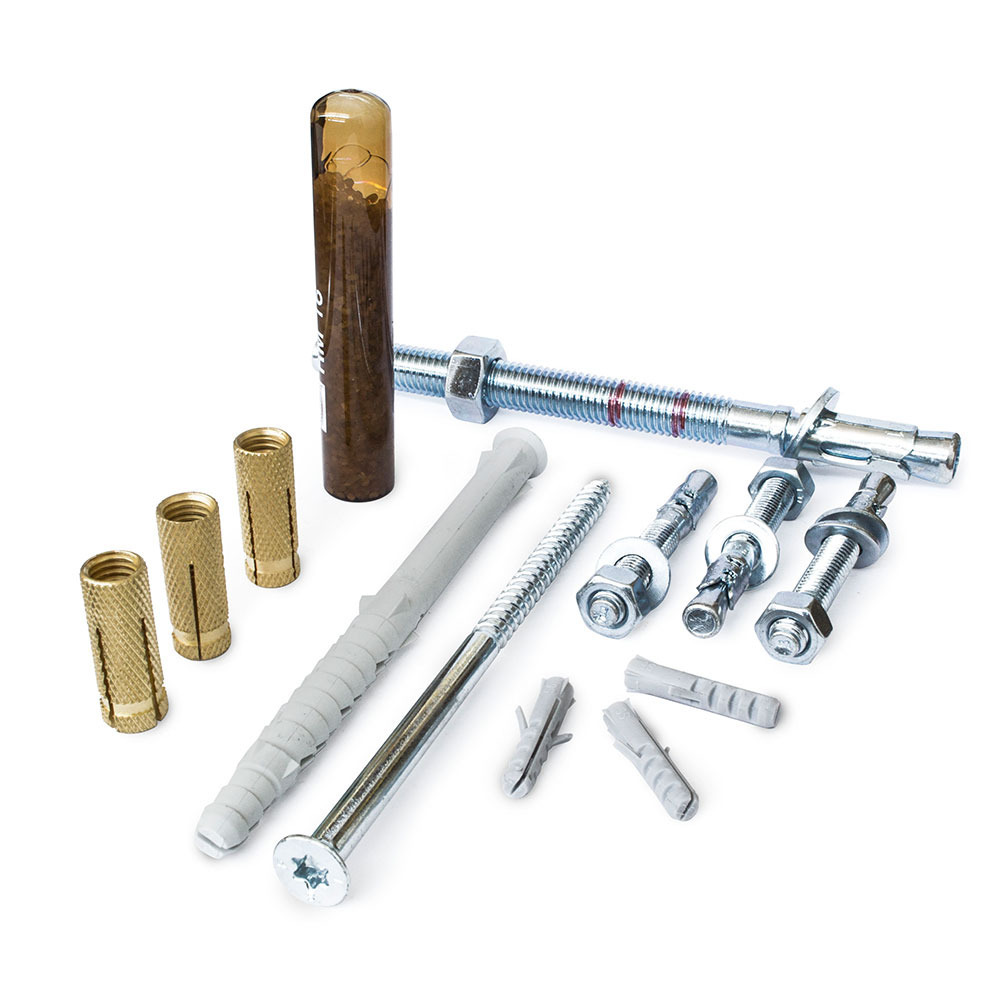
Anchors for solid materials, which include: - Expansion anchor bolts in metal - Strike anchors - Bolt anchors
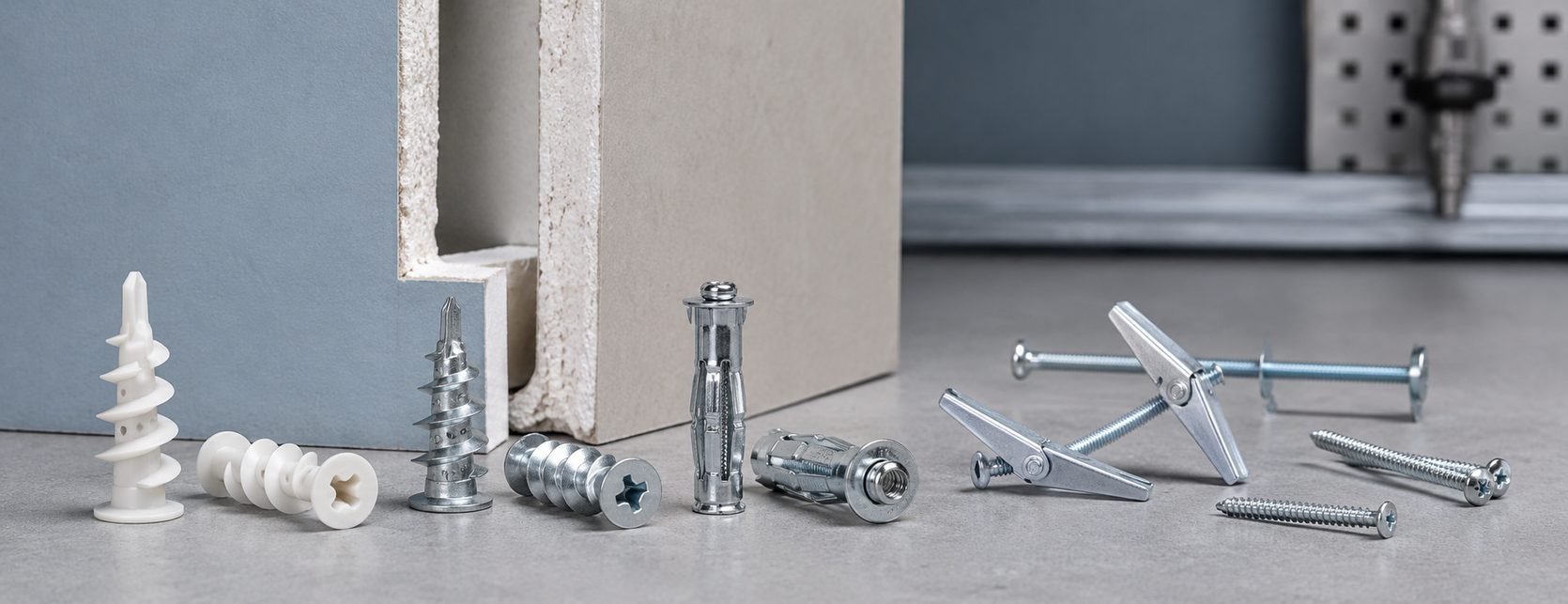
Anchors for hollow walls, which include: - Deformation anchors - Self-drilling anchors - Toggle anchors
The most common types of anchors, easy to use and fasten, are the following:
The weight to be supported is definitely a fundamental factor in choosing the right anchor. The criteria related to weight are indeed the length (which is established based on the thickness of the support) and the diameter. In detail, the choice could be based on the following guidelines:
Weight < 20 kg = diameter between 4-5 millimeters;
Weight between 20-50 kg = diameter between 6-8 millimeters;
Weight > 50 kg = diameter greater than 10 millimeters (these are the so-called anchors for heavy loads, hence, mechanical anchors).
Note: The indications just mentioned can be taken as general guidelines. Indeed, such values can vary in reference to various basic factors such as, for example, the product, the supplier, and the final use.
Mechanical anchors for heavy loads
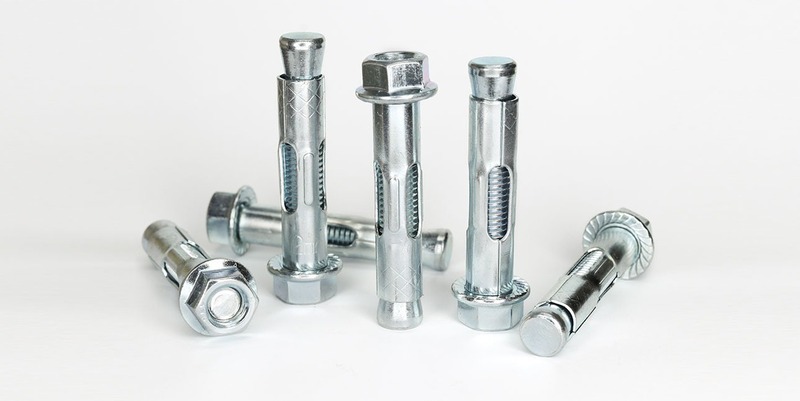
When we talk about mechanical anchors for heavy loads, we refer to mechanical fixings, i.e., fixing systems that transmit to the support the stresses resulting from the application of the load. What does this mean? Such elements work by the effect of the expansion that the anchor itself transfers by friction to the support material.
The effect of the expansion can occur in different ways:
By screwing the screw inside the expansion body, a geometric coupling of shape with the walls of the hole made in the support material occurs (the hole must be of the right size).
By hammering with a specific tool.
A mechanical anchor for heavy loads finds wide use in various sectors and processes. Below we report some examples of application of anchors for heavy fixings:
Structural fixings
Fixings in seismic zones or with a non-negligible seismic risk
Fixings for fire escape stairs
Fixings of parapets, railings, and balustrades
Fixings of wooden beams
Wood fixings on concrete
Fixing of canopies
Fixing of shelves or brackets
Fixing of gates
A mechanical anchor is therefore an element that allows fastening by friction or interlocking.
As specified in the previous paragraph, the weight to be supported is linked to the diameter and length, criteria to be used to make the right choice.
Chemical or Mechanical Anchor?
When the wall's holding capacity does not allow for the fixing of the classic mechanical anchor, a valid alternative is the chemical anchor. This type of element allows for fixing to the wall through threaded rods that are fixed with special rigid glues.
Unlike mechanical anchors where fixing occurs by friction or interlocking, a mechanical anchorage involves the use of an adhesive inserted into the hole. This adhesive, which hardens in a very short time, practically locks the screw in place. The use of the chemical anchor is particularly recommended in cases where one does not want to compromise the integrity of the structure, thus avoiding cracks or splits. Indeed, by injecting the glue into the hole, this anchorage allows for the fixing of heavy loads even on more fragile walls. Among the advantages of such an anchor are its long duration, resistance to heat, and chemical substances.
If you're wondering which anchor, chemical or mechanical, is the best, the answer lies in the type of job to be performed. For example, if the characteristics of the support are critical or the object to be fixed is subject to a load that varies over time, then the chemical anchorage is safer because it glues to the wall and becomes one with the bricks. Conversely, if the fixing system does not require special attention, the plastic or steel anchor ensures the hold.
For further information or to request advice on how to choose the right mechanical anchor, subscribe to our newsletter.
Or, send a request to our commercial team by writing to the email: commerciale@univiti.it
Drywall anchors: types, load capacity, selection criteria and correct installation to identify the most suitable fixing solution for every application....
Industrial automation is now a key factor in improving efficiency, quality, and control in manufacturing processes. By integrating machines, software, and data, companies can make their production more reliable, flexible, and competitive....
Threaded stud bolts are fasteners widely used in industry when it is necessary to ensure strong, reliable and above all time-demountable connections. Unlike traditional screws, they have a specific configuration that makes them particularly suitable ...
Carburizing is a thermochemical treatment that significantly improves steel performance by increasing surface hardness without compromising internal toughness. It is a fundamental solution for components subject to wear, friction and dynamic loads....
Surface treatments of steel are essential to ensure corrosion resistance, durability and reliable performance. Understanding which ones to choose and when to apply them helps you avoid problems, reduce costs, and improve component efficiency....
In the metal fabrication and construction industries, structural connection and reinforcement systems play a fundamental role in ensuring long-term stability and safety. Among these, steel tension rods are a widely used technical solution for absorbi...
The metalworking sector is one of the pillars of modern industry. But what does it actually encompass? What are its categories, and what jobs fall under it? In this article, we provide a clear and comprehensive analysis of one of the most strategic s...
Behind every product that reaches the market lies a complex network of suppliers, production processes, logistics, and distribution. Supply Chain Management was developed precisely to efficiently coordinate all these activities, transforming supply c...
Heat treatment of steel is one of the most important processes for obtaining reliable, resistant metal components suitable for industrial applications. From normalizing to tempering, these processes modify the structure of the material and determine ...
 Added to quote