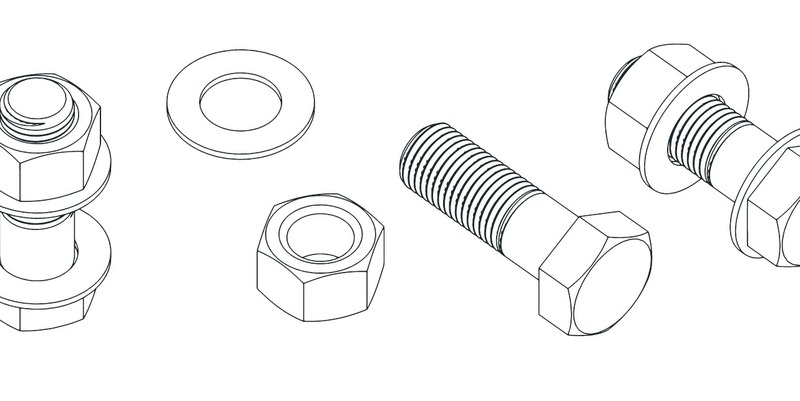
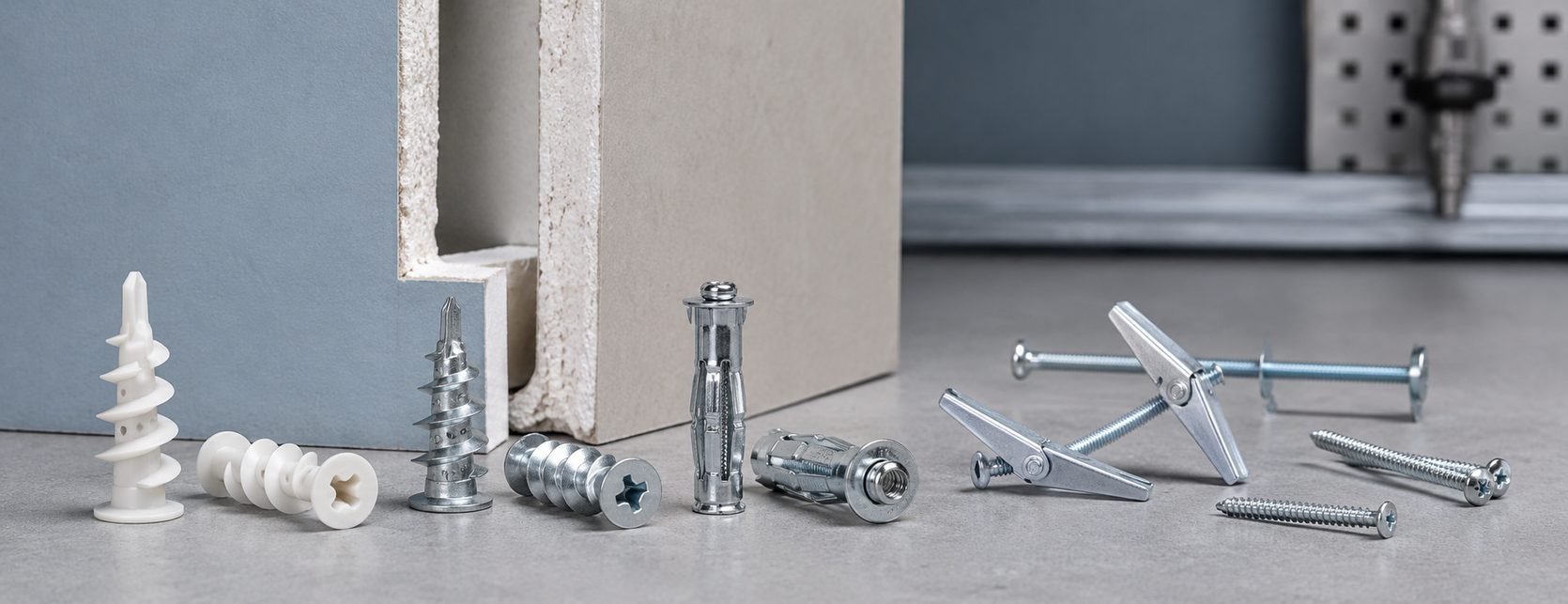
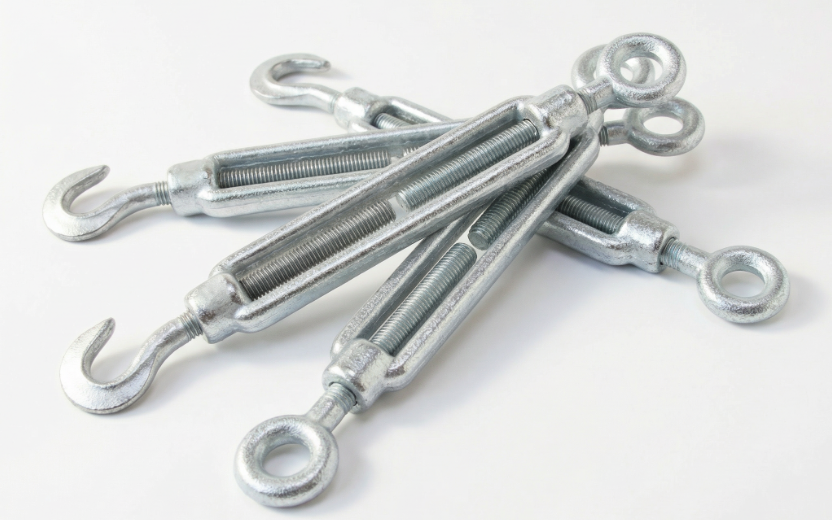
Designed and manufactured to fasten objects or parts of them together, screws are mechanical elements equipped with threading, mainly used in mechanics or construction. But how many types of screws are available on the market? And how do you choose the right one for your needs?
There are various types of screws available on the market, each with specific characteristics, depending on the support and final application. For this reason, we have compiled a complete guide that will be useful in navigating the varied world of screws and bolts.
How are screws classified? Let's discover the different sizes
A screw is a fastening tool that must be chosen based on each specific use. To make the correct choice, it is important to know all the characteristics that define this mechanical element, starting from the main ones:
Head, the end of the element on which the tightening force is applied. The head features the drive or socket that allows a screwdriver or driver to fasten. The head can be flat, countersunk, cylindrical, or domed. The drive, on the other hand, can be slotted, Phillips, Pozidriv, star, hexagon, and asymmetrical.
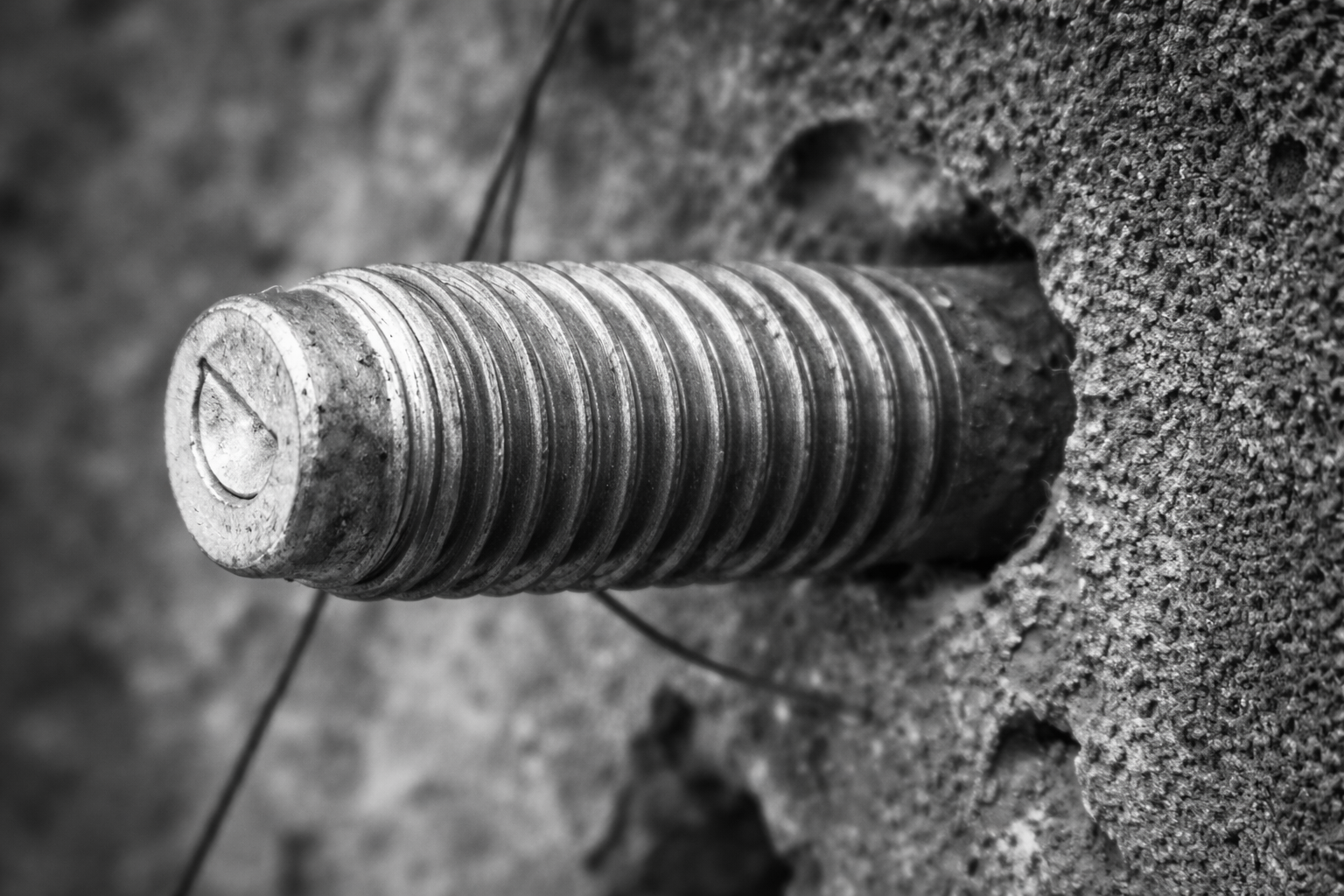
Shank, the cylindrical part of the screw that can be fully or partially threaded.
Point, the final tip. The point is used to directly bore into the material (e.g., wood) while the screw lacks it when coupled with a nut.
The most suitable choice of this mechanical element is linked to the material in which the screws will be inserted. It is indeed based on the final use that the size of the screws is chosen.
The method of measuring screws, and therefore the way to determine the exact length of the element, changes depending on the product to be measured. For example, for hex head screws, the length is measured from under the head. For flat countersunk self-tapping screws, the measurement of the length includes the head of the screw.
The dimensions of the screws can thus vary depending on the use. In general, the longer and larger the diameter of the screws, the greater the anchoring power. The method of measuring screws varies according to the unified profile in which it is produced:
ISO metric profile, measured in cm;
GAS profile, measured in inches;
Whitworth profile, measured in inches.
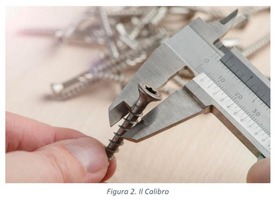
To facilitate the calculation of the correct size of screws, it is advisable to use a thread gauge. Thanks to the use of this measuring tool, it is easier to identify the type of profile and thread pitch.
Anyway, to choose the most suitable product for one's needs, it is always useful to evaluate the final use of the same.
How are bolts classified and how to understand their size?
Talking about a classification of screws means referring to the DIN, UNI, ISO regulations that identify each single standardized article and provide indications about all the lengths and variants available for each diameter. For example, the cylindrical head screw with recessed hexagon (DIN 912 UNI 5931 ISO 4762) in class 8.8, is available in 17 different lengths for diameter 3.
Since the product must adhere to certain mechanical characteristics according to regulations, it is important to underline that not all lengths are available for each diameter.
To know in detail the diameter measurement, and consequently the lengths available for that product, a calipercan be used. With this measuring tool, you can hold the screw with your fingertips or with tweezers. Then, bring the threaded part in contact with the jaws of the caliper. By rotating the micrometer knob until it clicks, you can then proceed with reading the instrument.
The dimensions of the bolts are varied as well, and in this case, too, depend on the final application, materials, shapes, etc. In general, the dimensions of the bolts are estimated from one end to the other of the element taking the total length. For example, a bolt marked M6x55 will have an outer diameter of the screw equal to 6 mm and a length of 55 mm.
How to choose the most suitable screw or bolt
The choice of a screw or a bolt should not be left to chance. By using the following evaluative criteria, it will be easier to find the most suitable element:
Screw head: based on the selected drive, it will be possible to apply more or less force in tightening;
Raw material: for example, stainless steel is advisable for outdoor work. In general, it is discouraged to choose low-quality products to avoid breaking them during use and damaging the support as well;
Treatment the screw has undergone: a fundamental criterion for defining the corrosion resistance of the element;
Levels of resistance: for correct use, it is advisable to choose screws and bolts that have the same resistance and pitch.
For further information on how to choose the right dimensions of screws and bolts, subscribe to our newsletter.
Metal sandblasting applied to small metal components: surface preparation, process control and its role in coatings for screws, bolts and threaded parts....
Technical guide to choosing anchors and bolts for air conditioner installation: substrate, bracket, anchoring, vibration, corrosion and proper tightening....
Drywall anchors: types, load capacity, selection criteria and correct installation to identify the most suitable fixing solution for every application....
Industrial automation is now a key factor in improving efficiency, quality, and control in manufacturing processes. By integrating machines, software, and data, companies can make their production more reliable, flexible, and competitive....
Threaded stud bolts are fasteners widely used in industry when it is necessary to ensure strong, reliable and above all time-demountable connections. Unlike traditional screws, they have a specific configuration that makes them particularly suitable ...
Carburizing is a thermochemical treatment that significantly improves steel performance by increasing surface hardness without compromising internal toughness. It is a fundamental solution for components subject to wear, friction and dynamic loads....
Surface treatments of steel are essential to ensure corrosion resistance, durability and reliable performance. Understanding which ones to choose and when to apply them helps you avoid problems, reduce costs, and improve component efficiency....
In the metal fabrication and construction industries, structural connection and reinforcement systems play a fundamental role in ensuring long-term stability and safety. Among these, steel tension rods are a widely used technical solution for absorbi...
The metalworking sector is one of the pillars of modern industry. But what does it actually encompass? What are its categories, and what jobs fall under it? In this article, we provide a clear and comprehensive analysis of one of the most strategic s...
Behind every product that reaches the market lies a complex network of suppliers, production processes, logistics, and distribution. Supply Chain Management was developed precisely to efficiently coordinate all these activities, transforming supply c...
 Added to quote