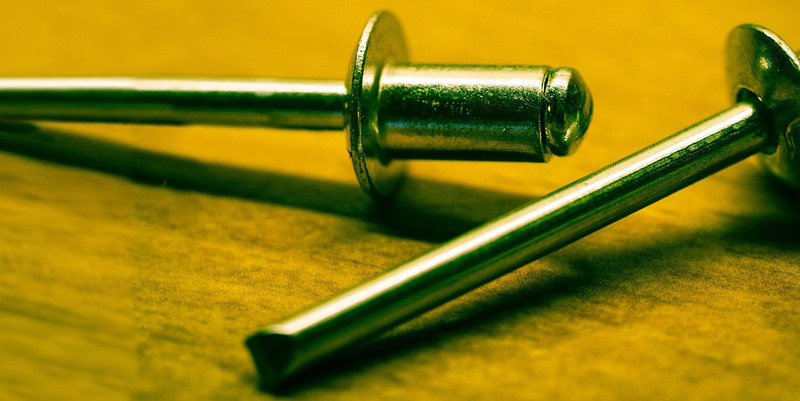
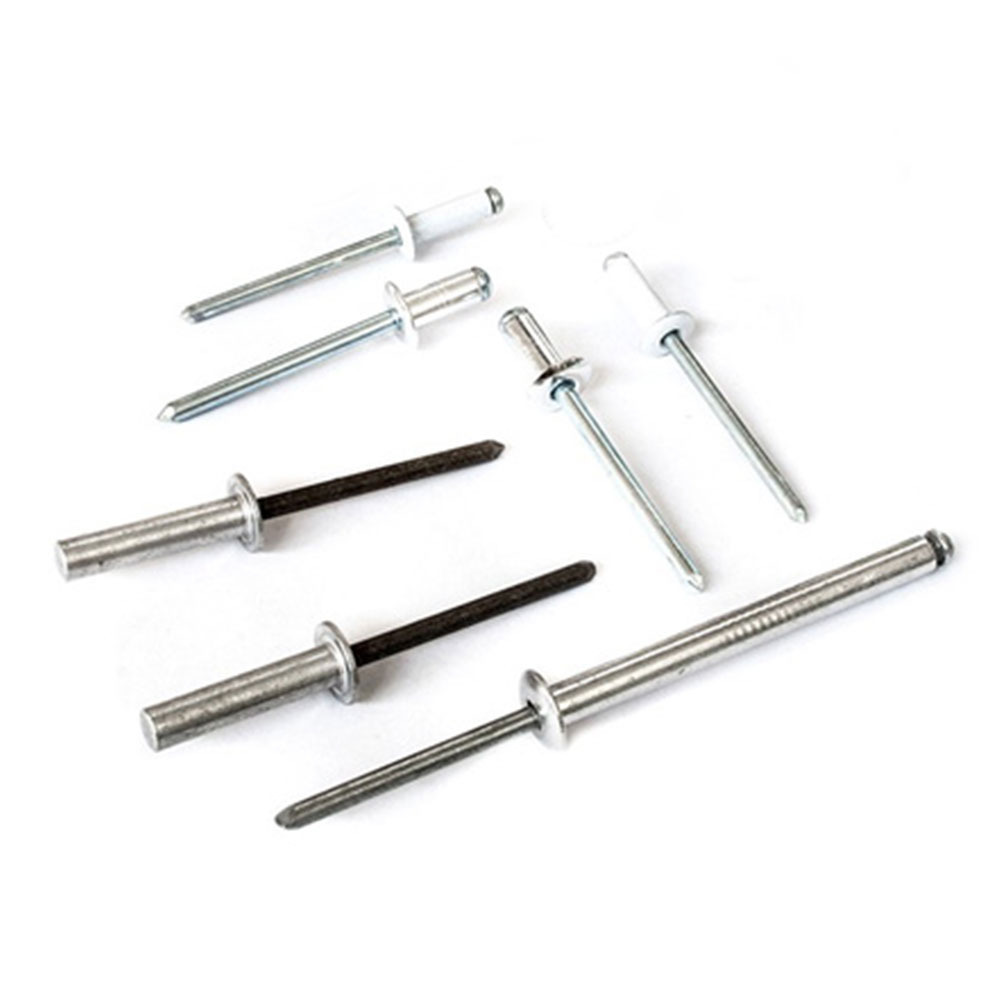
Rivets are non-detachable fastening elements used to join two components that otherwise could not be joined using other techniques like bolted joints, welding, or adhesives. These components are characterized by a head – available in various diameters and materials - and a shank – available in various lengths and materials.
The peculiarity of these elements lies in their application: once the rivet is inserted, the structures or surfaces are joined uniformly and homogeneously, achieving an airtight lock capable of supporting very heavy loads.
Over time, the rivet has found extensive use also thanks to the aesthetic and ornamental characteristics that the component can assume. In the following paragraphs, we will outline specifically what rivets are, how they are used, and how many types exist.
What Are Rivets Used For?
Rivets can be used as joining elements between sheets or components of different thicknesses.
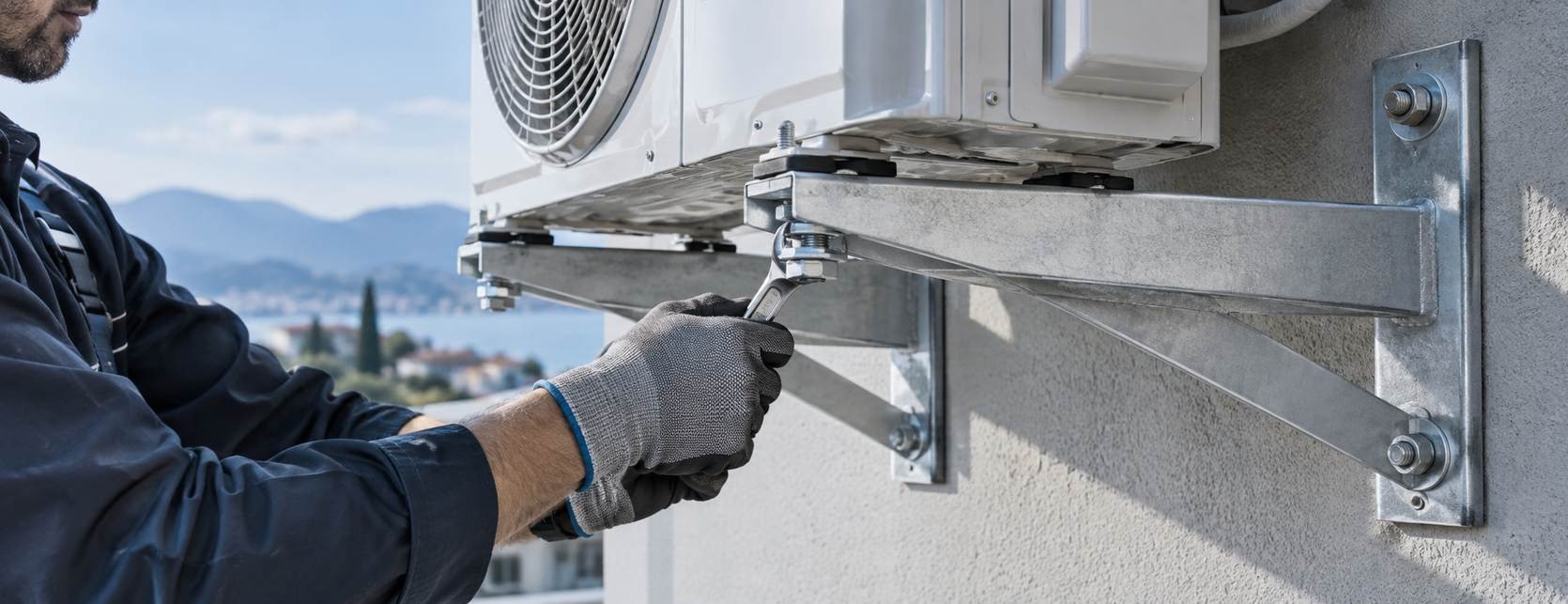
Also used in the world of fashion and leather goods as ornamental accessories, purely aesthetic rivets are distinguished from those for structural applications. The latter are joining elements that offer strong resistance to loads and, for this reason, are used in heavy carpentry, building, the railway industry, in the construction of agricultural machinery, and heavy transport vehicles. Some types, like those with stainless steel heads, particularly resistant to water, are also used in electrical installations and in appliances such as air conditioners.
Thus, it is a product that finds numerous uses and is also easy to apply. In fact, fixing a rivet occurs using a pneumatic or battery-powered riveting tool, a tool that guarantees rapid anchoring and long-lasting.
The vast range of areas where the element can be used corresponds to an equally vast variety of product types, of different shapes and sizes depending on the use.
How Many Types of Rivets Are There?
Based on the type of resistance and hardness they must respond to and the type of application, the main types of rivets are:
This fastening element is composed of two parts: the head and a cylindrical body.
Its application is quite simple. The first step involves simultaneously joining and drilling the surfaces to be fixed. The hole must have a calibrated diameter larger than the body of the rivet. Subsequently, the element will be inserted into the hole using a riveting tool that, with an opening and closing mechanism, will perform strong traction.
Special attention should be given to structural rivets, which we have already mentioned, elements that allow a joint resistant to tensile, compressive, and shear forces. This type of product is characterized by a very long head and a shank with grooves, similar to a screw. Their use is linked to the use of the riveting tool. This type of element is recommended when the structure and the joint itself will be subjected to strong stresses.
Another type of rivet is the break stem rivet. These are non-removable joints, generally applied on sheet metal, composed of a head and a nail. In this case, due to repeated movement, the head deforms and the shank breaks at a predetermined point. Work is therefore carried out on only one side of the surfaces to be joined so as to operate even in the presence of blind angles.
Finally, concerning the materials of rivets, they can be diverse and easily used on any surface or hole according to needs. It is therefore possible to find:
To choose the right fastening element, several parameters must be considered and, if necessary, consult with a trusted supplier. Among all, even the size of the rivet is a criterion to evaluate but how?
How to Choose the Size of Rivets?
Correct measurement of rivets is necessary to choose the right element suitable for your needs. A general rule suggests that the diameter of the rivet must be three times the thickness of the surface to which it will be applied. Even in this case, the advice is to rely on trusted suppliers and experts capable of indicating the suitable product.
For further information about the characteristics of rivets, subscribe to our newsletter.
Metal sandblasting applied to small metal components: surface preparation, process control and its role in coatings for screws, bolts and threaded parts....
Technical guide to choosing anchors and bolts for air conditioner installation: substrate, bracket, anchoring, vibration, corrosion and proper tightening....
Drywall anchors: types, load capacity, selection criteria and correct installation to identify the most suitable fixing solution for every application....
Industrial automation is now a key factor in improving efficiency, quality, and control in manufacturing processes. By integrating machines, software, and data, companies can make their production more reliable, flexible, and competitive....
Threaded stud bolts are fasteners widely used in industry when it is necessary to ensure strong, reliable and above all time-demountable connections. Unlike traditional screws, they have a specific configuration that makes them particularly suitable ...
Carburizing is a thermochemical treatment that significantly improves steel performance by increasing surface hardness without compromising internal toughness. It is a fundamental solution for components subject to wear, friction and dynamic loads....
Surface treatments of steel are essential to ensure corrosion resistance, durability and reliable performance. Understanding which ones to choose and when to apply them helps you avoid problems, reduce costs, and improve component efficiency....
In the metal fabrication and construction industries, structural connection and reinforcement systems play a fundamental role in ensuring long-term stability and safety. Among these, steel tension rods are a widely used technical solution for absorbi...
The metalworking sector is one of the pillars of modern industry. But what does it actually encompass? What are its categories, and what jobs fall under it? In this article, we provide a clear and comprehensive analysis of one of the most strategic s...
Behind every product that reaches the market lies a complex network of suppliers, production processes, logistics, and distribution. Supply Chain Management was developed precisely to efficiently coordinate all these activities, transforming supply c...
 Added to quote