Aerospace and aeronautical fasteners are two types of fasteners that must meet strict standards and specific criteria to ensure the best performance in terms of equipment and technology. Screws, nuts, bolts, pins, collars, and aeronautical rivets, along with many other fastening elements, are used in the aerospace industry with the goal of adhering to the necessary safety principles for this field. In this article, we will outline the types of fastening elements, the materials, and the certifications to which aeronautical fasteners must conform.
Quality and Safety Standards in Aerospace Fasteners
Safety and innovation are the two keywords in the aerospace industry. To ensure high levels of performance and safety in the construction and use of various devices, it is necessary to use specific fasteners with well-defined characteristics.
In detail, the primary reference is to fastening elements, aeronautical components that play a fundamental role in design as much as in production. Indeed, aerospace equipment and tools require secure and permanent joints because they are subject to extreme external factors such as:
High pressure;
Velocity;
Wind;
Unstable temperatures.
These are specific atmospheric conditions and environments, and therefore, the fasteners used must also meet equally specific characteristics. Among these:
High resistance to oxidation and corrosion to withstand extreme temperatures and pressures;
High shear and tensile strength to ensure long-term robustness;
Lightweight structure to facilitate takeoff and reduce fuel consumption and related costs;
Self-sealing and self-locking capabilities to avoid any type of pressure.
These listed are essential characteristics that fasteners used in this particular sector must meet. Only in this way can the standards of quality and safety be maintained over time.
Advanced Materials for Aerospace Fasteners
To maintain and ensure the criteria mentioned in the previous paragraph, the materials with which aerospace and aeronautical fasteners are made are also fundamental.
Generally, such components are found in:
Aluminum, a material that resists extreme temperatures and corrosion even under high-stress conditions;
Steel, a material characterized by high resistance and surface hardness. Since it is heavier than other materials, its application requires study and analysis for each specific project;
Titanium, a valid alternative to aluminum, is a material that meets criteria of resistance and durability.
Its main advantage is the ability to withstand extreme temperatures, both hot and cold, in the long term. The choice of one material over another is to be made based on each device to be designed and realized. The goal is to improve energy efficiency and therefore fuel consumption in every new project.
Design and Engineering of Bolts for Critical Loads
As highlighted in the previous paragraphs, to achieve the objectives of safety and quality of each device, it is crucial to study, analyze, and create projects that adapt to specific situations. In this sense, an important role is therefore played by design to drawing, which, if entrusted and realized by specific suppliers equipped with ad hoc laboratories and machinery, will return the best solutions every time.
The steps of the design to drawing
The study and realization of a device and related fastening elements require the following distinct steps:
Application analysis: the first step is to be carried out in close contact with the client to study the various technical characteristics of the application such as materials, structuring, geographical location, climatic conditions, any complications in installation, etc.
Verification of hypotheses: the second step involves formulating some hypothetical solutions based on the problems to be faced. These can be advanced on the materials of an existing product, on the shape, on accessory characteristics, or on completely new drawing fasteners. Once the ideal solutions are evaluated, proceed with verifying them on parameters such as reproducibility, measurability, performance, etc.
3D drawings and video animation: once the actual possibility of realizing the product is established, faithful reproductions in 3D and animations can be made, to then proceed with the actual production;
Prototyping and testing: in this phase, sampling batches are produced, a step that allows testing in the laboratory and, possibly, bringing the imagined solution to the construction site. Tests on a new generation product concern the technical sphere (resilience, traction, hold to unbuttoning) but also the usability sphere (ease of installation), the convenience on the construction site (possible packaging), and all accessory aspects that can contribute to turning a good technical solution into an excellent product.
Production and supply: If the product passes every phase and meets the initial needs of the client, it moves to the final step and is ready for production and supply.
Fasteners in the Assembly of Aerospace Structures
Tested and certified fastening elements guarantee quality and safety. In general, there are various types of tests, more or less specific, to subject the various fastening elements to, such as:
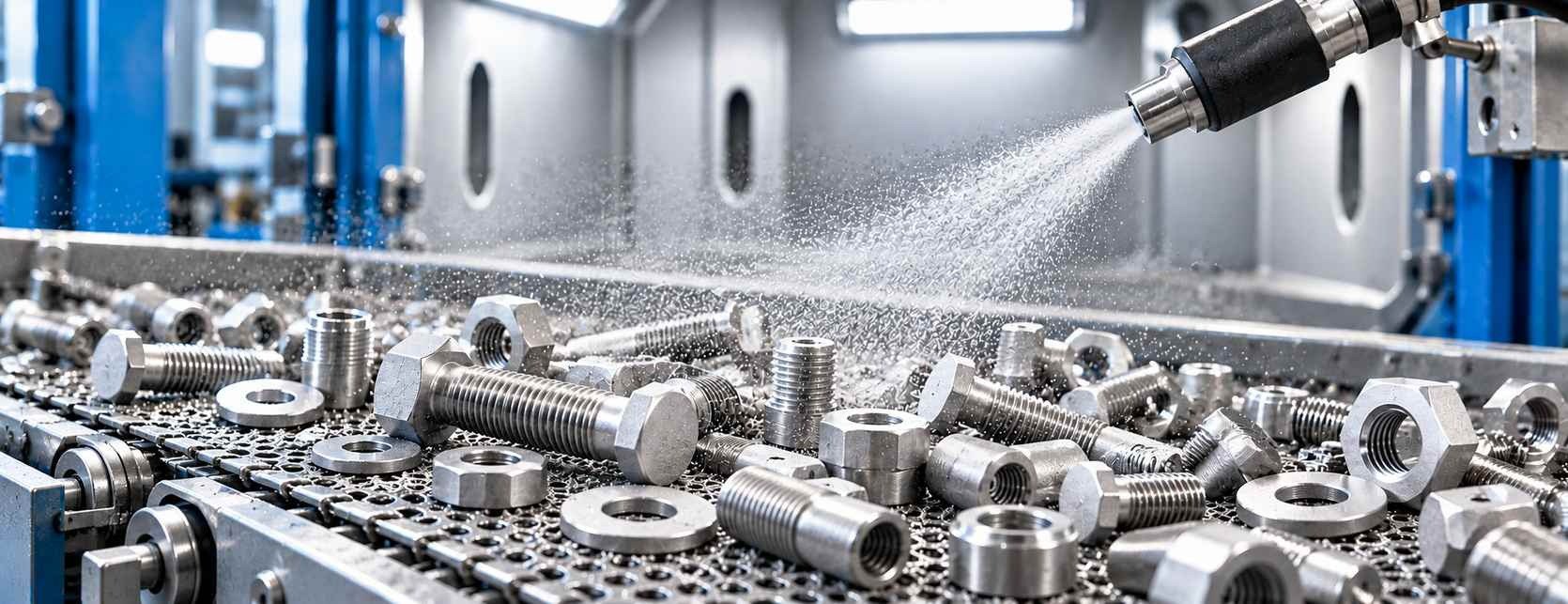
Metal sandblasting applied to small metal components: surface preparation, process control and its role in coatings for screws, bolts and threaded parts....
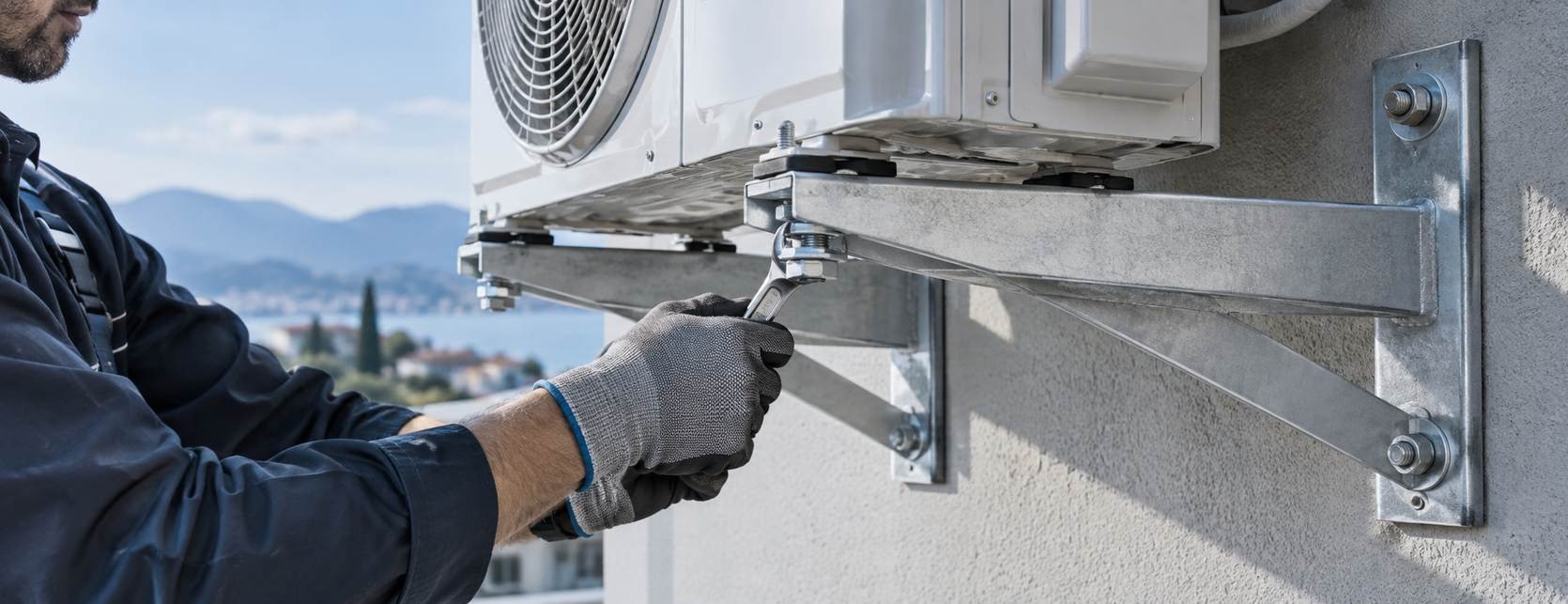
Technical guide to choosing anchors and bolts for air conditioner installation: substrate, bracket, anchoring, vibration, corrosion and proper tightening....
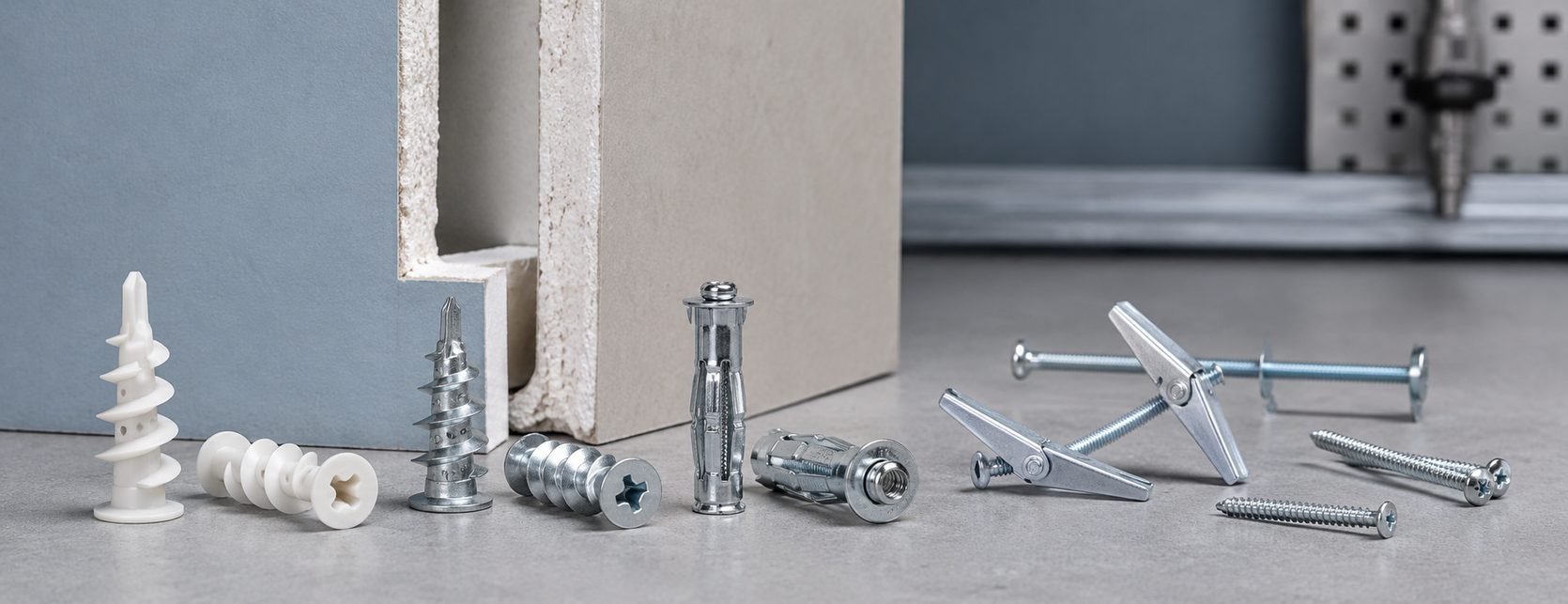
Drywall anchors: types, load capacity, selection criteria and correct installation to identify the most suitable fixing solution for every application....
Industrial automation is now a key factor in improving efficiency, quality, and control in manufacturing processes. By integrating machines, software, and data, companies can make their production more reliable, flexible, and competitive....
Threaded stud bolts are fasteners widely used in industry when it is necessary to ensure strong, reliable and above all time-demountable connections. Unlike traditional screws, they have a specific configuration that makes them particularly suitable ...
Carburizing is a thermochemical treatment that significantly improves steel performance by increasing surface hardness without compromising internal toughness. It is a fundamental solution for components subject to wear, friction and dynamic loads....
Surface treatments of steel are essential to ensure corrosion resistance, durability and reliable performance. Understanding which ones to choose and when to apply them helps you avoid problems, reduce costs, and improve component efficiency....
In the metal fabrication and construction industries, structural connection and reinforcement systems play a fundamental role in ensuring long-term stability and safety. Among these, steel tension rods are a widely used technical solution for absorbi...
The metalworking sector is one of the pillars of modern industry. But what does it actually encompass? What are its categories, and what jobs fall under it? In this article, we provide a clear and comprehensive analysis of one of the most strategic s...
 Added to quote