How a wind turbine blade works: the role of bolted connections
To understand how a wind turbine blade works, it is necessary to consider the entire wind turbine, the machine that converts wind energy into electricity. It consists of blades, a hub, a nacelle housing the mechanical and electrical systems, and a tower.
In everyday language, the expression “wind turbine blade” is often used to refer to the entire structure, whereas, in technical terms, the blades are individual components that, together with the central hub to which they are attached, form the rotor.
The components of a wind turbine are manufactured separately and joined during assembly using connections that must combine mechanical stability with the ability to be dismantled.
Access to fasteners is important during inspections, and bolts and associated fasteners play a role throughout the machine’s life cycle, from design and procurement to work on site.
Like the other parts of the turbine, a wind turbine blade operates within a system in which connection reliability and maintainability are closely related requirements.
Rotor operation and control systems
In horizontal-axis wind turbines, which generally have three blades, rotation results from the interaction between the airflow and the aerofoil profiles. The pressure difference across the blade surfaces generates aerodynamic forces: their tangential component produces the torque that drives the rotor, which consists of the blades and the hub.
The generator then converts mechanical energy into electricity. The drivetrain may include a gearbox, which increases the rotational speed at the generator input, or provide a direct connection between the generator and the rotor.
Control is also provided by the pitch system, which rotates each blade about its longitudinal axis. Changing the blade angle alters the aerodynamic forces, allowing rotor power and speed to be controlled. In excessively strong winds, it enables the driving torque to be reduced.
To describe how a wind turbine blade works under different operating conditions, the orientation of the rotor relative to the wind must also be considered. This function is performed by the yaw system, which rotates the nacelle at the top of the tower to align the rotor with the wind direction.
How a wind turbine blade works: structural connections
Blades are mainly made from composite materials, consisting of reinforcing fibres and a polymer matrix. At the root, the end closest to the hub, the blade is attached to the pitch bearing by threaded fasteners arranged around a circle.
Connection designs include metal inserts integrated into the composite, or anchoring arrangements with transverse elements coupled to longitudinal studs. Verification covers the entire system: fasteners, anchors and the surrounding material all contribute to load transfer.
In tubular steel towers, the sections are assembled using bolted ring flanges, while anchor bolts at the base can connect the structure to the foundation. The structural bolting assemblies intended for these joints must meet the mechanical and geometrical requirements specified in the design, including the matching of bolts, nuts and washers.
During operation, changes in the wind and the effect of the blades’ weight as they rotate generate cyclic loads. Fatigue resistance is therefore critical: it is the ability to withstand repeated loading that can cause cracks even at stress levels below the material’s static strength.
Tightening generates preload by elastically elongating the bolt and compressing the joined parts. As long as the joint remains closed, an external separating load is shared between a reduction in compression and an increase in fastener tension, according to the stiffnesses and geometry of the assembly. A preload that is properly specified, applied and maintained in service helps limit the stress range in the bolt.
Assembly and maintenance of bolted connections
In torque-controlled tightening, the preload achieved depends on friction in the threads and at the bearing surfaces. Lubrication and coatings must correspond to the conditions used to define the procedure: changing them can alter the axial force achieved at the same applied torque.
In joints designed for it, hydraulic tensioning allows the studs to be elongated directly before the nuts are seated. The initial load must compensate for the losses that occur when the tool is released, so that the required preload remains.
On flanges, tightening each bolt elastically deforms the connected parts and affects the load in neighbouring fasteners. The procedure must therefore specify the sequence, load increments and verification passes, taking surface flatness and settlement into account. The aim is to achieve a force distribution consistent with that assumed in the design.
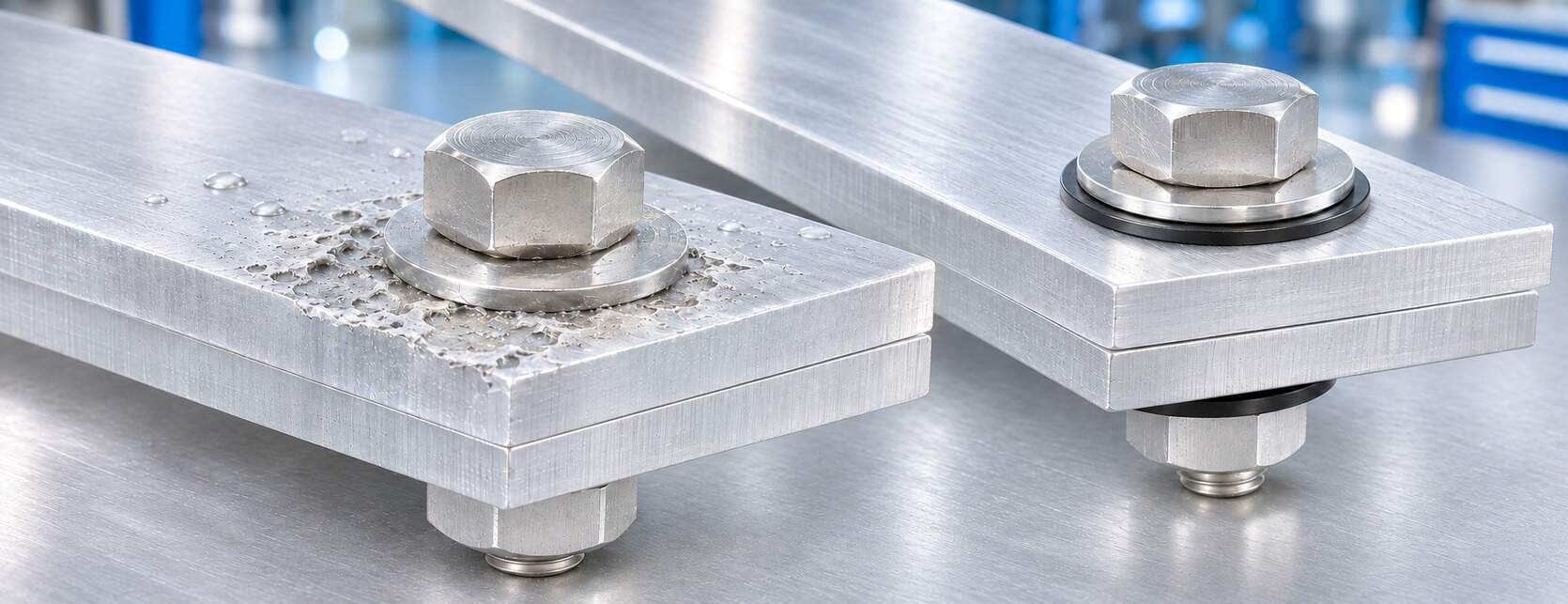
Corrosion protection requires a combined assessment of the environment, the coupled materials and the assembly conditions. Where moisture and salt deposits are present, coating integrity and areas prone to water retention must be inspected. Contact between dissimilar metals also requires an assessment of the risk of galvanic corrosion.
The maintenance plan must take account of how a wind turbine blade operates under the intended service conditions, following the methods and intervals specified by the manufacturer. In addition to examining the condition of the joints, it includes the prescribed checks on residual preload. Where specified, appropriately calibrated ultrasonic measurements can assess the axial force in the bolts and identify any deviations from the expected values.
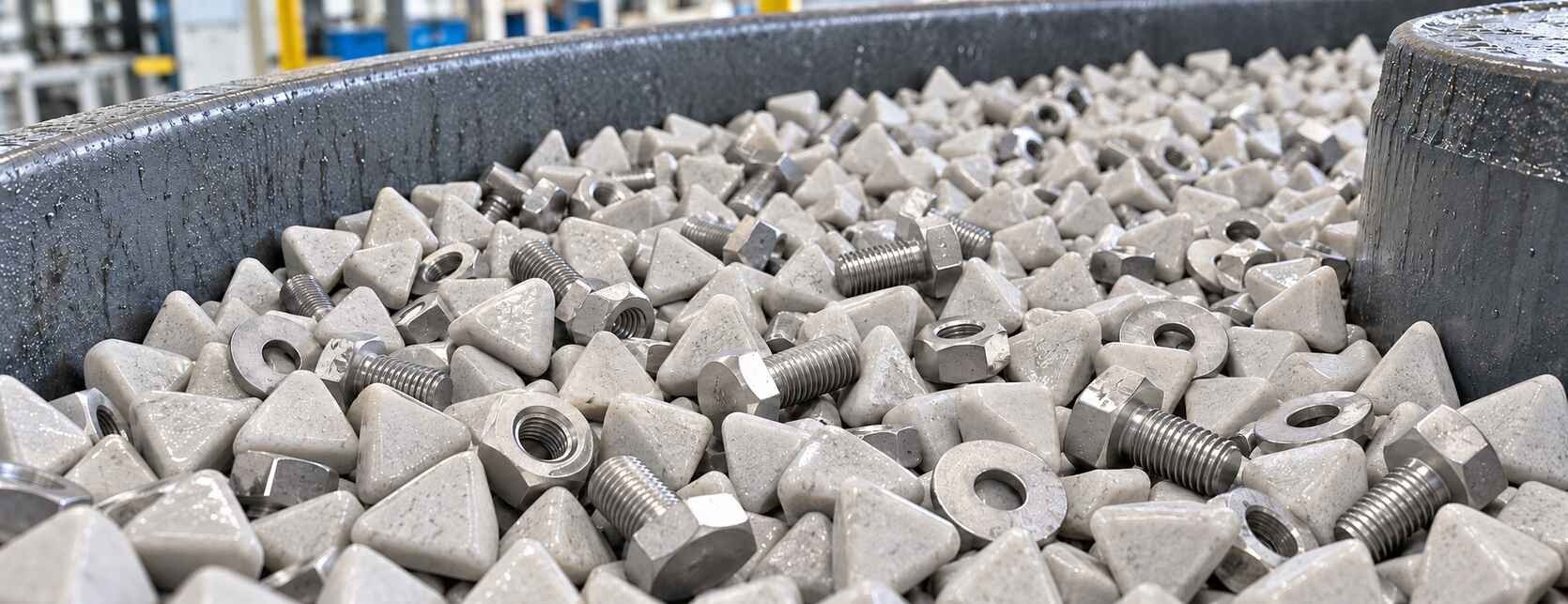
Tumbling of small metal parts: abrasives, process parameters and checks to remove burrs, finish surfaces and maintain geometry and dimensional tolerances....
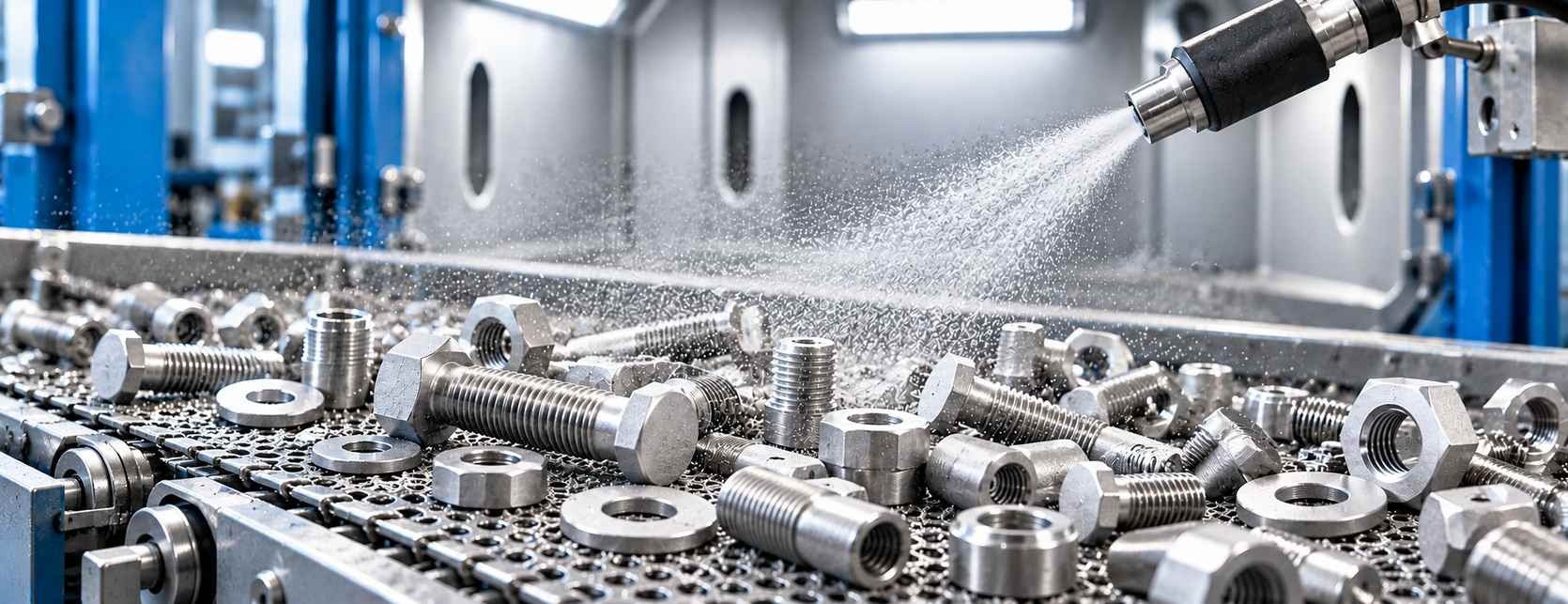
Metal sandblasting applied to small metal components: surface preparation, process control and its role in coatings for screws, bolts and threaded parts....
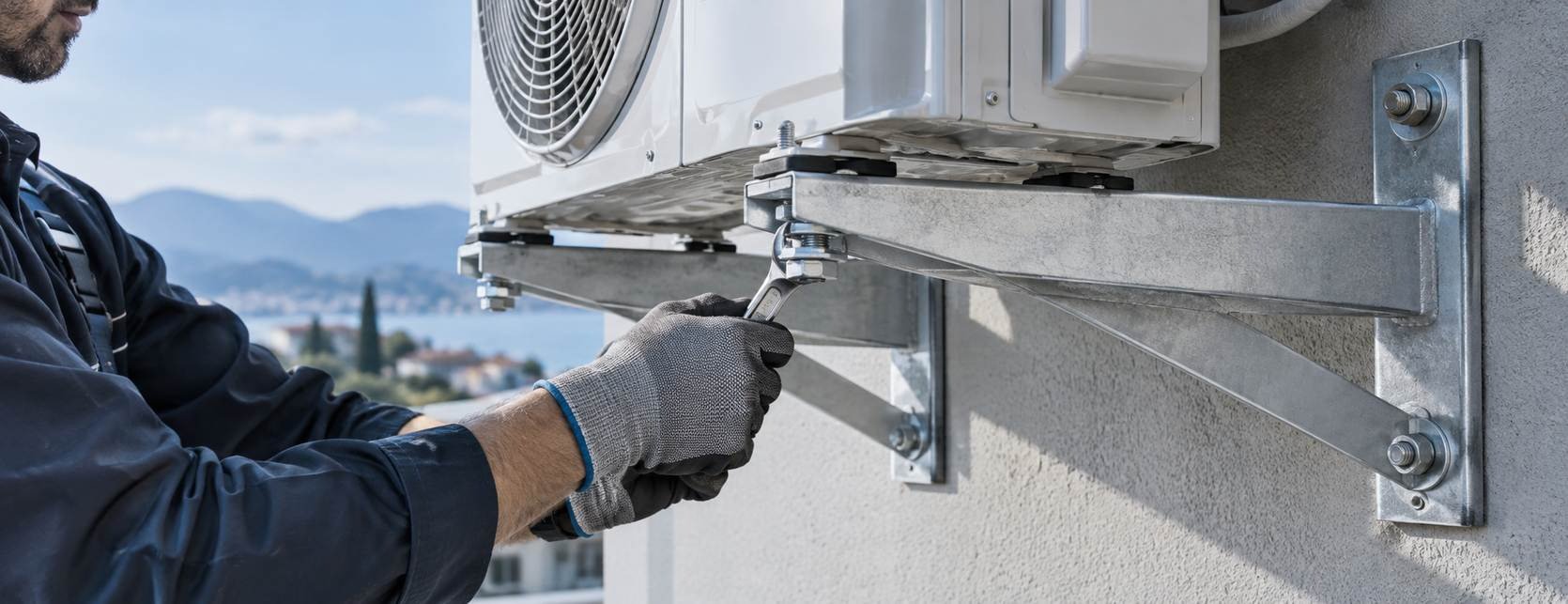
Technical guide to choosing anchors and bolts for air conditioner installation: substrate, bracket, anchoring, vibration, corrosion and proper tightening....
Drywall anchors: types, load capacity, selection criteria and correct installation to identify the most suitable fixing solution for every application....
Industrial automation is now a key factor in improving efficiency, quality, and control in manufacturing processes. By integrating machines, software, and data, companies can make their production more reliable, flexible, and competitive....
 Added to quote