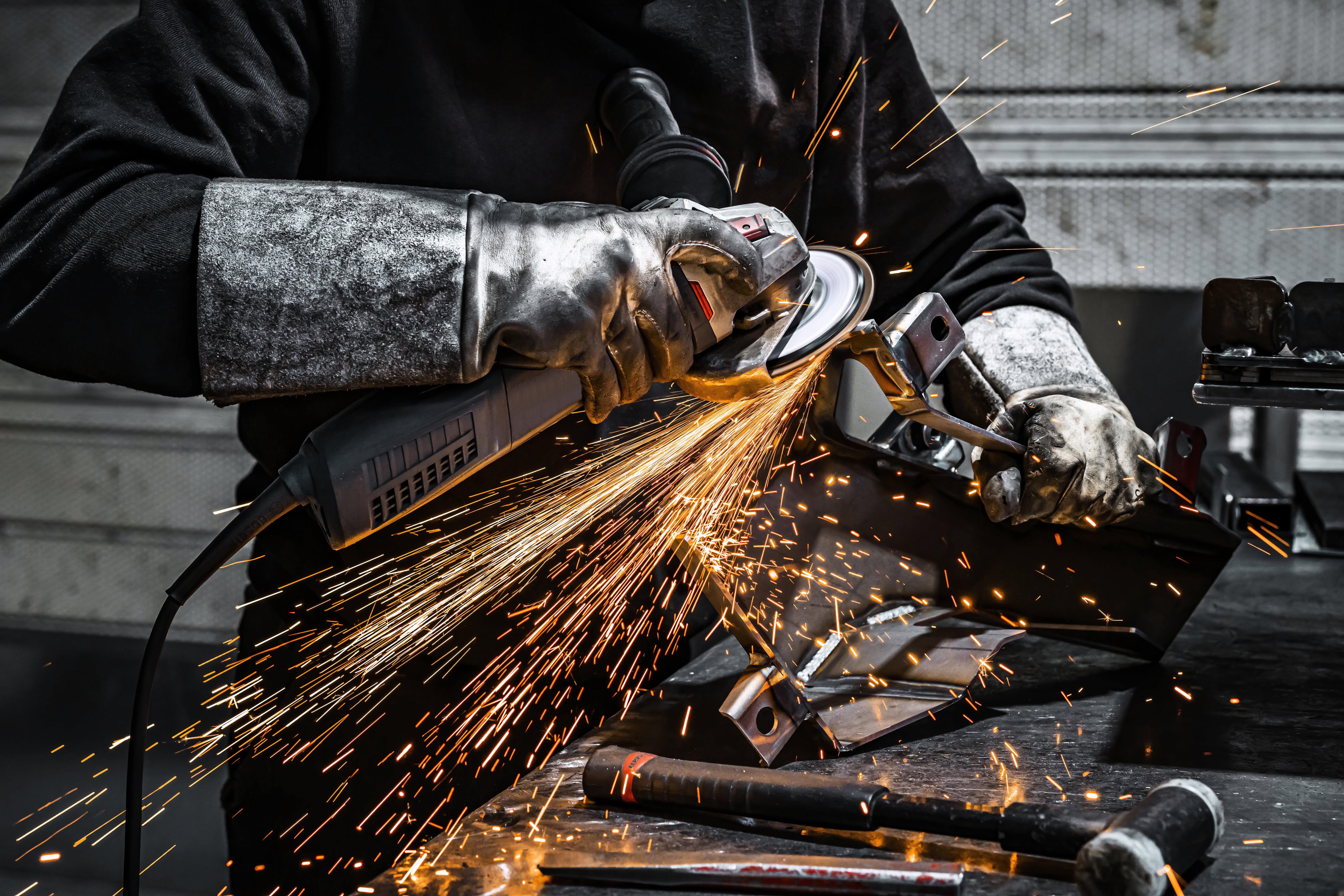
Already widely spread and highly demanded in the production of screws, bolts, and fasteners for its particular resistance to corrosion, steel is a material that is 100% recyclable. Steel recycling is a sustainable system that can occur potentially infinite times. In fact, recycled steel has the exact same original properties and, for this reason, is defined as a "permanent resource". In this article, we will delve into the numbers dictated by steel recovery, the techniques used, and the importance of this material for a sustainable economy.
How Much Steel Is Recycled?
The recovery of steel produces 99% first-choice material, while the remaining 1% is waste material used as inert for road use. Talking about sustainable steel means describing a material that avoids the consumption of additional oil for the extraction of raw materials, promotes the reduction of CO² emissions, and other pollutants. The numbers in this regard are nothing short of impressive: according to an estimate published by Confindustria, 14 tons of steel are recycled per second worldwide.
Europe is among the protagonists of such a sustainable economy: about 40% of steel production is made from material recovery and therefore from steel recycling. Moreover, it is particularly interesting to underline how Italy, already the leading European producer of electric furnace steel, is among the leading countries in this significant change; in fact, the production of material deriving from steel that is remelted reaches high percentages in the following sectors:
75% for packaging;
85% for construction material and machinery.
These numbers provide a clear reading of the importance of the recovery of such material:
686,660 tons of iron ore saved;
216,842 tons of carbon saved;
646,922 tons less CO² for the packaging sector alone.
Exploiting the potential of steel recovery equals process efficiency and high energy savings.
How Can Steel Be Recycled?
As anticipated earlier, recycled steel does not show any deformation or degradation of the original mechanical properties. The material, in fact, appears just like new and reusable in its infinite applications. But how does the recycling of steel occur?
When a steel element is removed from a work or structure, it is brought to the foundry where, once melted and reconstituted, it is ready for a new use. Generally, the material is transformed through production processes with electric arc furnaces. This widely used tool guarantees a reduction of acoustic impact, dust, 50% of the water requirement, and an additional 50% of the energy requirement.
The maintenance of mechanical properties between the old and new element is indicated with the English term up-cycling. A product recycled in up-cycling mode will retain its properties, unlike an element produced in down-cycling mode, which will lose its specificities and be destined for lower-level uses. An example of an element recycled in down-cycling is plastic. Therefore, steel elements belonging to constructions, machinery, vehicles, etc., that are discarded, are collected, transported to recycling sites, and transformed.
Where Is Steel Recycled?
Disposing of and recovering steel correctly means, therefore, reducing its impact on the environment. To recycle steel, once a sufficient amount of material is collected, it is necessary to transport it to recycling sites. Here, the ferrous elements will be subjected to checks, as established by European regulations, to ascertain the presence or absence of radioactive slag. The next step involves proceeding with the targeted recovery procedures: the volume of the collected material will first be reduced, and then it will be melted. In the foundries, the element will then undergo several main operations: melting, forming, ladling, casting, demolding, deburring, and finishing. At the end of all these processes, the steel will be initiated into a new production cycle.
The Importance of Anticorrosive Processes
Steel is the most resistant and durable material over time. To increase its "useful life" and therefore its resistance to corrosion, it is important to subject it to protection systems. Among the most efficient is hot-dip galvanizing, a very effective technique also for the material's circularity. Indeed, galvanized steel is reusable and with a recycling percentage close to 100%. Among the main advantages of a hot-dip galvanized product are:
Energy efficiency, both in terms of energy needed for the production of galvanization and in terms of the lifespan of the galvanized product;
Durability: even if subjected to environments or corrosive factors, materials and components galvanized according to UNI EN ISO 1461 and UNI EN 10348-2 standards, have durable resistance over time;
Ease of maintenance: if it becomes necessary to extend the lifespan of the galvanized element, a new protective layer can be applied, and thus, it can be restored. This mechanism is applicable especially to dismountable artifacts. Moreover, just by a simple check of the zinc layer, it is possible to monitor and predict the duration of the protection and therefore the performance of the steel product;
Environmental compatibility: zinc is a natural element that does not impact the environment or human health.
Steel subjected to galvanization will then be a product not only of high quality but also of high environmental performance.
For further information about steel recycling, subscribe to our newsletter.
Metal sandblasting applied to small metal components: surface preparation, process control and its role in coatings for screws, bolts and threaded parts....
Technical guide to choosing anchors and bolts for air conditioner installation: substrate, bracket, anchoring, vibration, corrosion and proper tightening....
Drywall anchors: types, load capacity, selection criteria and correct installation to identify the most suitable fixing solution for every application....
Industrial automation is now a key factor in improving efficiency, quality, and control in manufacturing processes. By integrating machines, software, and data, companies can make their production more reliable, flexible, and competitive....
Threaded stud bolts are fasteners widely used in industry when it is necessary to ensure strong, reliable and above all time-demountable connections. Unlike traditional screws, they have a specific configuration that makes them particularly suitable ...
Carburizing is a thermochemical treatment that significantly improves steel performance by increasing surface hardness without compromising internal toughness. It is a fundamental solution for components subject to wear, friction and dynamic loads....
Surface treatments of steel are essential to ensure corrosion resistance, durability and reliable performance. Understanding which ones to choose and when to apply them helps you avoid problems, reduce costs, and improve component efficiency....
In the metal fabrication and construction industries, structural connection and reinforcement systems play a fundamental role in ensuring long-term stability and safety. Among these, steel tension rods are a widely used technical solution for absorbi...
The metalworking sector is one of the pillars of modern industry. But what does it actually encompass? What are its categories, and what jobs fall under it? In this article, we provide a clear and comprehensive analysis of one of the most strategic s...
Behind every product that reaches the market lies a complex network of suppliers, production processes, logistics, and distribution. Supply Chain Management was developed precisely to efficiently coordinate all these activities, transforming supply c...
 Added to quote