Following the enactment of some European regulations, structural bolting has taken on a fundamental role in metal carpentry. The term structural bolting refers to articles that, subject to CE marking, allow for the traceability of products.
Specifically, the European standards that define the characteristics of such bolting are EN14399 and EN15048. Through these standards, two types of structural bolting are identified in relation to the type of assembly to be made:
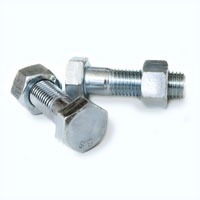
EN15048 specifies assemblies not for preload.
Figure 1. UNI EN 15048 assembly partially threaded
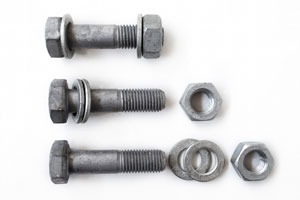
EN14399 specifies preload assemblies.
Figure 2. UNI EN 14399 assembly
Depending on the type of assembly, the elements used are different. In the following paragraphs, we will analyze in detail how the two classes differ and what are the reference specifications.
UNI EN 15048 and UNI EN 14399: Differences and Fields of Applications
As mentioned in the previous paragraph, structural bolting is regulated by two main standards: UNI EN 15048 and UNI EN 14399. These are two bolt standards based on which the elements used in the formation of the assemblies change:
The elements of EN 15048are essentially a screw and a nut, products that form non-preload assemblies called SB (Structural Bolt).
The elements of EN 14399 are a screw, a nut, and a washer, products that form preload assemblies made with HV, HR, and HRC systems.
Specifically, preload assemblies – EN 14399 – are controlled tightening assemblies that find greater application in cases where the structure or joint to be made is subjected to tensile forces. As a controlled tightening assembly, the preload is applied using a torque wrench, thus controlling the tightening torque.
The HV, HR, and HRC initials indicate a different breakage in case of stress, although the three systems are equivalent. For example, the HV system involves the use of a lower nut that, if stressed, will be the element destined to fall. In the HR system, instead, the nut is higher and associated with a more extended screw thread; in case of stress, the bolt will yield.
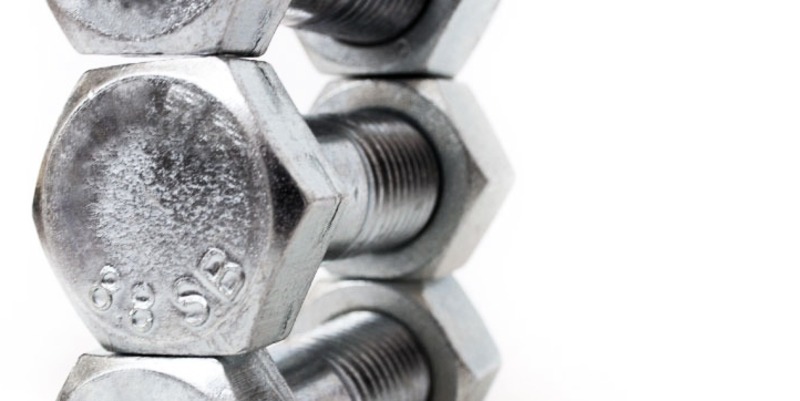
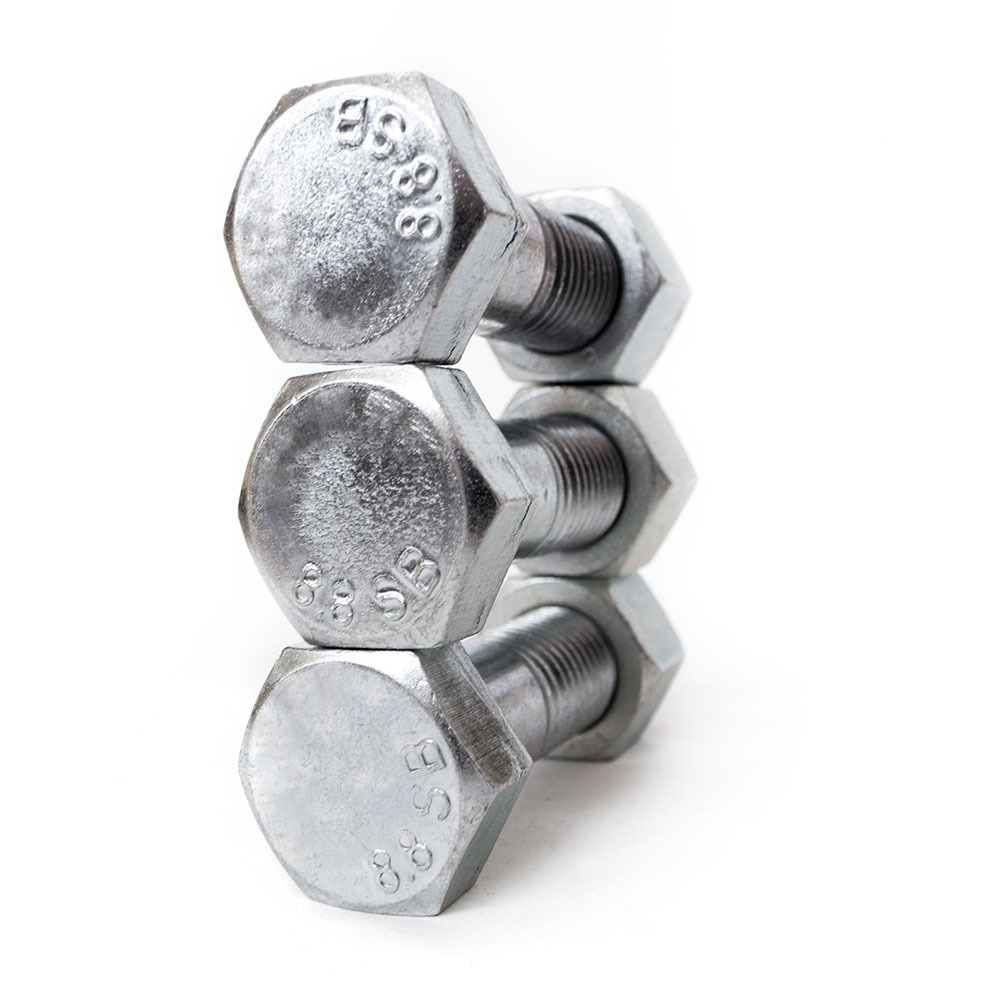
Regarding non-preload assemblies - EN 15048, unlike the previous ones, do not require controlled tightening but manual tightening is sufficient. The elements of UNI EN 15048 are mainly produced with high-strength steels, generally in grade 8.8 defined as the structural grade for screw products in reference to the standard, available in 2 versions: partially threaded and fully threaded. Some types of non-preload assemblies are also produced in stainless steel and, although not as widely distributed as the first, they can be supplied upon request.
These assemblies are called SB (Structural Bolt), a label that describes a special marking whose characteristics will be described in the following paragraphs.
UNI EN 15048: Kits and Products
All structural bolting is supplied in sealed packages by the manufacturer. The EN 14399 and EN 15048 standards do not allow for open packaging, and the customer must therefore acquire the assembly in the quantities provided by the package.
In fact, for both standards, there are very specific rules regarding packaging:
Single packages, containing nut + screw + screw for SB systems and nut + washers for HV, HR, and HRC systems from a single batch of each piece.
Separate packages, containing nuts, screws, and washers all coming from a single batch on which the manufacturer must report the tightening characteristics.
To better understand the product's expected performance, the package label must also present indicative values for setting the torque wrench for assembly.
CE Mark: What It Indicates and How to Recognize It
The UNI EN 15048 standard stipulates that all individual products making up the assembly (screw, nut, and washer upon request) must be subjected to CE marking, with the assembly manufacturer's mark, and special SB (Structural Bolting) mark.
Regarding SB Assemblies (EN 15048), these must refer to the following main features:
Standard diameters from M12 to M36;
Underhead fillet radius not increased;
Partial or total threading for the entire length of the screw.
Regarding the CE mark, it applies to the product, in this case, the screw and nut assembly (the washers, since they do not necessarily form part of the assembly batch, do not have marking). To recognize the true CE marking on labels, they must present various information such as:
Identification number of the certifying body for the CE mark;
Name or brand of the assembly manufacturer;
CE conformity certificate number;
Reference to the EN 15048 standard;
Product designation according to the different parts of EN 15048;
Declaration of any hazardous substances.
The CE mark must therefore be affixed to construction products for which the manufacturer has provided the Declaration of Performance (DOP). This document describes information related to the essential characteristics of the product and compliance with the reference standards.
To not miss other articles like this and receive more information on structural bolting regulations, subscribe to our newsletter.
Metal sandblasting applied to small metal components: surface preparation, process control and its role in coatings for screws, bolts and threaded parts....
Technical guide to choosing anchors and bolts for air conditioner installation: substrate, bracket, anchoring, vibration, corrosion and proper tightening....
Drywall anchors: types, load capacity, selection criteria and correct installation to identify the most suitable fixing solution for every application....
Industrial automation is now a key factor in improving efficiency, quality, and control in manufacturing processes. By integrating machines, software, and data, companies can make their production more reliable, flexible, and competitive....
Threaded stud bolts are fasteners widely used in industry when it is necessary to ensure strong, reliable and above all time-demountable connections. Unlike traditional screws, they have a specific configuration that makes them particularly suitable ...
Carburizing is a thermochemical treatment that significantly improves steel performance by increasing surface hardness without compromising internal toughness. It is a fundamental solution for components subject to wear, friction and dynamic loads....
Surface treatments of steel are essential to ensure corrosion resistance, durability and reliable performance. Understanding which ones to choose and when to apply them helps you avoid problems, reduce costs, and improve component efficiency....
In the metal fabrication and construction industries, structural connection and reinforcement systems play a fundamental role in ensuring long-term stability and safety. Among these, steel tension rods are a widely used technical solution for absorbi...
The metalworking sector is one of the pillars of modern industry. But what does it actually encompass? What are its categories, and what jobs fall under it? In this article, we provide a clear and comprehensive analysis of one of the most strategic s...
 Added to quote