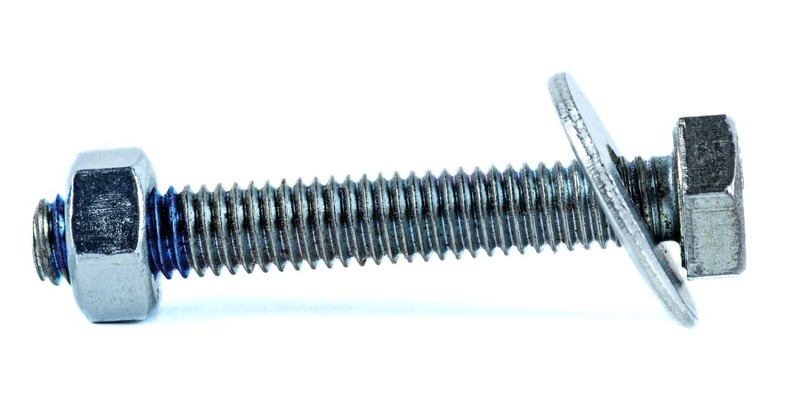
Threadlockers, also known as thread locking agents, are liquid or semi-liquid components that prevent corrosion, loosening, or seizing of various threaded fastening components. Particularly useful in the case of vibrations or shocks, these liquid adhesives literally seal the threads of screws and nuts, ensuring stability over time.
For this reason, they are used in various contexts, from the maintenance of industrial machines to delicate electronic components, and the automotive sector. But let's discover together how they are applied and how to choose the best product.
What is the purpose of a threadlocker?
As mentioned in the introductory paragraph, threadlockers are components that prevent the failure of threaded assemblies. Delving into the product more in detail, we can talk about fluids that fill the gaps created between threaded couplings, thus ensuring the load of the tightening torques of screws, bolts, or nuts.
When these fixing liquids are applied, they polymerize in the absence of air, at room temperature, and in contact with metal. Subsequently, a real thermosetting film is formed that maintains the friction between the threads.
So what are the main advantages of using threadlockers?
Prevent loosening and unwanted movements of parts;
Prevent corrosion;
Maintain tightening force over time;
Resistance to shocks and vibrations.
Threadlockers are therefore a valid alternative to mechanical lockings and allow saving on repair times and costs.
Which threadlocker to choose?
In order to choose the best product for one's needs, the mechanical resistance of the parts must be distinguished. In fact, there are:
Low-strength threadlockers, these products have low tenacity and therefore allow a very simple reopening of the assembly.
Medium threadlockers, these products allow subsequent disassembly with normal work tools. They guarantee good stability and durability even at medium-high temperatures.
High-strength threadlockers, these are high-resistance threadlockers that are generally used for jobs where subsequent disassembly is not expected. They are high-temperature threadlockers, therefore with very high thermal and chemical resistance.
An evaluation of the product and its final purpose before application will ensure the correct choice is made.
How long does it take for a threadlocker to dry?
Being hardening liquids or semi-liquids, there is a drying time for threadlockers that depends on the surfaces on which the product will be applied.
In general, there is a threadlocker for every type of thread, easily applicable whether it concerns unassembled parts (the liquid is inserted during assembly) or already assembled parts (the liquid penetrates into the already assembled parts).
The products on the market are now all equipped with a convenient dispenser that facilitates the application of the liquid, avoiding waste and drips. For optimal assembly, it is advisable to:
Clean and degrease the surfaces before application;
Shake the container before use;
Avoid contact between the metal and the nozzle to not risk clogging the bottle;
For through holes, apply 2/3 drops on the screw at the point where the nut will be screwed on;
For blind holes, apply 2/3 drops of liquid at the bottom of the hole.
Leaving the liquid to act for 16/24 hours will guarantee the desired result.
Should it be necessary to remove the threadlocker and normal work tools prove insufficient because too much product was applied, you can proceed with heating the joint up to a maximum temperature of 250°. The heat will facilitate the removal of the liquid.
For further information about threadlockers, subscribe to our newsletter. You can contact us at commerciale@univiti.it to request a quote.
Industrial automation is now a key factor in improving efficiency, quality, and control in manufacturing processes. By integrating machines, software, and data, companies can make their production more reliable, flexible, and competitive....
Threaded stud bolts are fasteners widely used in industry when it is necessary to ensure strong, reliable and above all time-demountable connections. Unlike traditional screws, they have a specific configuration that makes them particularly suitable ...
Carburizing is a thermochemical treatment that significantly improves steel performance by increasing surface hardness without compromising internal toughness. It is a fundamental solution for components subject to wear, friction and dynamic loads....
Surface treatments of steel are essential to ensure corrosion resistance, durability and reliable performance. Understanding which ones to choose and when to apply them helps you avoid problems, reduce costs, and improve component efficiency....
In the metal fabrication and construction industries, structural connection and reinforcement systems play a fundamental role in ensuring long-term stability and safety. Among these, steel tension rods are a widely used technical solution for absorbi...
The metalworking sector is one of the pillars of modern industry. But what does it actually encompass? What are its categories, and what jobs fall under it? In this article, we provide a clear and comprehensive analysis of one of the most strategic s...
Behind every product that reaches the market lies a complex network of suppliers, production processes, logistics, and distribution. Supply Chain Management was developed precisely to efficiently coordinate all these activities, transforming supply c...
Heat treatment of steel is one of the most important processes for obtaining reliable, resistant metal components suitable for industrial applications. From normalizing to tempering, these processes modify the structure of the material and determine ...
The seven principles of quality form the basis of ISO management systems and, in particular, the ISO 9001 standard. Understanding them means understanding how organizations can improve processes, decisions, and relationships to ensure quality and lon...
The Machinery Directive 2006/42/EC is one of the pillars of European industrial safety and defines the essential requirements that a machine must comply with to be placed on the Union market. It is not a simple formal fulfillment, but a system of res...
 Added to quote