ISO 14001 and ISO 45001 Certifications: What They Are and Benefits
Corporate certifications are a fundamental tool for companies aiming to stand out in the market and improve their operational efficiency.
Among them, the ISO 14001 and ISO 45001 standards stand out: these are two certificates that testify to a company's commitment to promoting environmental management and workplace safety.
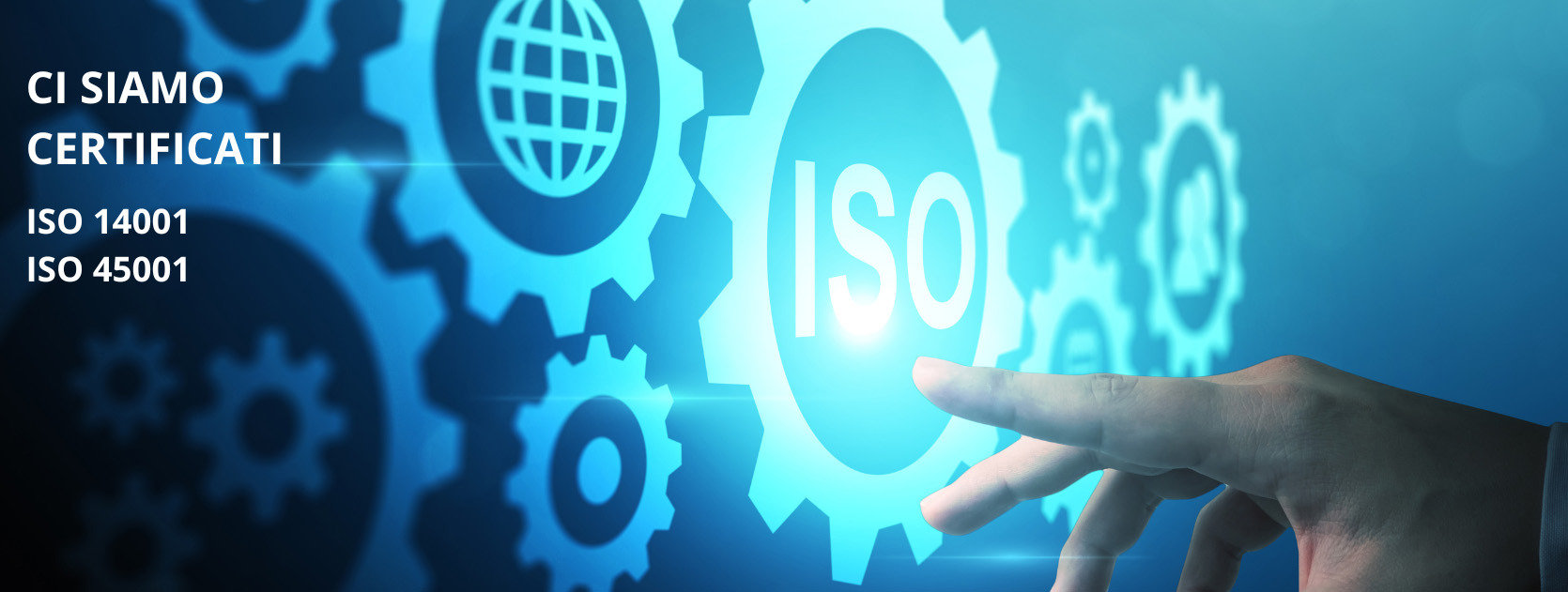
Univiti has obtained both certifications: a result that underscores the desire to constantly improve, adding to the ISO 9001, quality certification, achieved in 2023.
Corporate Certifications: What Are the Requirements?
How are corporate certifications obtained? It's a long process that requires commitment and dedication from the entire company.
To get certified in ISO 45001 and ISO 14001, these are the main steps a company must take:
Defining the company policy: the company management must define a policy that expresses commitment to occupational health and safety (ISO 45001) or environmental protection (ISO 14001);
Implementing the management system: the company must implement a management system in line with the requirements of the chosen standard;
Documentation: procedures must be documented clearly and comprehensively;
Internal audit: the company must perform an internal audit to verify the management system's compliance with the standard requirements;
Certification audit: an independent certification body performs an audit to confirm the system's compliance;
Certificate issuance: if the audit outcome is positive, the certification body issues the certificate;
Maintaining the certification: the company must maintain and periodically update the management system to meet new needs and regulatory changes.
The certification process involves an evaluation by an accredited body, which verifies compliance with ISO standards, followed by periodic audits to maintain the acquired certification.
ISO 45001 Certification: What It Is and How to Obtain It
The ISO 45001 certification is the international standard for occupational health and safety management systems.
Its purpose is to make systematic for a company the control, knowledge, awareness, and management of all potential risks inherent in the workplace.
To obtain the ISO 45001 certification (which updates the previous OHSAS 18001 standard), a company must:
Implement a management system that meets the requirements specified in the standard;
Demonstrate that it can systematically identify health and safety risks;
Adopt appropriate control measures.
ISO 45001 requires that management actively engages in identifying potential risks and involves workers in these operations, thus creating a virtuous circle of improving everyone's health and safety.
The Benefits of ISO 45001 Certification
The ISO 45001 standard is a valuable tool for assessing the quality and organizational maturity of companies.
Obtaining the ISO 45001 certification offers the following benefits:
Improvement of workers' safety and well-being;
A reduction in workplace accidents;
Reduction of occupational diseases;
Consequent decrease in absences and medical expenses.
This certification not only contributes to improving organizational processes, providing concrete recommendations on how to improve health and safety practices but also represents a competitive advantage for companies: it strengthens the company's reputation, facilitating access to new markets and business opportunities.
ISO 14001 Certificate: What It Is and How to Obtain It
The ISO 14001 certification concerns the environmental management system (EMS) and is designed to help organizations reduce the impact of their operations on the environment.
Through its implementation, a company commits to:
Reducing the impact of its activities on the environment;
Preventing pollution;
Optimizing resource use;
Improving energy performance.
The process of obtaining ISO 14001 requires the adoption of a series of measures, including:
Defining an environmental policy;
Assessing environmental impacts;
Planning objectives and improvement actions;
Monitoring and measuring performance.
ISO 14001: Key Benefits for Companies
Why is the ISO 14001 certification important?
For various reasons, but especially because it helps companies effectively manage the environmental impact of their activities. This benefits everyone: the environment first and foremost, but also the employees and the company itself.
Among the main advantages of obtaining the ISO 14001 certificate are:
Improvement of energy efficiency;
Reduction of waste and harmful emissions;
Savings on operational costs.
This standard also promotes a positive image of the company, increasing its attractiveness to customers and investors aware of current environmental issues.
Univiti is Certified ISO 14001 and ISO 45001
The ISO 14001 and ISO 45001 certifications are not just an important milestone for Univiti but represent a tangible commitment to sustainability and safety.
Having these titles is crucial for companies that want to demonstrate their corporate social responsibility and continuously improve their performance in these areas.
Moreover, they represent an additional guarantee and security: working with a certified company means relying on a partner that focuses on quality in every aspect of its operations.
We thank everyone for their commitment and hard work that has allowed us to obtain these two prestigious certificates!
Want to stay updated on the world of Univiti? Subscribe to our newsletter!
Metal sandblasting applied to small metal components: surface preparation, process control and its role in coatings for screws, bolts and threaded parts....
Technical guide to choosing anchors and bolts for air conditioner installation: substrate, bracket, anchoring, vibration, corrosion and proper tightening....
Drywall anchors: types, load capacity, selection criteria and correct installation to identify the most suitable fixing solution for every application....
Industrial automation is now a key factor in improving efficiency, quality, and control in manufacturing processes. By integrating machines, software, and data, companies can make their production more reliable, flexible, and competitive....
Threaded stud bolts are fasteners widely used in industry when it is necessary to ensure strong, reliable and above all time-demountable connections. Unlike traditional screws, they have a specific configuration that makes them particularly suitable ...
Carburizing is a thermochemical treatment that significantly improves steel performance by increasing surface hardness without compromising internal toughness. It is a fundamental solution for components subject to wear, friction and dynamic loads....
Surface treatments of steel are essential to ensure corrosion resistance, durability and reliable performance. Understanding which ones to choose and when to apply them helps you avoid problems, reduce costs, and improve component efficiency....
 Added to quote