Nuts are fastening elements with a threaded hole. Generally used together with screws, with which they share the same type of threading and pitch, they serve tocreate a connection that holds the material on which they are applied together.
Just like screws and bolts, there are various types of nuts available in the market, with diverse shapes, materials, and sizes. Among the most widespread are:
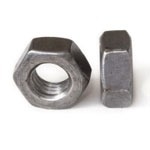
Hexagonal Nuts
Figure 1. Hexagonal Nut
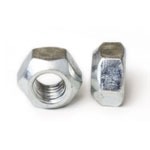
Lock Nuts
Figure 2. All-Metal Lock Nut
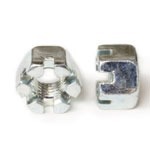
Crown Nuts
Figure 3. High Crown Nut
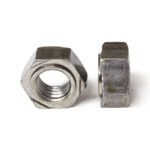
Weld Nuts
Figure 4. Weld Nut
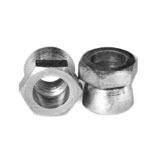
Security Nuts
Figure 5. Security Nut
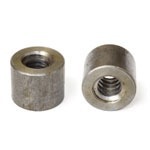
Cylindrical Nuts
Figure 6. Cylindrical Nut with Trapezoidal Threading
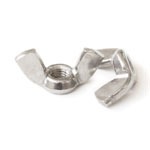
Wing Nuts
Figure 7. Wing Nut
Spacer Nuts
Figure 8. Hexagonal Spacer Nut
Blind Nuts
Figure 9. Blind Nut
Given the great variety of uses for this last type, we have decided to dedicate an in-depth analysis to help the user choose the most suitable element for their needs and final applications.
What are blind nuts?
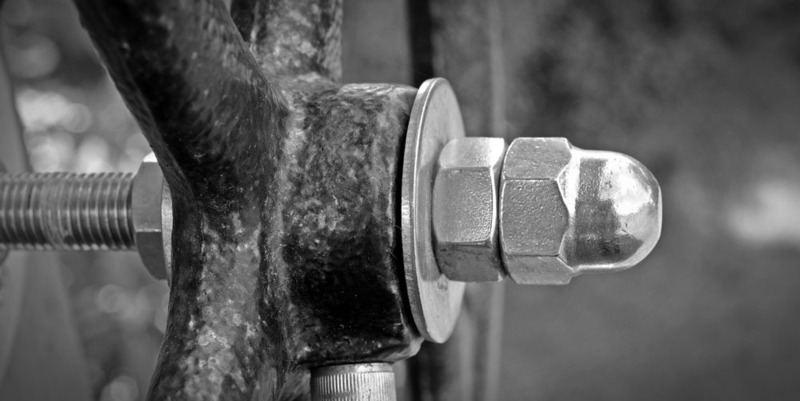
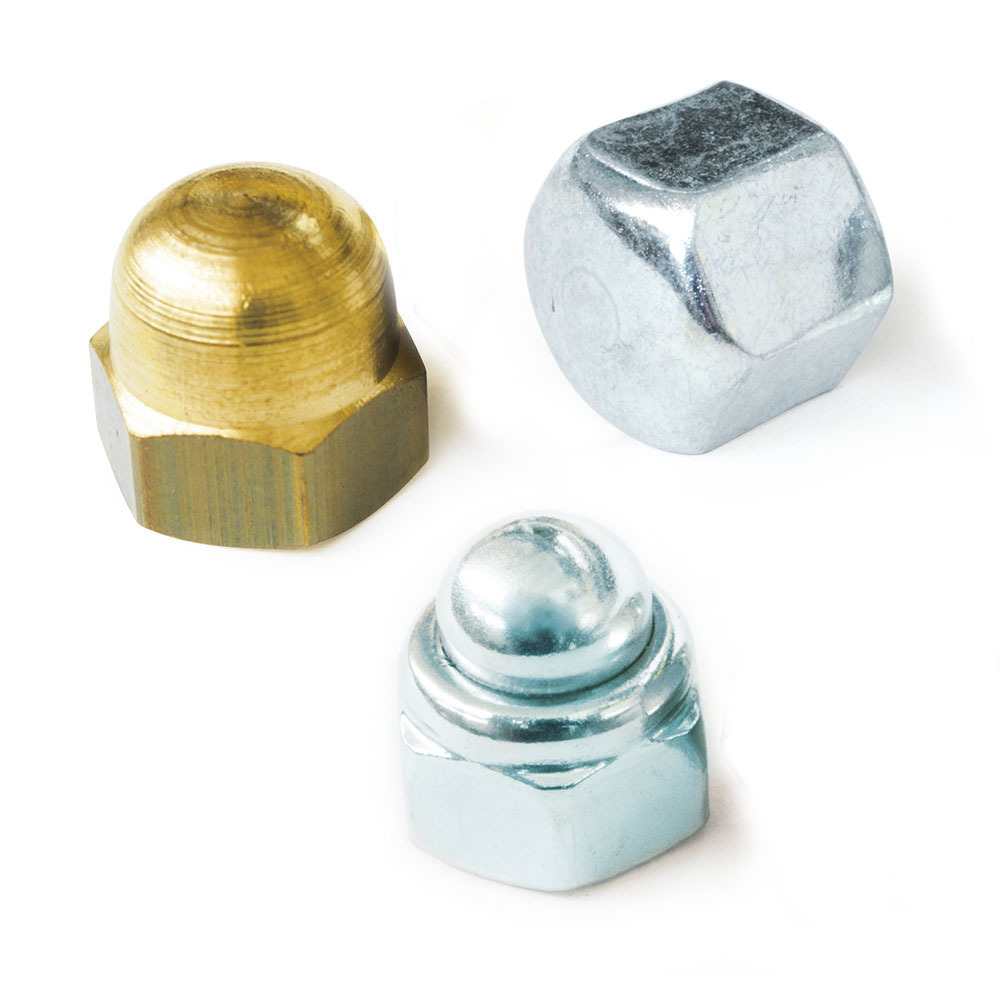
A blind nut is an element characterized by a non-through hole, having one of the two ends blind (hence the name). One version of this item is produced with a cap – a semi-spherical part – precisely at the end.
Figure 11. Blind Nut with Spherical Cap
A blind nut is predominantly used to tighten the protruding threaded part of a screw or a rod, thus as an aesthetic solution. Generally, this particular element is applied where a reliable threaded connection is required.
Reliability is dictated by the selection of the element of correct dimensions and materials, in reference to DIN 1587 standard.
The element can be supplied in:
Carbon Steel
Galvanized Steel
Brass, Bronze, and Aluminum
Plastic
Stainless Steel
One of the best performances is provided by stainless steel blind nuts, a material of excellent quality capable of resisting corrosion and lasting over time.
These products are used for various creations, from mechanical equipment to electronic devices, but it is a market that experiences continuous expansion in relation to applications.
Different Blind Nuts for Different Applications
As mentioned in the previous paragraph, blind nuts can be used in various fields:
Mechanical Industry;
Instrumentation;
Furniture Manufacturing;
Food Industry;
Design, etc.
Also in this case, in relation to the final use, it is possible to choose between different products:
Usually, the application of a blind nut does not require the use of a washer, except in cases where the connection must be strong and thus the nut, associated with the washer, will act as a counter nut.
A factor to consider for the correct choice is also the pitch of the threading, which can be coarse or fine.
Dimensions of Blind Nuts
Blind nuts come in different sizes. Among the most used and commercial sizes, we find, for example, diameters M8, M10, and M12, having respectively dimensions of 8, 10, and 12 millimeters.
In general, each standard provides different ranges of diameters in which the nuts can be produced:
DIN 917 Low profile blind nut galvanized steel - diameters supplied from M4 to M36;
DIN 917 Low profile blind nut stainless A2 - diameters supplied from M4 to M30;
DIN 917 Low profile blind nut brass - diameters supplied from M4 to M20;
DIN 986 Blind lock nut with nylon cap galvanized steel - diameters supplied from M4 to M16;
DIN 986 Blind lock nut with nylon cap stainless A2 - diameters supplied from M4 to M16;
DIN 1587 Blind hex nut with spherical cap in galvanized steel - diameters supplied from M3 to M30;
DIN 1587 Blind hex nut with spherical cap in stainless A2 - diameters supplied from M4 to M30;
DIN 1587 Blind hex nut with spherical cap in stainless A4 - diameters supplied from M4 to M27;
DIN 1587 Blind hex nut with spherical cap in brass - diameters supplied from M3 to M24;
DIN 1587 Blind hex nut with spherical cap in nickel-plated brass - diameters supplied from M3 to M12;
DIN 1587 Blind hex nut with spherical cap in plastic - diameters supplied from M3 to M16.
Thus, in relation to uses and needs, it is possible to select the most suitable element for every final destination.
For further useful information on choosing the correct blind nut, subscribe to our newsletter.
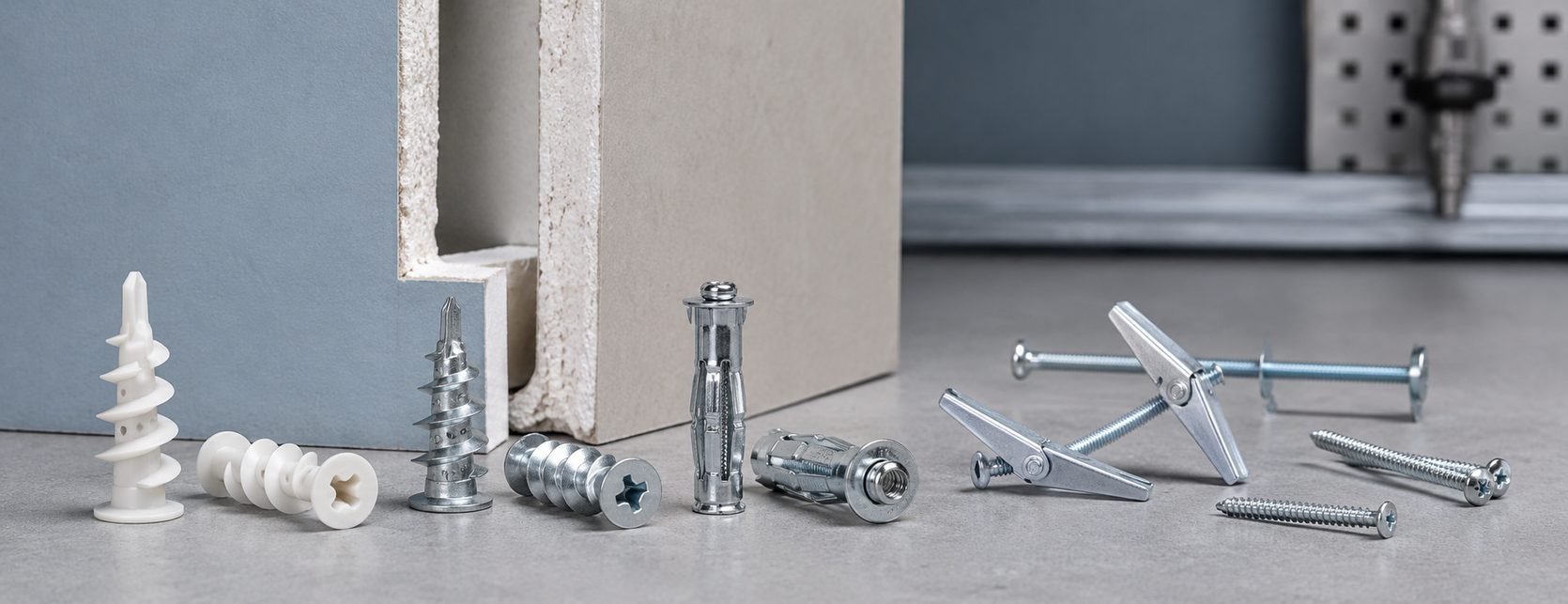
Drywall anchors: types, load capacity, selection criteria and correct installation to identify the most suitable fixing solution for every application....
Industrial automation is now a key factor in improving efficiency, quality, and control in manufacturing processes. By integrating machines, software, and data, companies can make their production more reliable, flexible, and competitive....
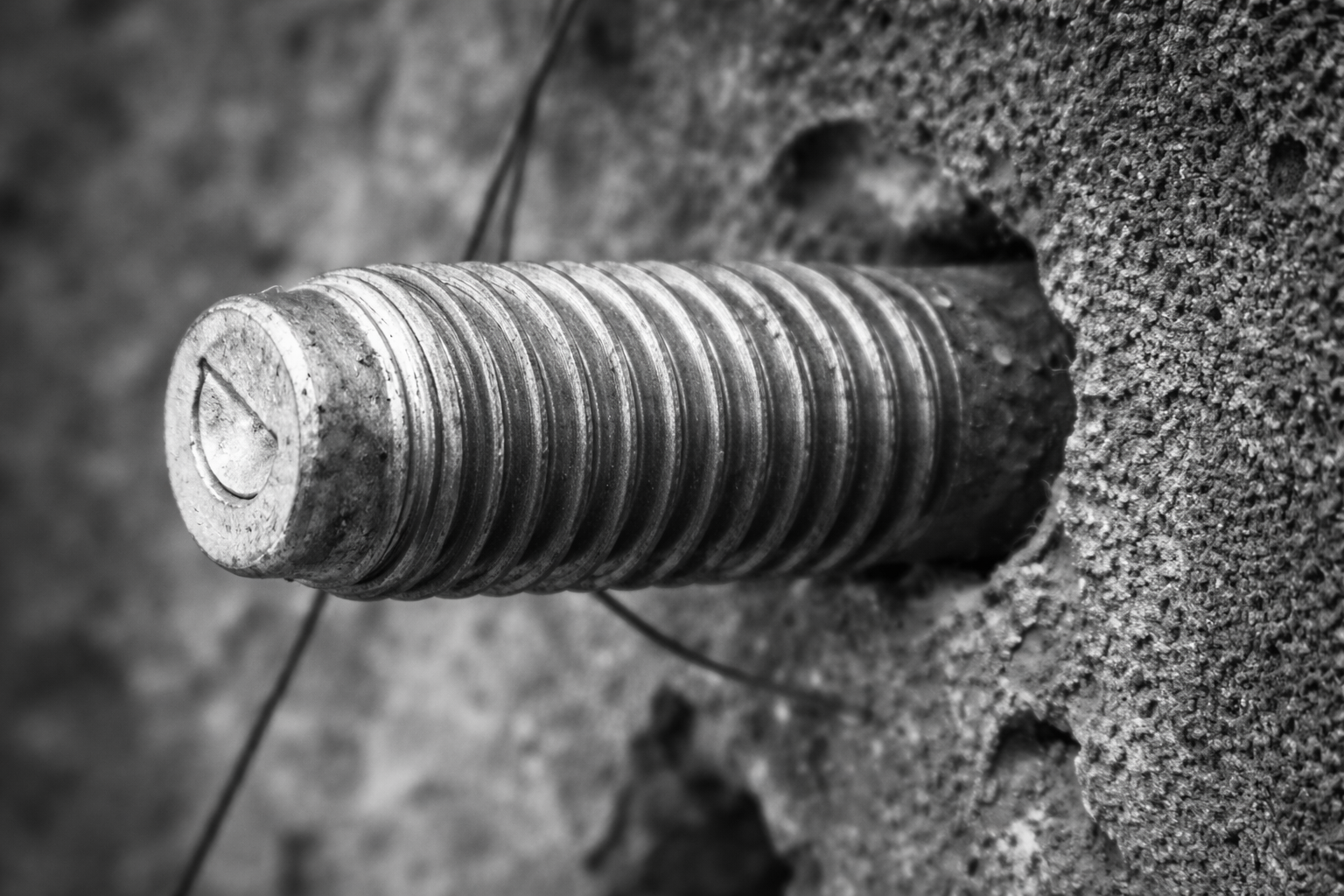
Threaded stud bolts are fasteners widely used in industry when it is necessary to ensure strong, reliable and above all time-demountable connections. Unlike traditional screws, they have a specific configuration that makes them particularly suitable ...
Carburizing is a thermochemical treatment that significantly improves steel performance by increasing surface hardness without compromising internal toughness. It is a fundamental solution for components subject to wear, friction and dynamic loads....
Surface treatments of steel are essential to ensure corrosion resistance, durability and reliable performance. Understanding which ones to choose and when to apply them helps you avoid problems, reduce costs, and improve component efficiency....
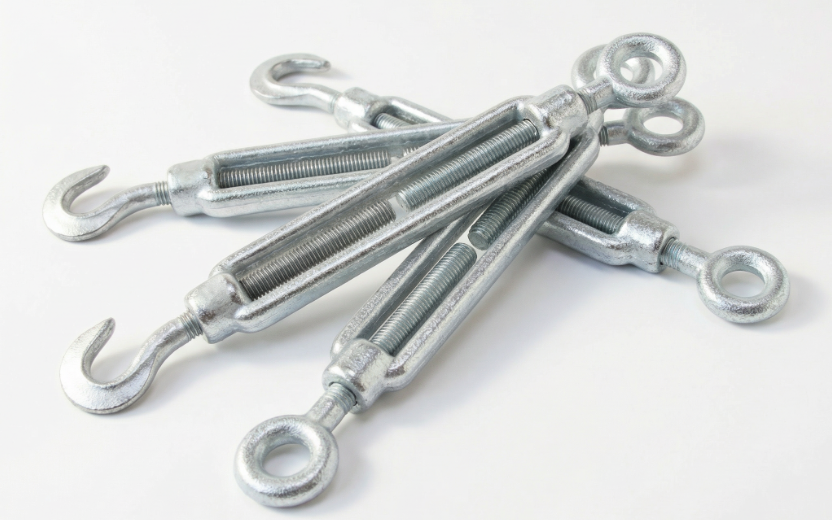
In the metal fabrication and construction industries, structural connection and reinforcement systems play a fundamental role in ensuring long-term stability and safety. Among these, steel tension rods are a widely used technical solution for absorbi...
The metalworking sector is one of the pillars of modern industry. But what does it actually encompass? What are its categories, and what jobs fall under it? In this article, we provide a clear and comprehensive analysis of one of the most strategic s...
Behind every product that reaches the market lies a complex network of suppliers, production processes, logistics, and distribution. Supply Chain Management was developed precisely to efficiently coordinate all these activities, transforming supply c...
Heat treatment of steel is one of the most important processes for obtaining reliable, resistant metal components suitable for industrial applications. From normalizing to tempering, these processes modify the structure of the material and determine ...
 Added to quote