Search the more than 56.000 items in the catalog.
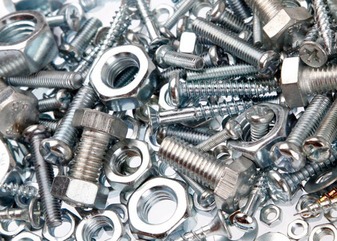
The term "threads" refers to connection systems that allow different elements to be assembled together. A thread consists of a helix that winds on an external conical or cylindrical surface of the screw or on the internal surface of a similar element...
Read more ...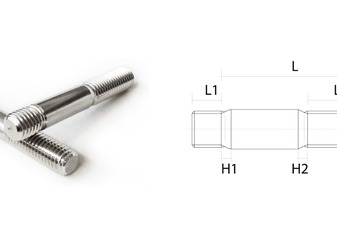
Screws are cylindrical elements used to fasten objects or parts of them together. The world of fasteners offers infinite types of screws, depending on the final application. Indeed, based on the use and the material to be screwed, it is possible to c...
Read more ...
In a previous article, we analyzed the vast world of threads, their characteristics, and the differences between these connection systems through which various elements are assembled....
Read more ...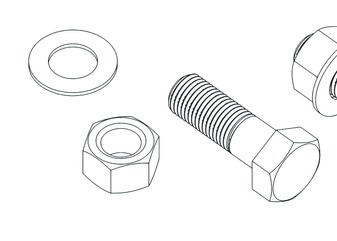
Designed and manufactured to fasten objects or parts of them together, screws are mechanical elements equipped with threading, mainly used in mechanics or construction. But how many types of screws are available on the market? And how do you choose t...
Read more ...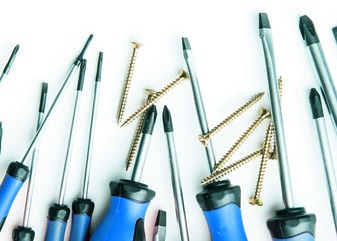
Among the indispensable work tools, the screwdriver is a utensil used for manually screwing and unscrewing screws. Given the presence of various types of screws and bolts on the market, there are just as many types of screwdrivers, each for the right...
Read more ...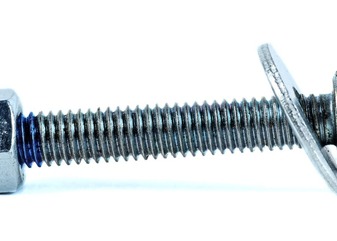
Threadlockers, also known as thread locking agents, are liquid or semi-liquid components that prevent corrosion, loosening, or seizing of various threaded fastening components. Particularly useful in the case of vibrations or shocks, these liquid adh...
Read more ...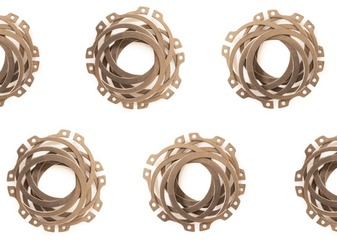
Seeger rings are safety components. A Seeger ring is indeed a special locking ring. Thanks to its universal application, it is possible to prevent the axial displacement of components such as wheels, bearings, sealing elements, etc., on shafts, spind...
Read more ...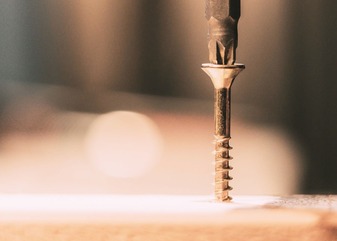
The market offers a remarkable variety of screw types, each with specific characteristics. Identifying the right one most suited to your needs can be a simple action when you know the intended use and the material you will be working on....
Read more ...
A screw is a threaded element used to fasten objects together. Used with a movement that converts circular motion into linear motion, screws are chosen based on their main application, thus the material they will be fastened to and the threading....
Read more ...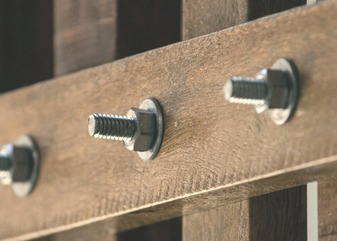
Screws and bolts are the two main fastening elements, widely used especially in the manufacturing and construction sectors. The difference between a screw and a bolt might seem clear to many, but given the commonalities between both, it's not so obvi...
Read more ...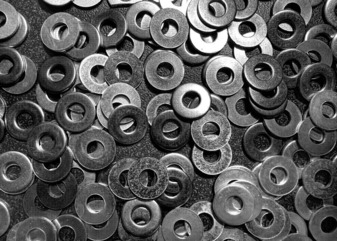
Also known as a shim or mechanical rosette, a washer is a disc-shaped element characterized by a hole, more or less wide, that is inserted between the nut of a bolt - or the head of a screw - and the object against which it will be screwed. The purpo...
Read more ...
Nuts are fastening elements with a threaded hole. Generally used together with screws, with which they share the same type of threading and pitch, they serve to create a connection that holds the material on which they are applied together....
Read more ... Added to quote